Physical Address
304 North Cardinal St.
Dorchester Center, MA 02124
Physical Address
304 North Cardinal St.
Dorchester Center, MA 02124
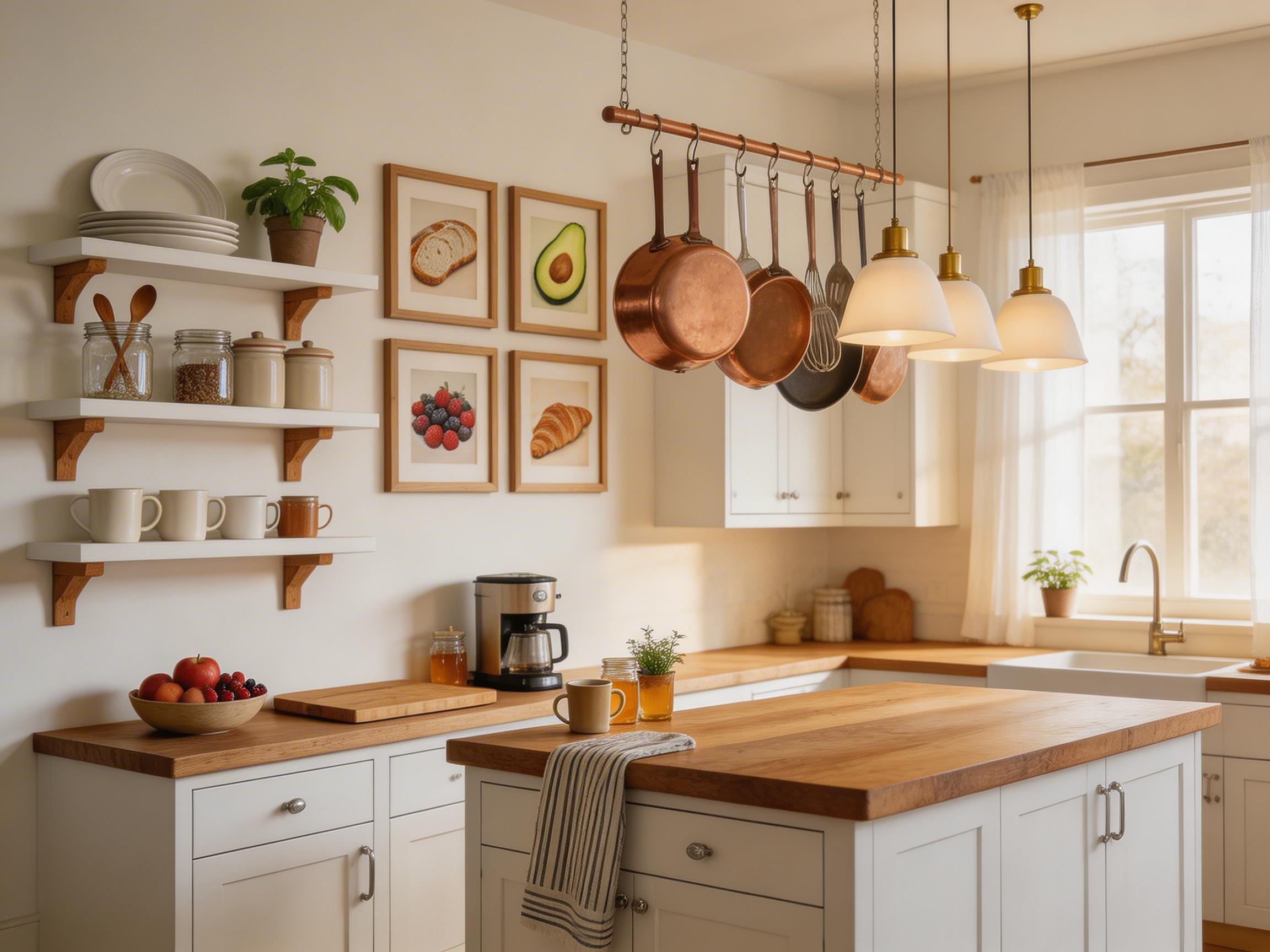
Discover 18 kitchen wall decor ideas for every style and budget — gallery walls, herb gardens, pot racks, peel-and-stick tile, and more. Start this weekend.
Most people spend more time in their kitchen than any other room. Yet when it comes to decorating, the walls stay blank for years. After ten years helping families design kitchens that feel as good as they function, I’ve found the right kitchen wall decor changes how the whole room feels — and in most cases, it takes an afternoon and under a hundred dollars.
These 18 ideas cover every style, budget, and skill level. Some take five minutes. Others are a weekend project. All of them come from real kitchens where I’ve seen them work.
Open shelves are the most flexible kitchen wall decor move you can make. They’re functional — you gain accessible storage — and when styled well, they read as a living gallery that changes as you need it to.
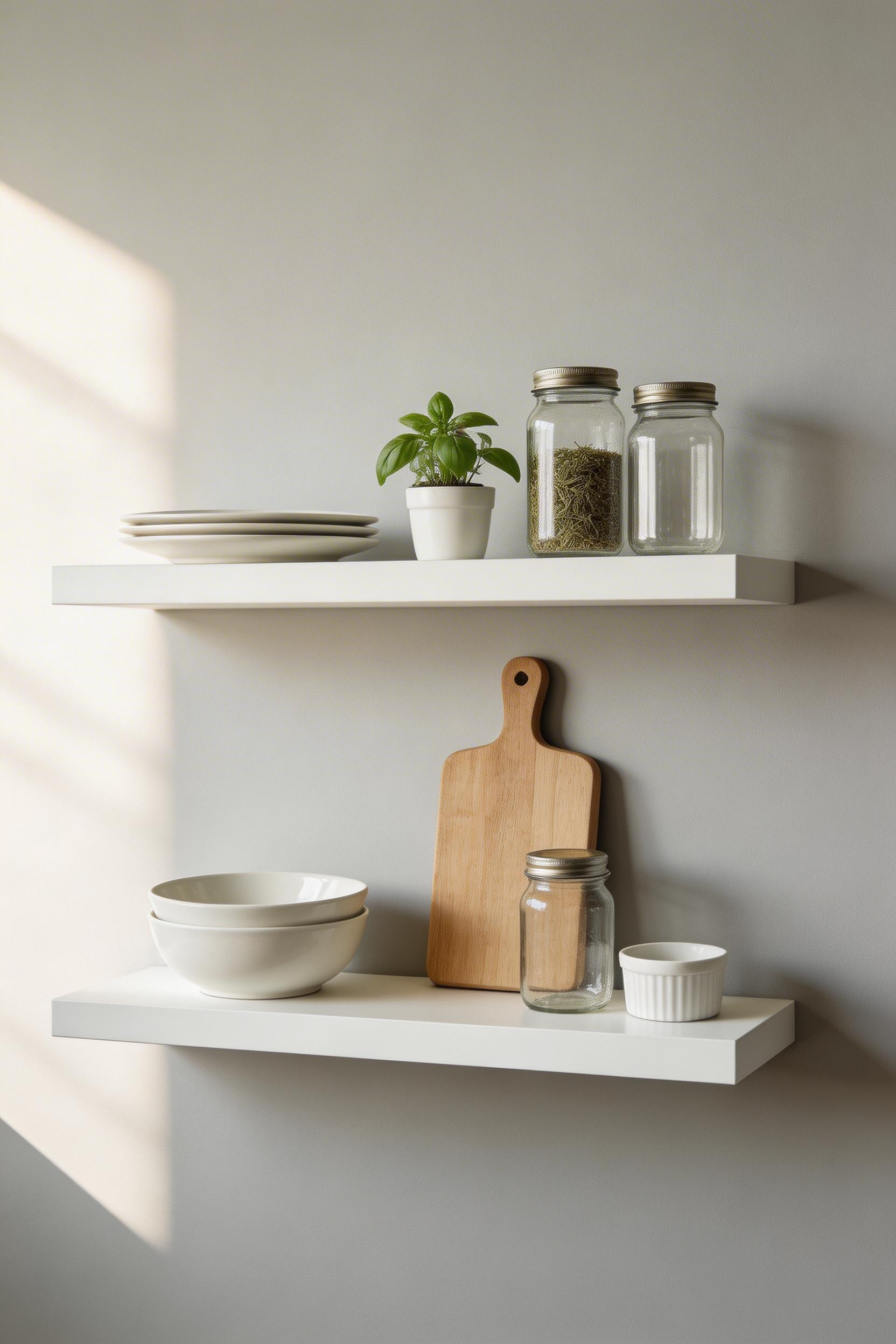
The visual appeal comes from contrast — the hard wall behind the soft, varied shapes of dishware, plants, and kitchen objects. West Elm floating shelves in walnut start around $129. IKEA BERGSHULT shelves at $29.99 work well in most white and neutral kitchens.
Leave 40% of each shelf empty. That breathing room is what makes the display look deliberate. Group objects in threes — one tall element, one medium, one low. Keep dishware color consistent: all-white ceramics with wood accents reads as designed; every pattern you own reads as a garage sale.
Rotate seasonal objects to keep the display fresh without buying new pieces. Small gourds in fall, citrus in winter, fresh herbs in spring — you’re moving what you already own, not spending more.
A food-themed gallery wall remains popular because it works. Prints of herbs, vegetables, fruit, or vintage food illustrations connect directly to the purpose of the room. When a guest walks into a kitchen with botanical food prints on the wall, they immediately understand this is a space someone loves to cook in.
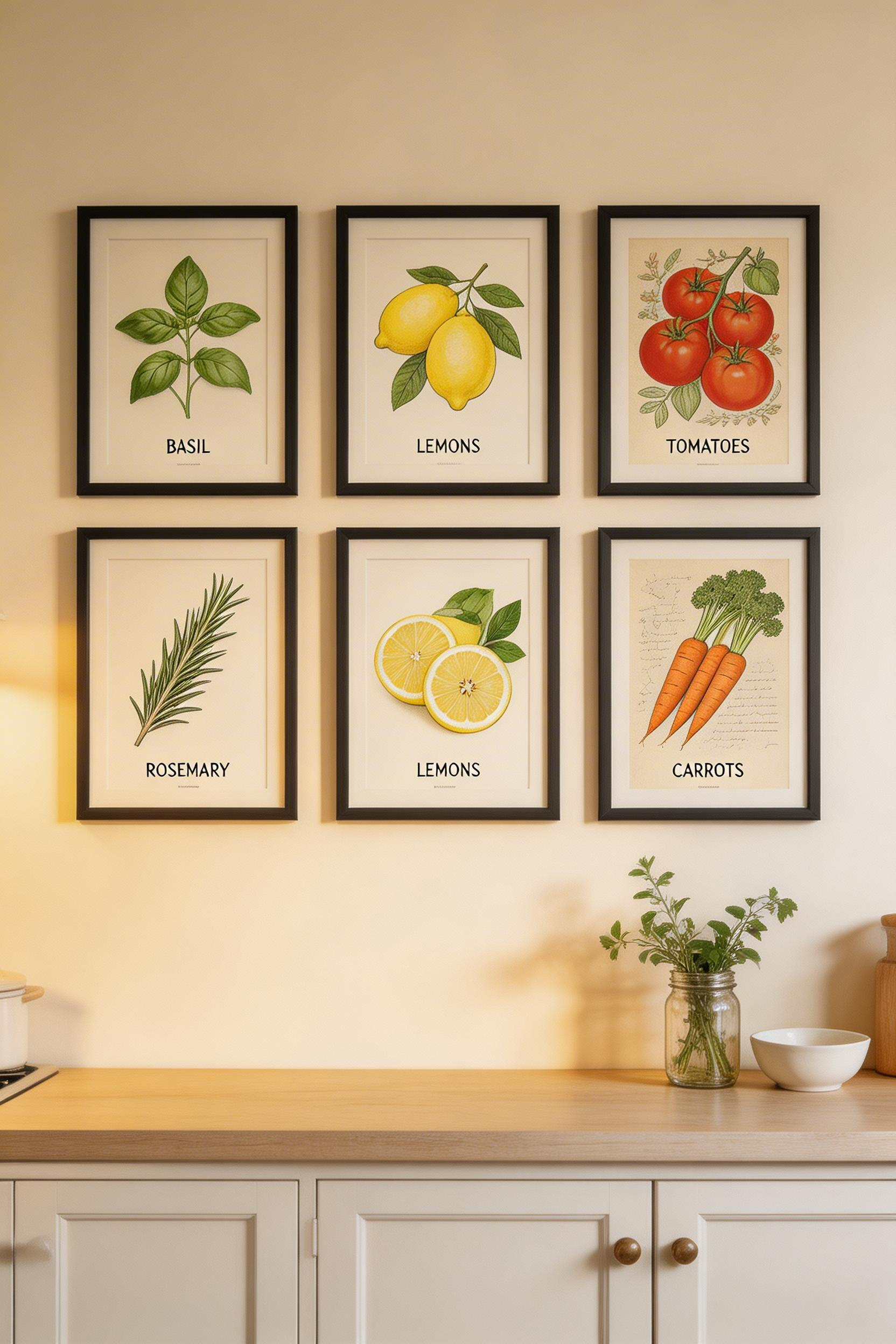
Desenio offers coordinated kitchen poster sets from $12 to $30 per print. Society6 carries hand-illustrated food prints from $20–$45. For a genuinely budget approach, Rawpixel.com has hundreds of free vintage botanical illustrations — print them at a local copy shop for $1–$3 each, frame them in $4.99 IKEA BILD frames.
Five to seven prints at three distinct sizes create the most balanced kitchen wall decor arrangement. The frame matters more than the print for cohesion: all-matte-black frames unify mismatched illustration styles. Lay the arrangement on the floor before marking any nail spots.
Use Canva to resize any botanical illustration to your chosen print size. Six 8×10 prints at a local print shop typically costs $6–$18 total. That’s your kitchen wall art done before you’ve spent anything on frames.
There’s a strong argument for the single-object approach: find one piece with enough presence to fill the wall, hang it confidently, and stop there. An oversized vintage clock — 18 to 24 inches wide — reads as intentional immediately. It gives the wall a focal point without requiring gallery arrangement or a nail-hole roulette.
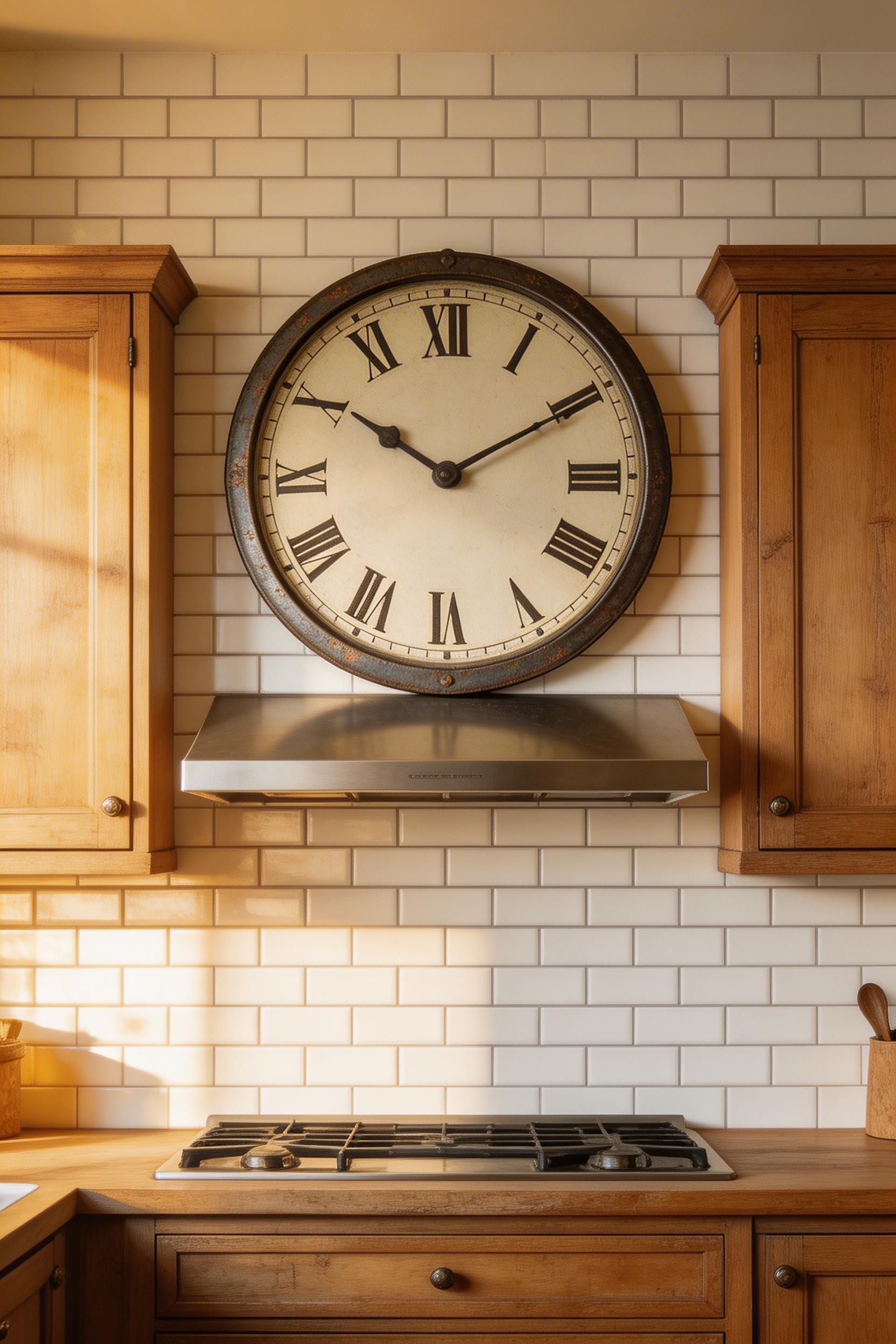
The Infinity Instruments Cafe Metal Clock (24″, $39.99) gives a bistro feel at a practical price. Pottery Barn’s Oversized Arch Wall Clock ($169) suits a more curated kitchen. Target’s Threshold Modern Farmhouse Clock ($44.99) is the reliable middle option. All three work well hung with the clock’s center around 5 to 5.5 feet off the floor.
For walls 6 to 10 feet across, an 18 to 24-inch clock hits the right proportion. Roman numerals feel more traditional; Arabic numerals push toward modern. If your cabinets are white and counters are stone, almost any classic clock style works.
Hang the clock so its top aligns with the tops of your upper cabinets. That visual line keeps the horizontal consistent across the kitchen and makes the placement feel measured rather than accidental.
A chalkboard wall panel is the best low-cost wall decor idea in any kitchen — the gap between what it costs and what it looks like is remarkable. Rust-Oleum Chalkboard Spray Paint costs under $6 and covers roughly six square feet. Frame a section of wall between two cabinets with 1×3 pine moulding (under $15), paint the interior, and you have a functional command center that doubles as rotating kitchen art.
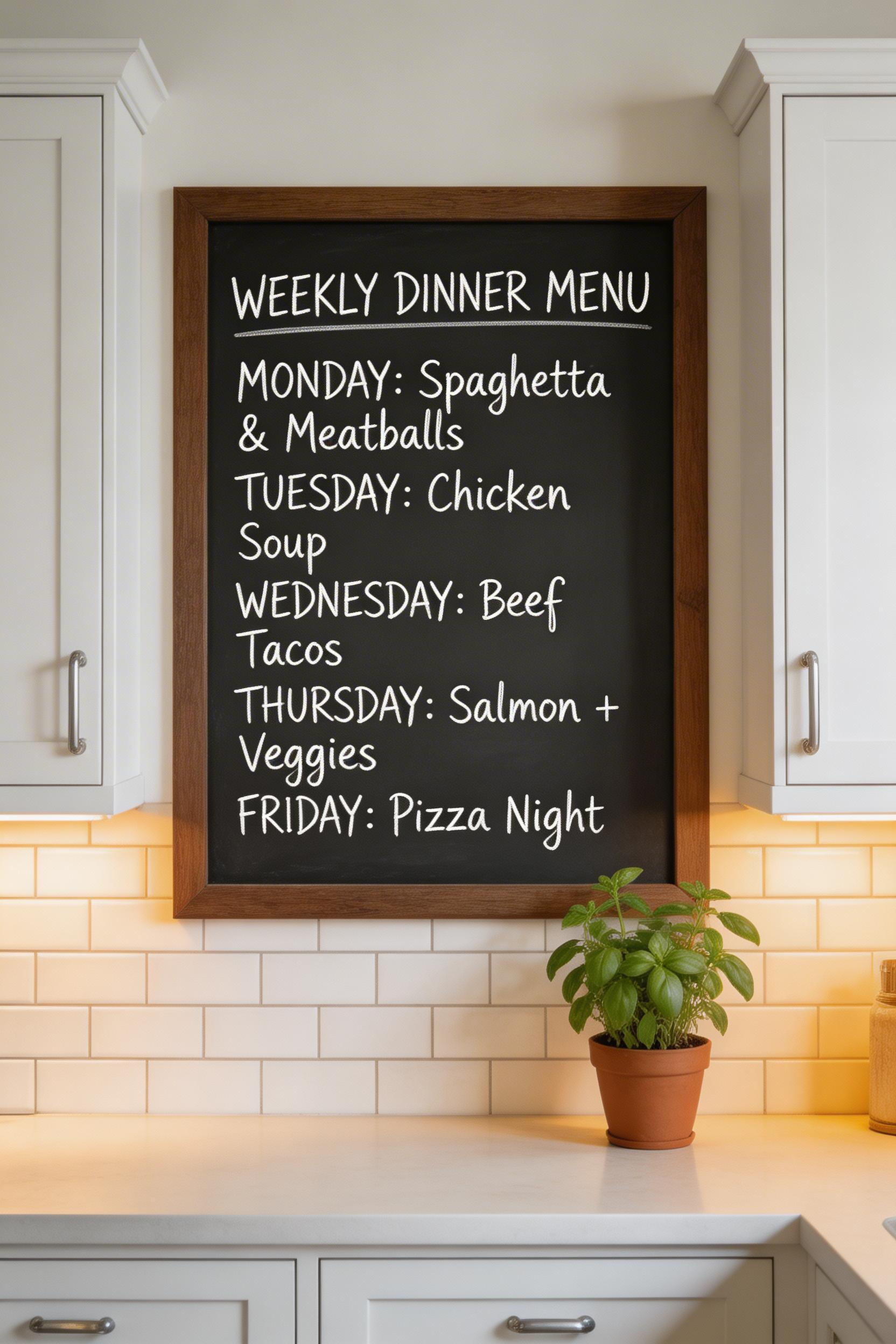
Unframed chalkboard paint on drywall looks like a half-finished project. The same painted area in a simple wood frame looks like a decision. Use Rust-Oleum brush-on chalkboard paint ($7.98 for 30 oz) and Chalkola liquid chalk markers ($17.99 for 10) rather than standard chalk — they’re sharper and wipe off cleanly with a damp cloth.
Apply two coats of chalkboard paint. Allow 24 hours to dry, then cure for three days before use. Season the surface by rubbing chalk sideways across the whole board and wiping it off. This step prevents ghost outlines from showing on the first write.
Write your weekly menu on Sunday night using a chalk marker. Five dinner dishes in a simple grid takes under ten minutes and makes the wall look curated for the full week. Stick to one or two chalk colors. A single white-on-black panel looks considered for years; a rainbow board looks considered for about a day.
A knife rack is the most honest kitchen wall decor: it admits this is a working kitchen, not a showroom, and turns the tools of actual cooking into the display. A walnut or acacia wooden-backed magnetic strip is warm and considered, and suggests someone thought carefully about what their kitchen should look like.
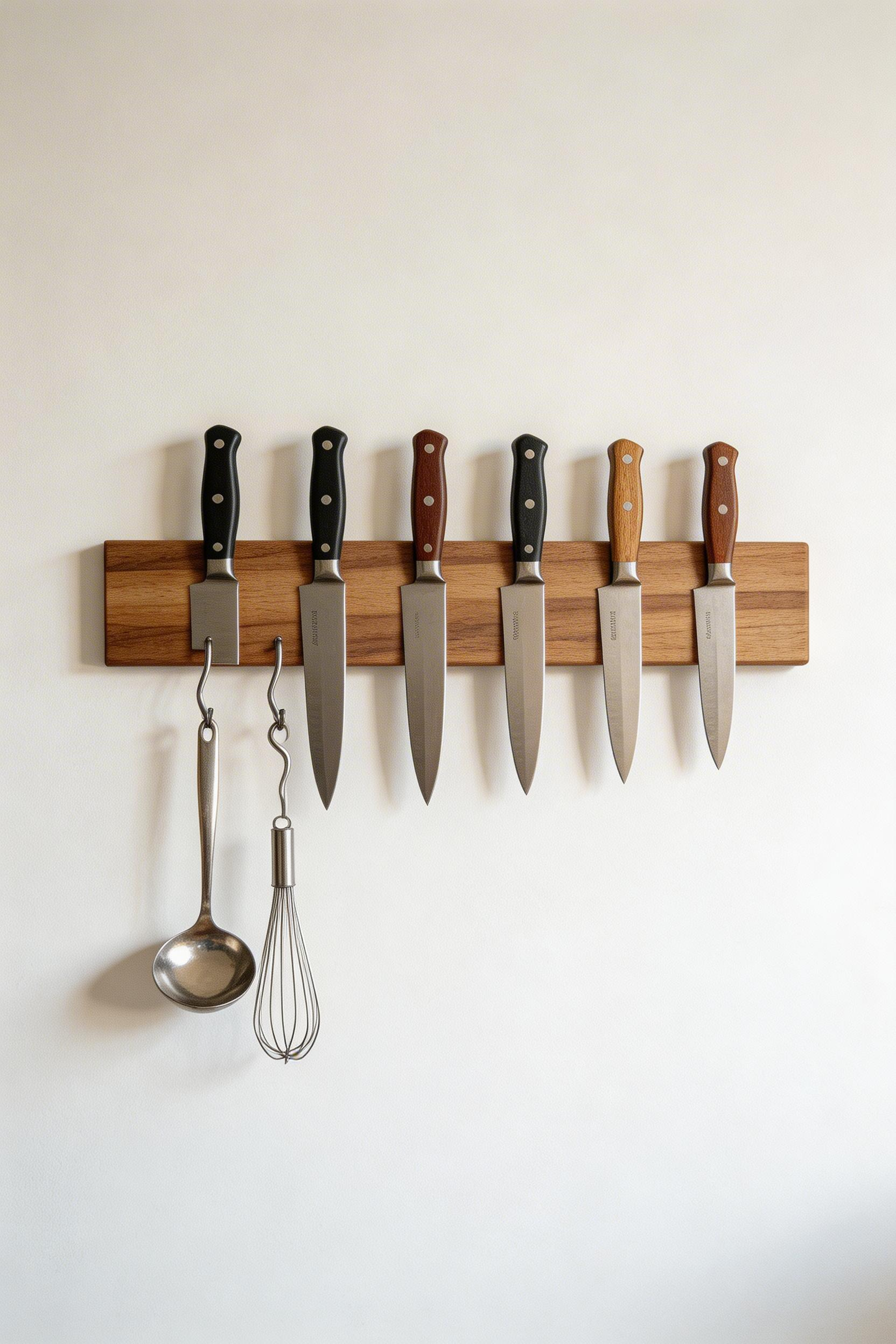
The Walrus Oil Walnut Magnetic Knife Strip (17″, $59) looks twice its price on the wall. Crate & Barrel’s Acacia Magnetic Knife Block runs $49.95 for an 18-inch version. The Amazon Basics Magnetic Knife Bar at $19.99 works, but stainless steel lacks the warmth that makes a knife rack feel like decor rather than equipment.
Mount at 4 to 5 feet off the floor — reachable for adults, out of reach for younger children. On drywall, use the included wall anchors. On tile, use a tile-rated masonry bit. Drill into a stud where possible; a full set of knives adds meaningful weight over time.
Add two or three S-hooks below the strip for ladles, a whisk, or scissors. That combination — knives on the magnet, tools below — turns a single strip into a small wall-mounted kitchen workstation. Keep blades oriented edge-facing the wall. It protects the blade and looks safer from across the room.
You don’t need a full renovation to put a tile panel on your wall. A 2×3 foot section of terracotta or encaustic tile — installed as a discrete mural panel rather than a full backsplash — adds earthy, handmade presence that paint and prints can’t replicate. It reads as architectural, which gives it an authority that lighter decorating ideas can’t quite match.
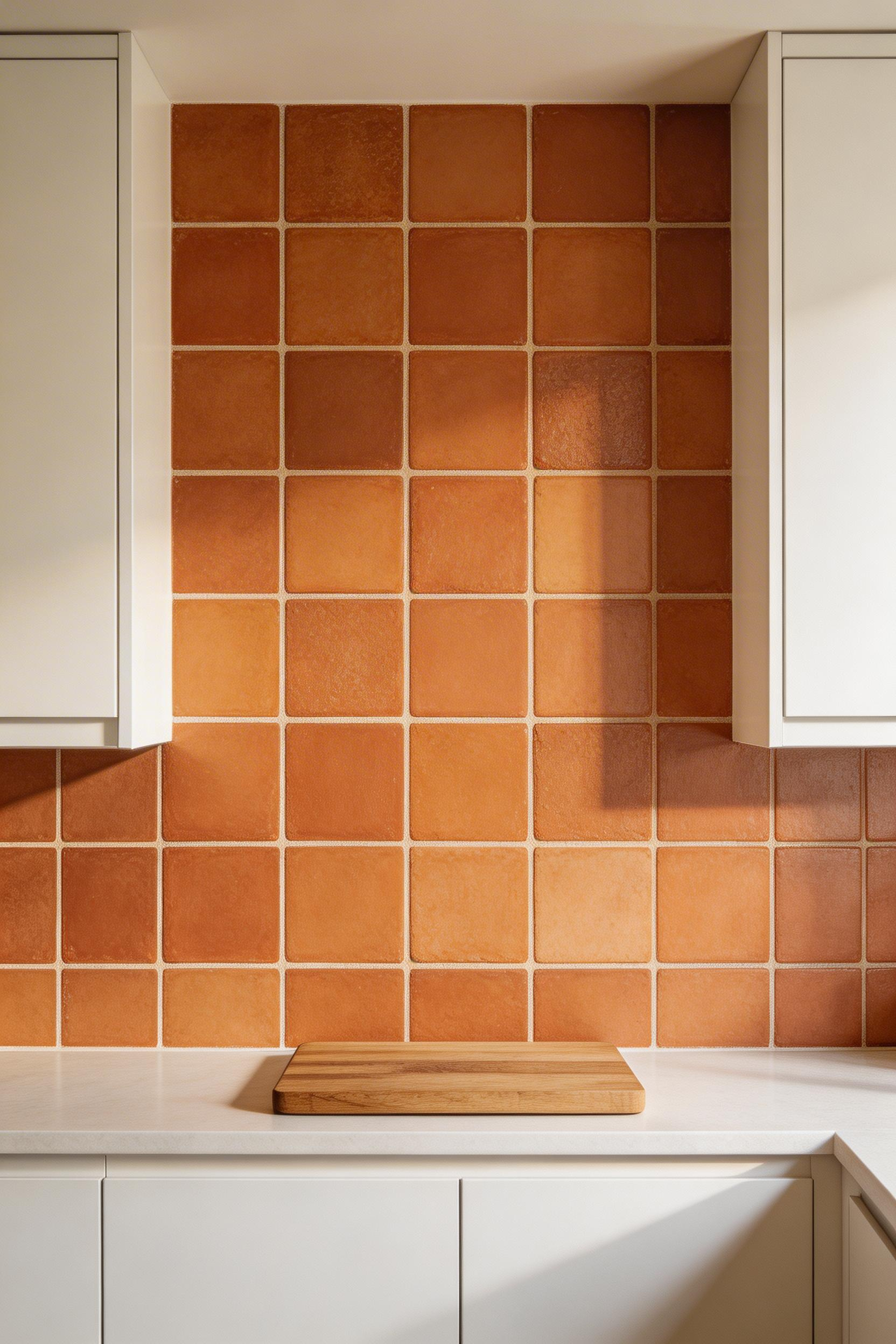
Fireclay Tile’s terracotta glazed tiles run $22–$35 per square foot. A 2×3 foot panel uses about six square feet — budget $130–$210 for tile, plus thin-set and grout. For renters, Smart Tiles Artisan Faux Cement panels peel and stick at $14.99 per 12×12-inch sheet with no grout required.
Terracotta tones pair naturally with white cabinetry and wood countertops. A 4×4 inch tile grid at 2×3 feet suits most small kitchens (the same ones covered in our kitchen island ideas for small kitchens guide, where every design choice gets scrutinized for scale). Charcoal grout creates bold contrast; cream grout produces a quieter, warmer panel.
Apply peel-and-stick tile only to a cool, grease-free wall. Wipe the surface with a degreaser and let it dry fully before removing any backing. That prep step alone doubles the adhesion lifespan.
A wall-mounted herb garden is the only kitchen wall decor idea that also feeds you. Three copper-finish pots of basil, chives, and mint — staggered at different heights — look like a design choice from the moment you walk in. But they’re also a genuine pantry extension: fresh herbs on demand, no grocery run, no withered half-bunch at the back of the fridge.
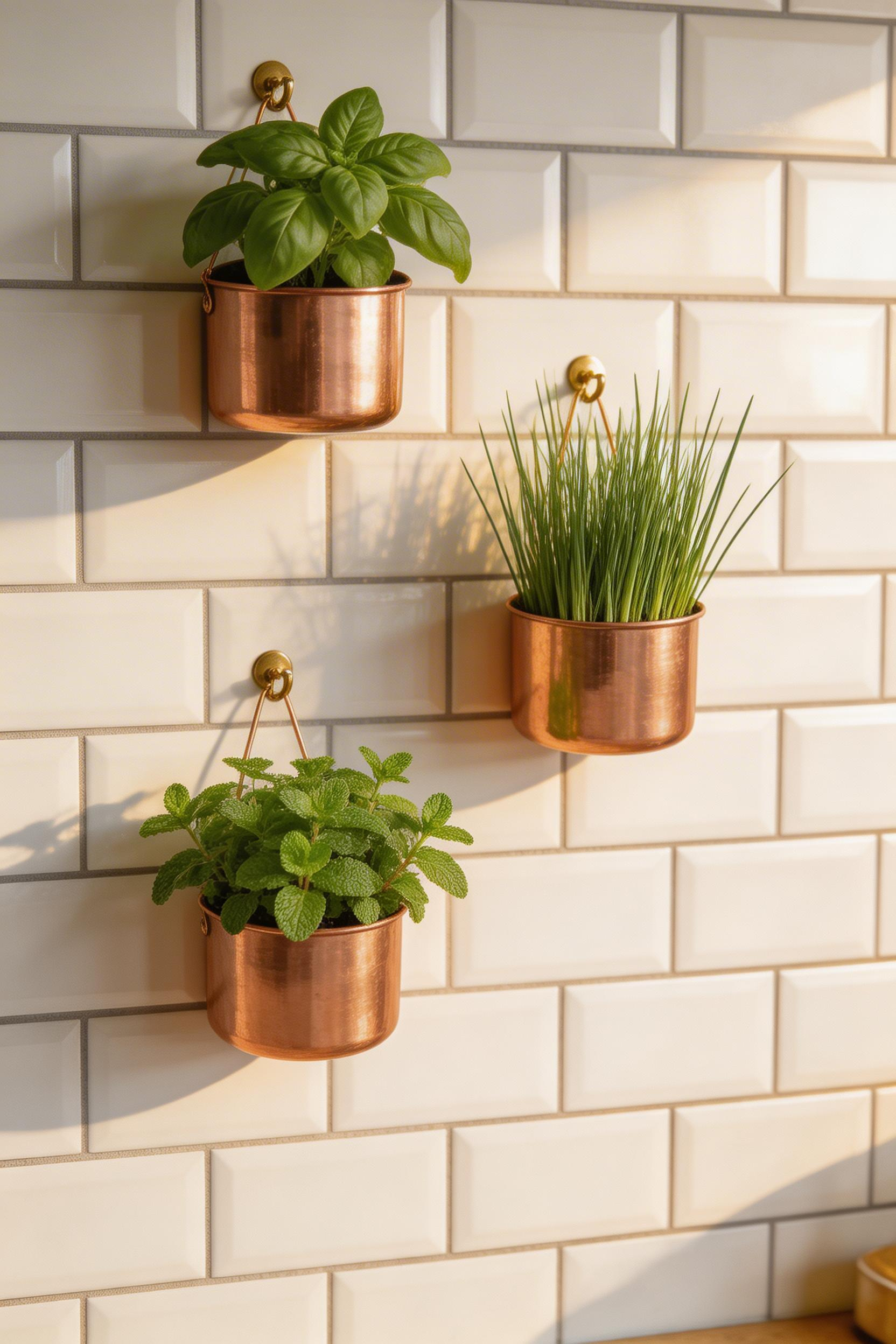
The Umbra Trigg Wall Shelf Planter set (three copper pots, $39.99) looks expensive without being expensive. The copper finish connects easily to brass cabinet hardware or a pot rack elsewhere in the kitchen. IKEA SOCKER at $12.99 is the budget version — simpler, still effective.
Stick to basil, mint, chives, flat-leaf parsley, and lemon thyme. Rosemary and sage need six or more hours of direct sun — they struggle in most kitchens and look unhealthy within weeks. One herb per pot; crowding two plants together means neither does well.
Rotate each herb to the nearest window for one week every month. That recovery period keeps the display looking lush rather than leggy. If the kitchen has no natural light, a small LED grow light clipped above the planters ($15–$25) makes an enormous difference.
Kitchen walls are almost entirely hard surfaces — ceramic, glass, painted drywall. A cluster of woven baskets is the easiest way to introduce a completely different material to the kitchen without painting or drilling into tile. Seagrass, rattan, and water hyacinth are all moisture-tolerant, which makes them practical in a room where steam and humidity are normal.
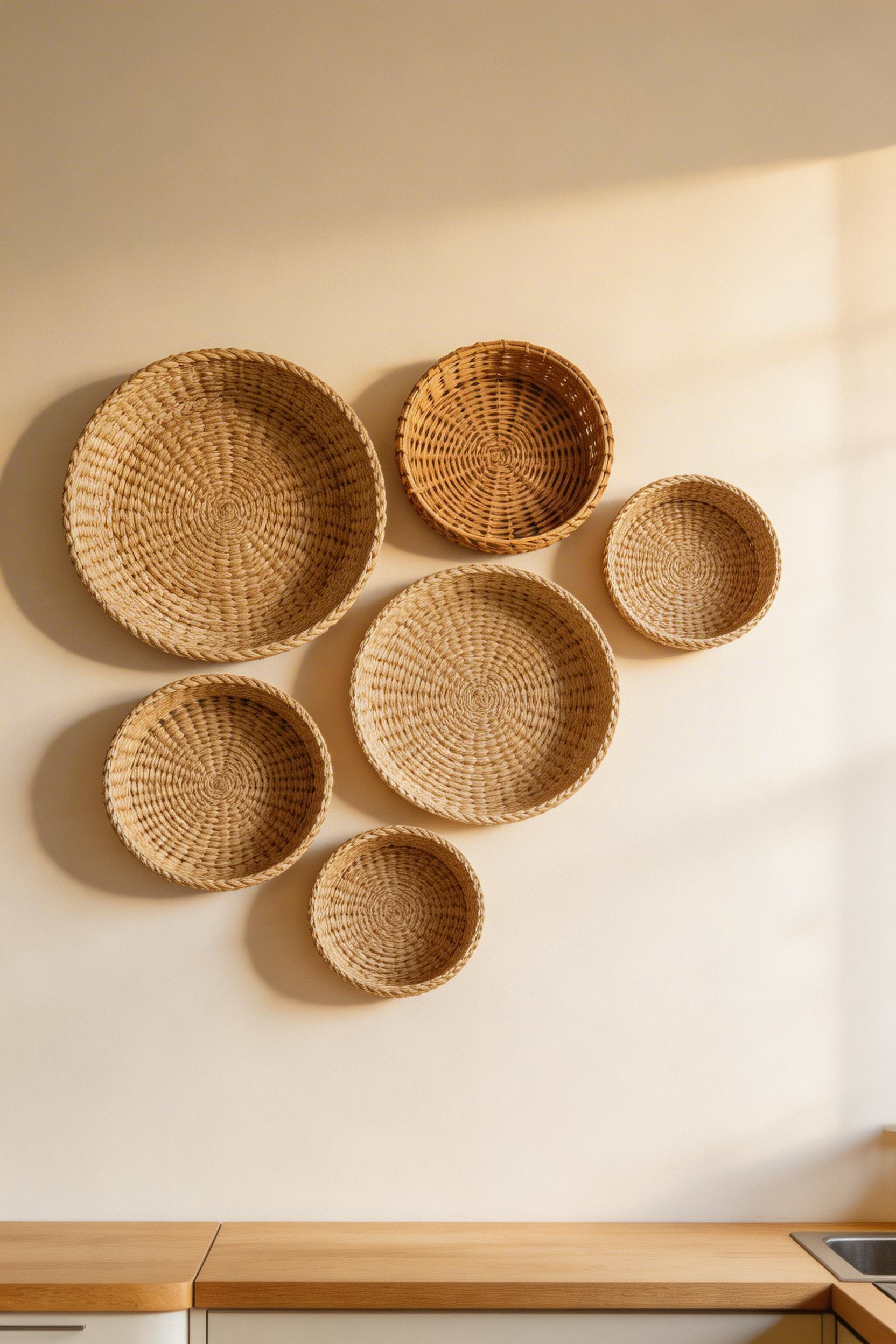
World Market’s Seagrass Round Wall Baskets run $19.99–$34.99. TJ Maxx and HomeGoods carry rotating selections at $7–$30 each. A mix of three basket sources often looks more gathered and personal than a matching set from one retailer.
A cluster of five to seven baskets at varying sizes (8″, 12″, and 16″) covers a typical 3×3 foot wall well. Lay everything on the floor first and live with the arrangement for a day before marking any hook positions. In practice, most people move at least two pieces once they see how the shapes interact.
Mix at least two weave textures — an open weave basket beside a tightly braided one. That contrast creates visual interest rather than repetition. Keep the color palette consistent: all natural tones read as intentional; a mix of colors reads as random.
The narrow floating spice shelf is the most functional form of kitchen wall decor. It clears counter space, organizes the spices you reach for daily, and adds a quiet architectural detail to an otherwise flat wall. Done right, guests notice without quite knowing why — the kitchen just feels more thought-through. For more ideas on making a small kitchen feel intentional from every angle, our kitchen island ideas for small kitchens guide covers the same approach.
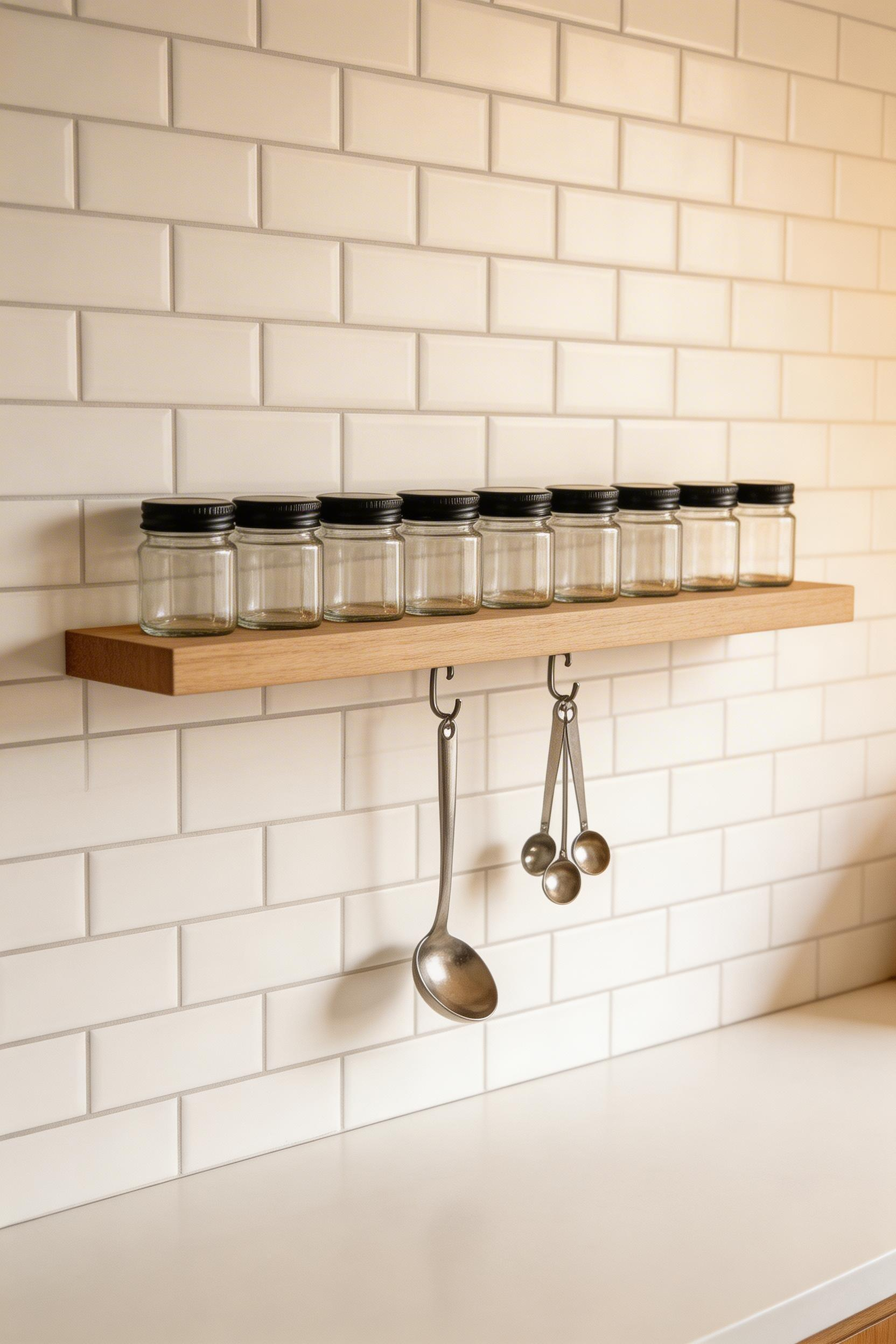
IKEA’s GRUNDTAL stainless rail with shelf ($15.99) is one of the best-value kitchen wall systems available. It holds standard spice jars at 3 to 4 inches of depth and mounts easily on most wall surfaces. The KUNGSFORS suspension rail ($29.99 rail, $4.99 hooks) offers a birch veneer accent that suits Scandinavian and light farmhouse kitchens.
Mount the shelf 18 to 24 inches above the counter — reachable while cooking, high enough to keep the work zone open below. A 24-inch wide shelf holds 10 to 12 spice jars in a single row. For larger spice collections, two rails spaced 8 inches apart doubles capacity without changing the wall footprint.
Put two or three small bud vases with cut flowers alongside the spice jars. That mix — utilitarian glass jars beside a small bunch of flowers — tips a functional shelf into something that looks designed. It costs about $3 for the flowers. Also, uniform spice jars make a real difference: a 24-pack of matching glass jars with black lids (about $18 on Amazon) turns a mismatched collection into a display worth putting on the wall.
Of all the kitchen wall art ideas on this list, the framed recipe card is the most personal — and the most likely to stay on your wall for decades. A handwritten recipe card from your grandmother, scanned and printed at 8×10, framed in a simple matte black IKEA frame: that’s irreplaceable. You can’t find it in a store.
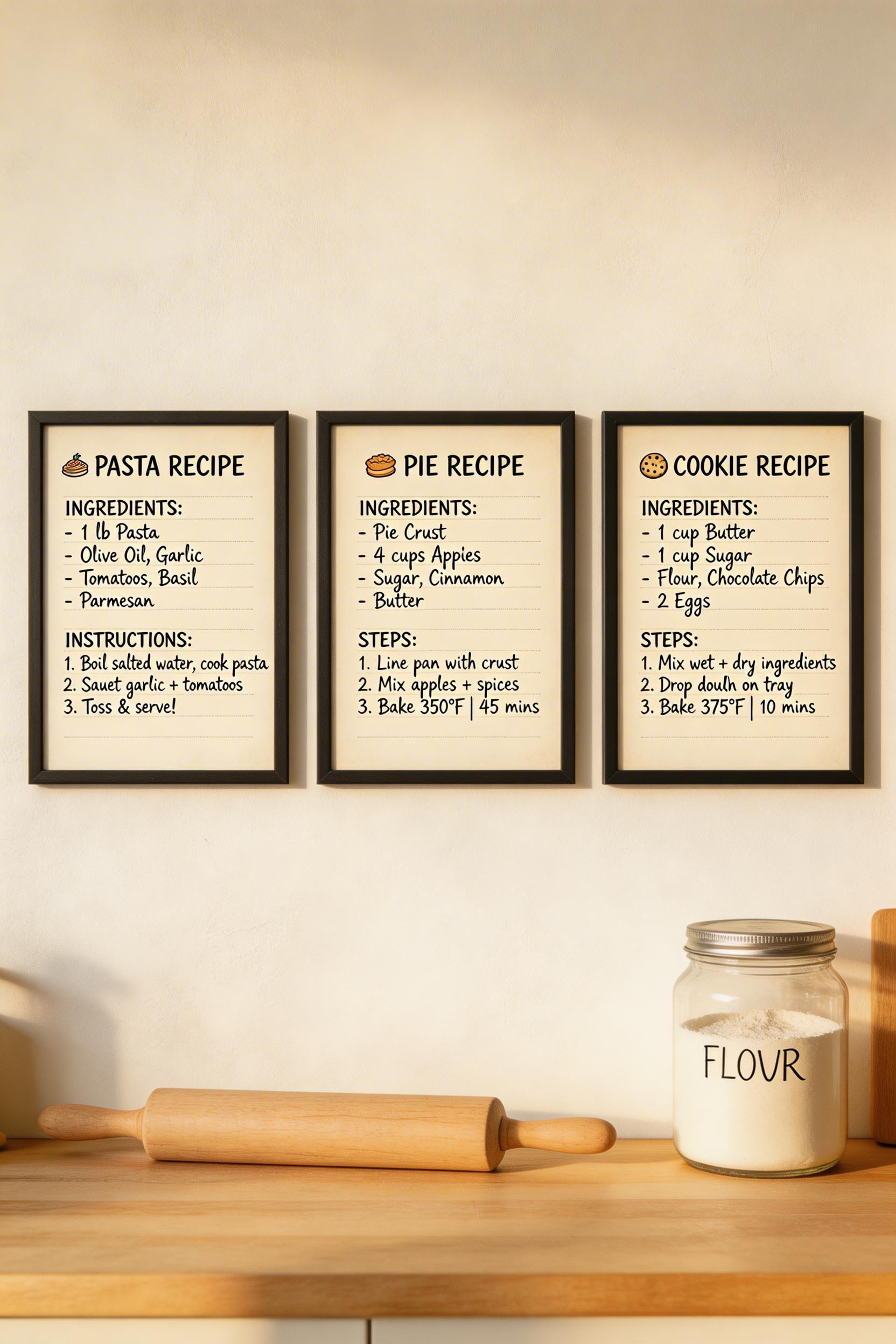
A triptych of three framed recipe cards turns personal cooking history into kitchen wall art with genuine meaning. Eight-by-ten prints in matching frames with a white mat look professional for under $25 total. Artifact Uprising offers custom heirloom recipe prints from $35–$85 for those who want the best-quality finish.
Etsy has hundreds of printable recipe card templates for $5–$20 per design. Download, personalize with your own recipe text, and print locally for $1–$3 per sheet. Alternatively, scan an actual handwritten card and print it as-is. The handwritten version always reads more personally — the imperfections in the lettering are the point.
If your cabinet hardware is matte black, use matte black frames. If it’s brushed brass, use thin gold frames. That connection — frame finish echoing hardware finish — makes recipe card prints feel like they belong in the kitchen rather than like art that happened to end up there.
Pegboard has a reputation problem — in most people’s mental image, it lives in the garage next to the drill bits. But paint a pegboard panel the same color as your kitchen wall, add brass hooks and a few small plant cuttings, and it becomes one of the most flexible and genuinely interesting wall systems in any kitchen at any price. It also says something honest: this is a room where people actually cook.
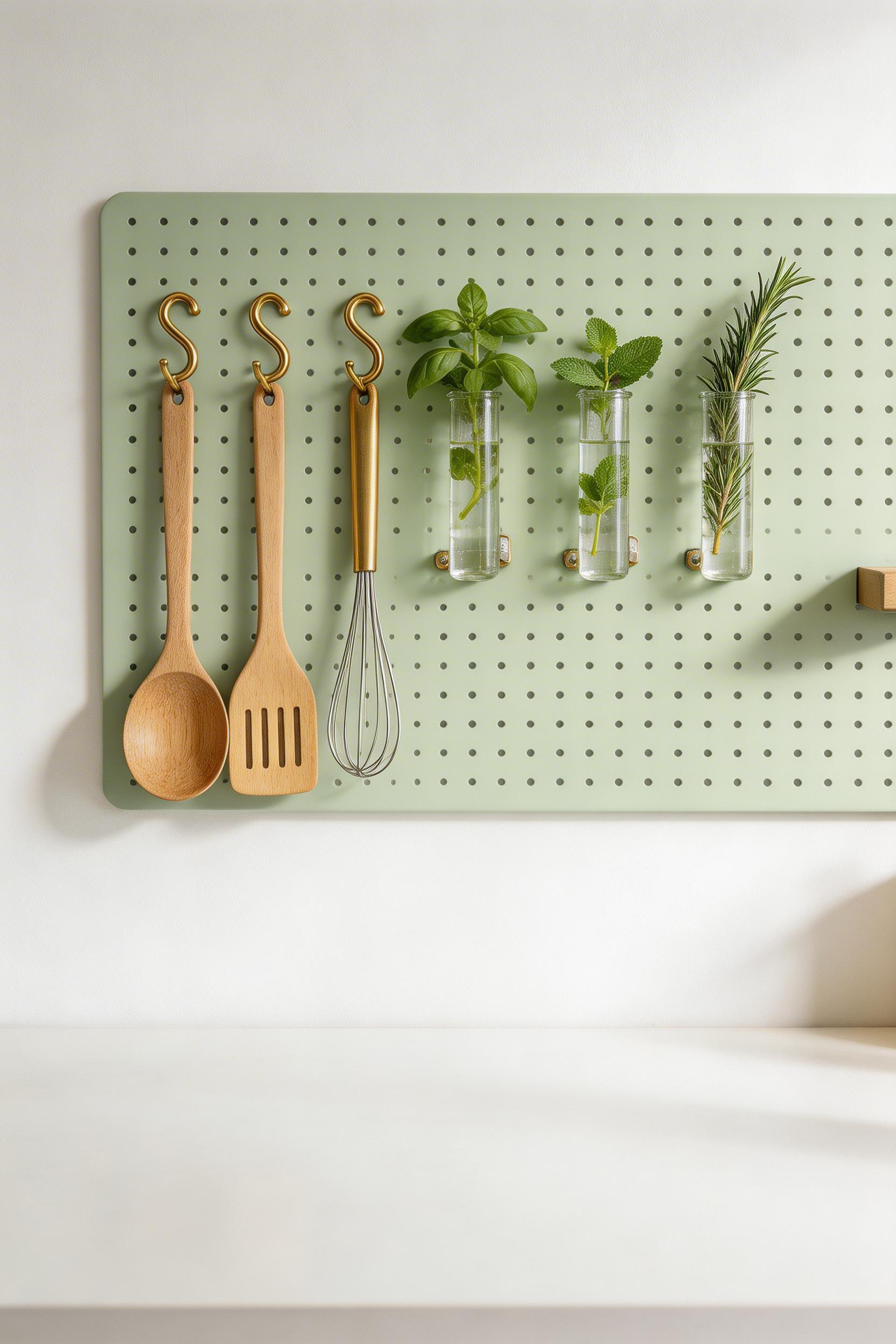
IKEA’s SKÅDIS (22×22″, $19.99) is the most-used version in home kitchens. The add-on hook and basket range is extensive and easy to rearrange. A hardware store pegboard sheet (24×48″, $23.97) gives more surface area and can be cut to fit any space. Key mounting note: pegboard must sit 1/2″ away from the wall — use the included spacers.
Paint the pegboard the same color as the wall, not a contrasting color. That counterintuitive choice makes the board look architectural rather than utilitarian. Limit the hook accent finish to one — all brass, all black, or all white — and the panel holds together visually.
Hang small glass test tubes on pegboard hooks and fill them with propagation cuttings. It looks beautiful, the cuttings slowly grow into new plants, and test tubes in packs of 20 cost under $10. For more inspiration on personal, functional design choices like this, the 4 Essential Kitchen Wall Decor Ideas to Personalize Your Space piece over at Home Decor Hero covers some smart complementary approaches. And if you’re working through the whole house room by room, the same confidence in design decisions translates directly — our living room layout ideas show how the same thinking applies to the larger space next door.
Most kitchen surfaces are hard: tile, glass, painted drywall, stone. Macramé is the exception — it brings soft, organic fiber to a room that otherwise has none. A kitchen with a macramé wall hanging sounds quieter. It feels warmer. The contrast between cotton and ceramic surfaces around it does real work.
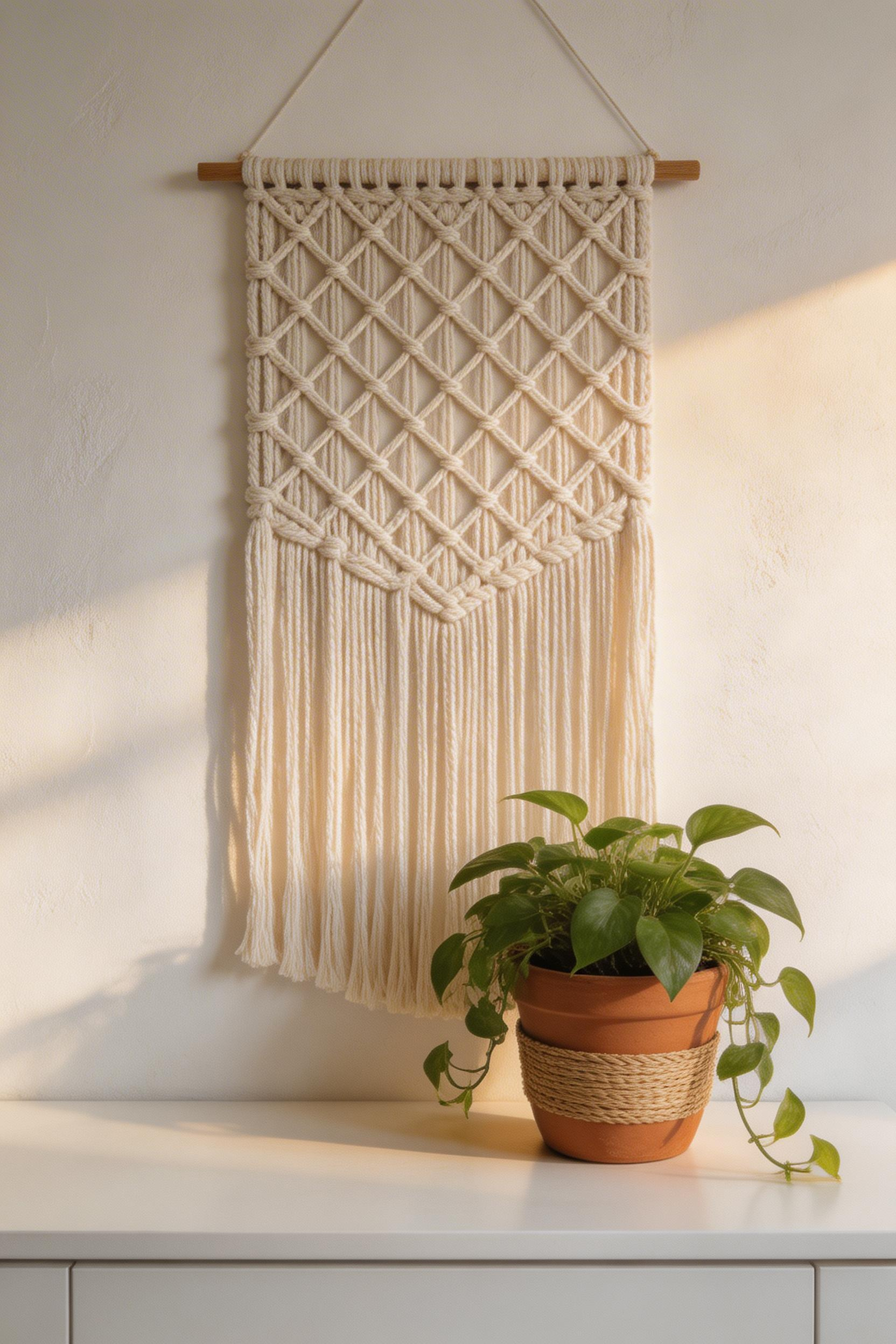
Place macramé on a wall away from the stove. Cotton fiber absorbs grease over time — a piece hung above the range needs cleaning far more often than one on a cooler wall. On a removed kitchen wall, natural cotton holds up well for years. Etsy sellers offer pieces from $20 to $140 depending on size.
A 12 to 18-inch wide piece suits a narrow wall between cabinets. A 24 to 36-inch piece suits a larger open wall above a counter or behind the kitchen table. For kitchens with a lot going on visually, choose the smaller size — the piece should add texture without competing with everything else.
Use a wooden dowel or a cut garden branch as the hanging bar. The dowel distributes weight evenly so the piece hangs flat. It also looks more intentional than a gathered top edge on a nail alone. Natural wood sticks from the garden cost nothing.
Faux brick peel-and-stick wallpaper installs in a single afternoon and removes cleanly when you want a change. NuWallpaper’s Peel & Stick Brick panels run $27.99 per roll and cover about 20 square feet. A typical kitchen accent wall (64 square feet) needs three rolls — total under $90. That’s a genuine material-upgrade look for a budget wall decor investment.
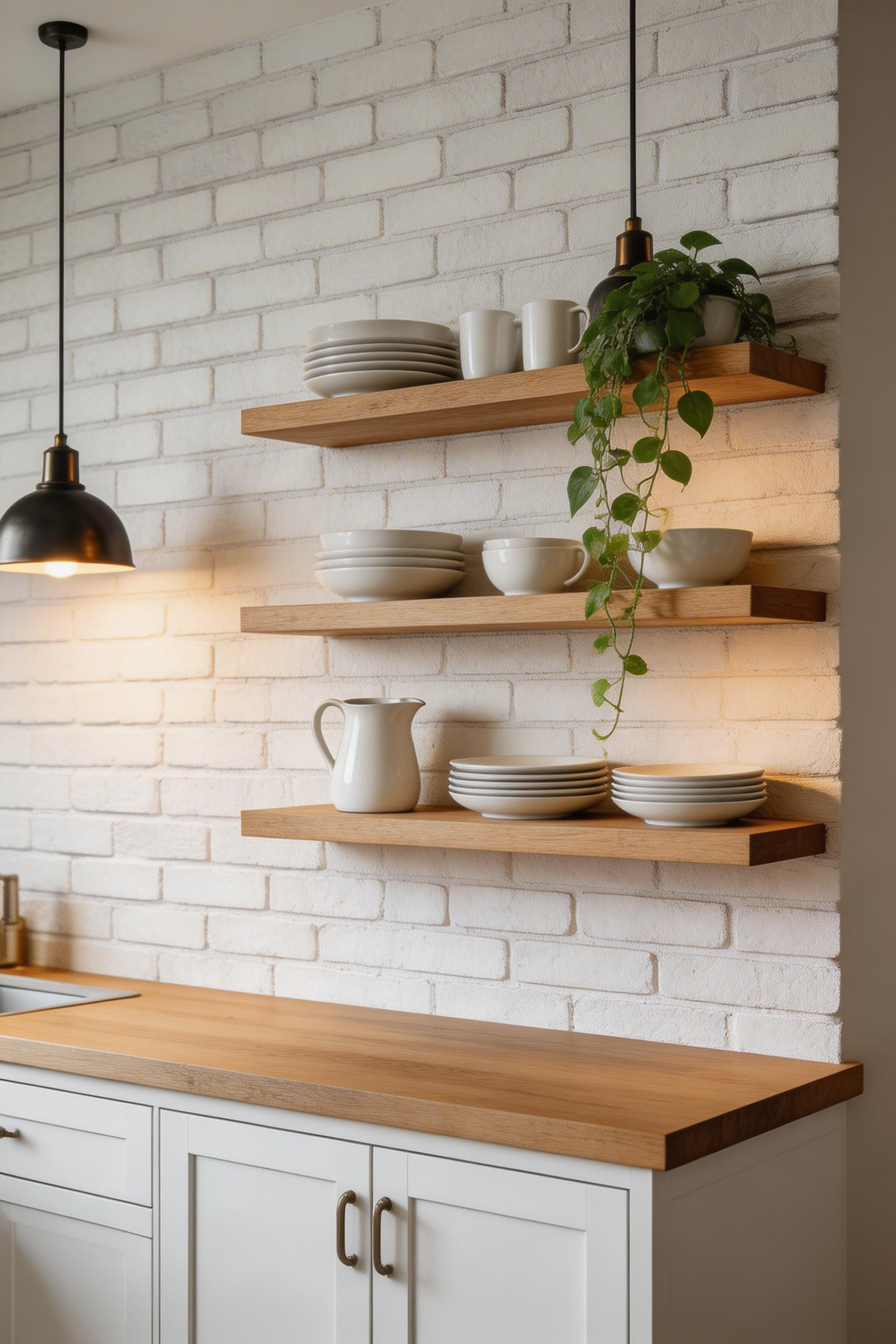
White or gray faux brick suits modern and farmhouse kitchens. Red brick panels suit industrial and eclectic styles. Brewster Wallpaper’s Exposed Brick peel-and-stick ($31.99 per roll) has a slightly more realistic texture than cheaper alternatives. RoomMates Red Brick ($24.99 per roll) is the most reviewed option on Amazon, with confirmed adhesion on properly prepped walls.
Clean the wall with a TSP substitute degreaser and let it dry completely. On any wall with grease contamination — common in kitchens — adhesive fails within weeks regardless of brand. Apply only to a cool wall. The area directly behind a stove gets warm enough during cooking to gradually loosen adhesive on vinyl-backed panels.
Use a metal straightedge and a sharp utility knife for all edge cuts. Scissors leave an uneven edge that shows on a brick pattern where straight lines are the whole point.
Botanical prints have been reliable kitchen wall decor for decades because they bridge the natural and the domestic in a way that feels genuinely appropriate to the kitchen. An illustrated sprig of rosemary hanging above a counter where you cook with rosemary is a coherent design statement. It isn’t trying too hard. It just belongs.
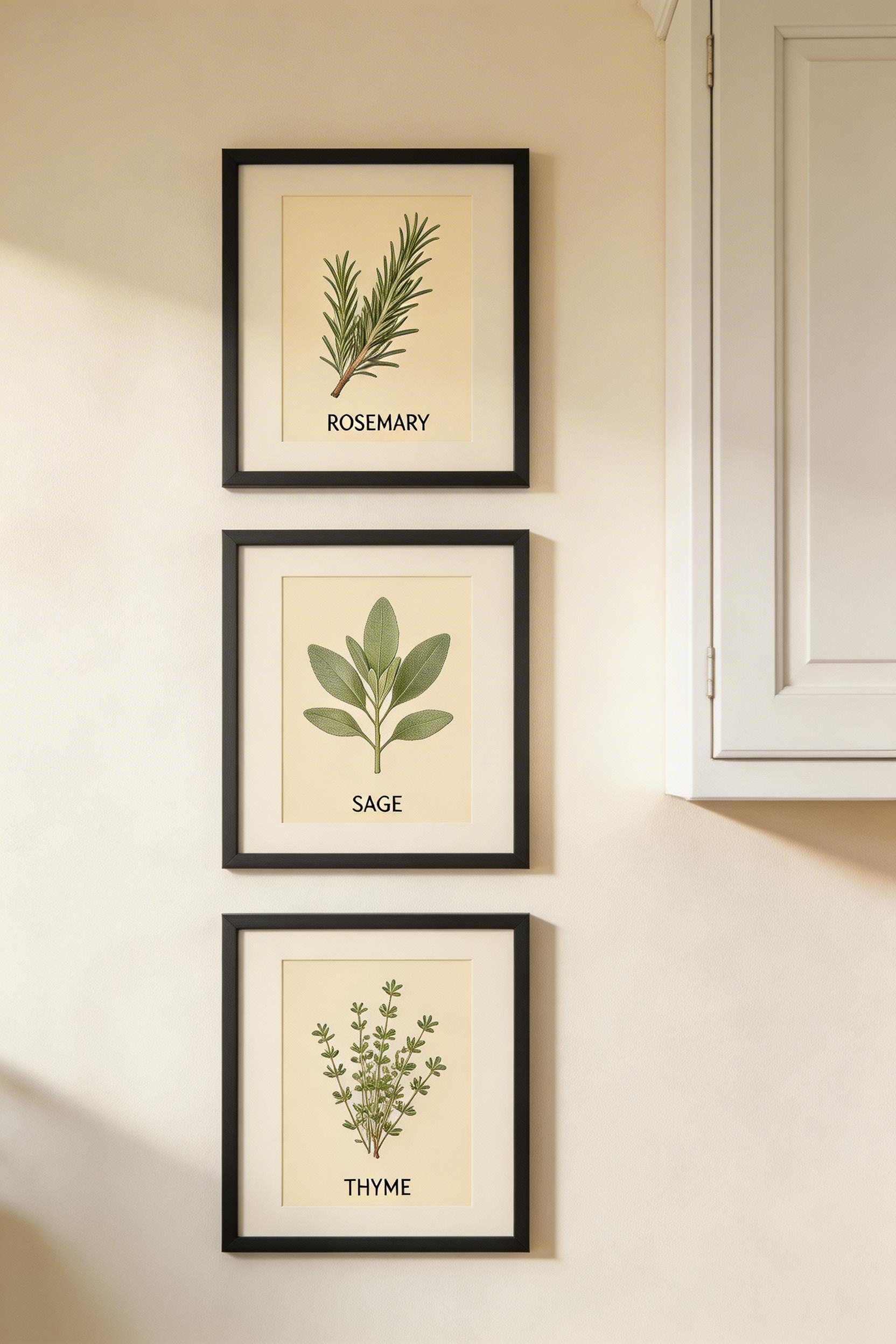
Desenio’s botanical print sets run $36–$60 for a coordinated trio. Rawpixel.com’s public domain collection has hundreds of free high-resolution vintage botanical illustrations — print locally and frame in IKEA RIBBA frames ($4.99–$9.99). A trio of 8×10 botanicals in matching matte black frames costs as little as $25 total.
Stick to one background tone across the set — all cream, all white, or all black — to unify varied botanical subjects. Matte black frames suit modern and farmhouse kitchens; natural wood suits cottage and rustic styles; thin gold suits traditional and eclectic kitchens. Choose the finish that connects to one other metal element already in the kitchen.
A vertical column of three works best on narrow walls between cabinets. A horizontal row of three suits a long open wall above a counter. Before hanging, cut paper templates to each frame size, tape them to the wall, and step back. Moving paper is free; moving nail holes is work.
A wall-mounted pot rack is the one piece of functional kitchen decor that argues openly for itself: it frees cabinet space, keeps your most-used pots accessible, and turns cookware into the room’s focal point. The best pot racks look like they were designed for the kitchen they’re in.
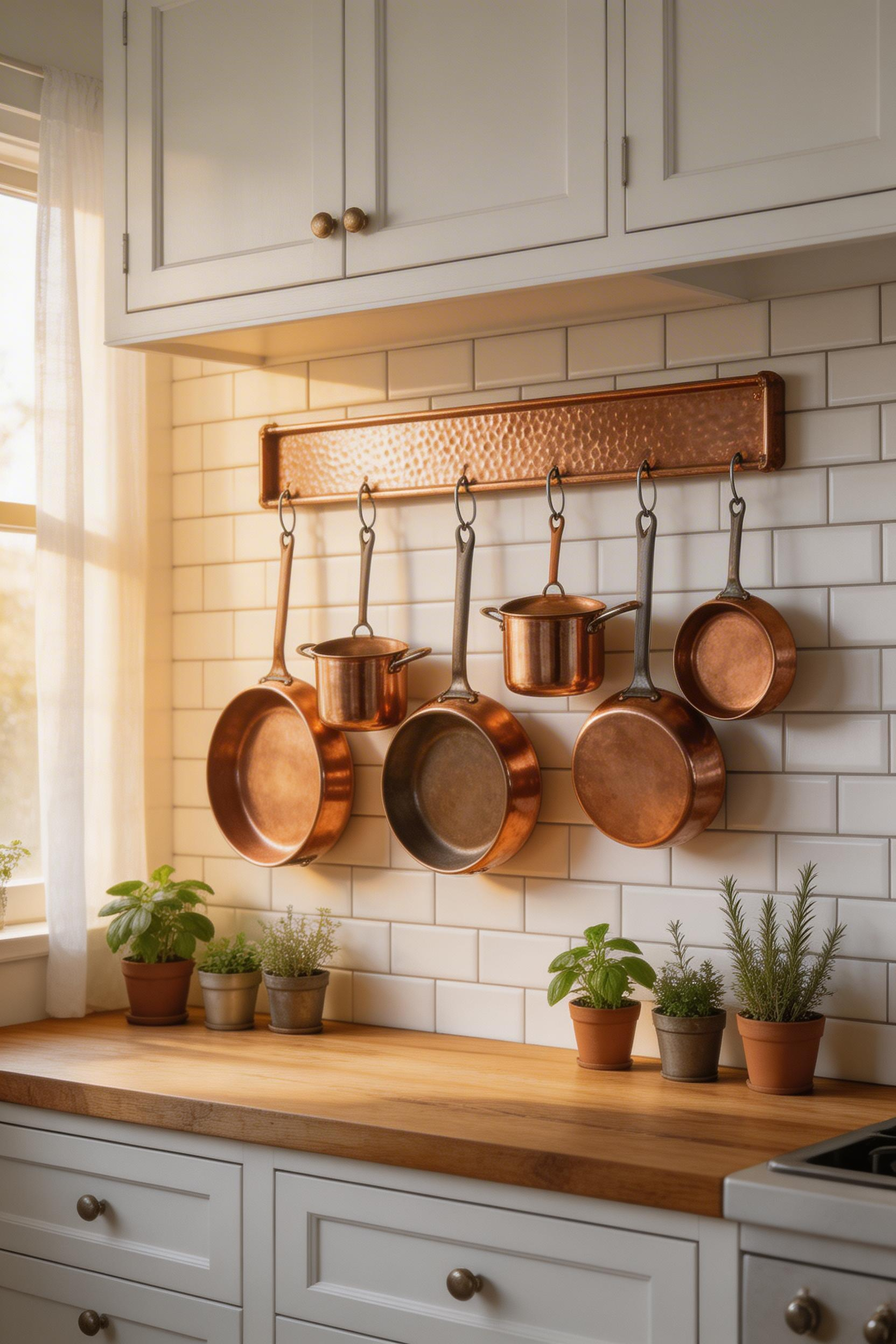
The Enclume Premier 24″ Wall-Mount Pot Rack ($149.95) is the professional version — hammered steel, rated for up to 200 lbs. Old Dutch’s 18″ Antique Copper wall rack ($89.99) is the warmer-looking option for traditional and farmhouse kitchens. For a modern kitchen where matte black is the dominant finish, the Amazon Basics 24″ rack at $49.99 delivers the function without the premium price.
Mount into wall studs — use a stud finder before drilling. A fully loaded pot rack exerts significant pull over time. Drywall anchors alone are not sufficient for most installations.
Hang copper pots on the outer hooks where they catch the light, and cast iron on the inner hooks closest to the wall mount. Give copper a quick polish before hanging — oxidized copper looks like neglect rather than patina until it develops an even tone over years of use. A light coat of mineral oil on cast iron gives a deep, finished look.
A small collection of wooden serving boards and vintage kitchen utensils, hung on a wall with brass hooks, is the kitchen wall decor version of a bookshelf: it tells you something real about the person who lives there. The boards come from different kitchens, different trips, different gifts. That mix of history and function is what separates a gathered kitchen wall from a styled one — and gathered is always better.
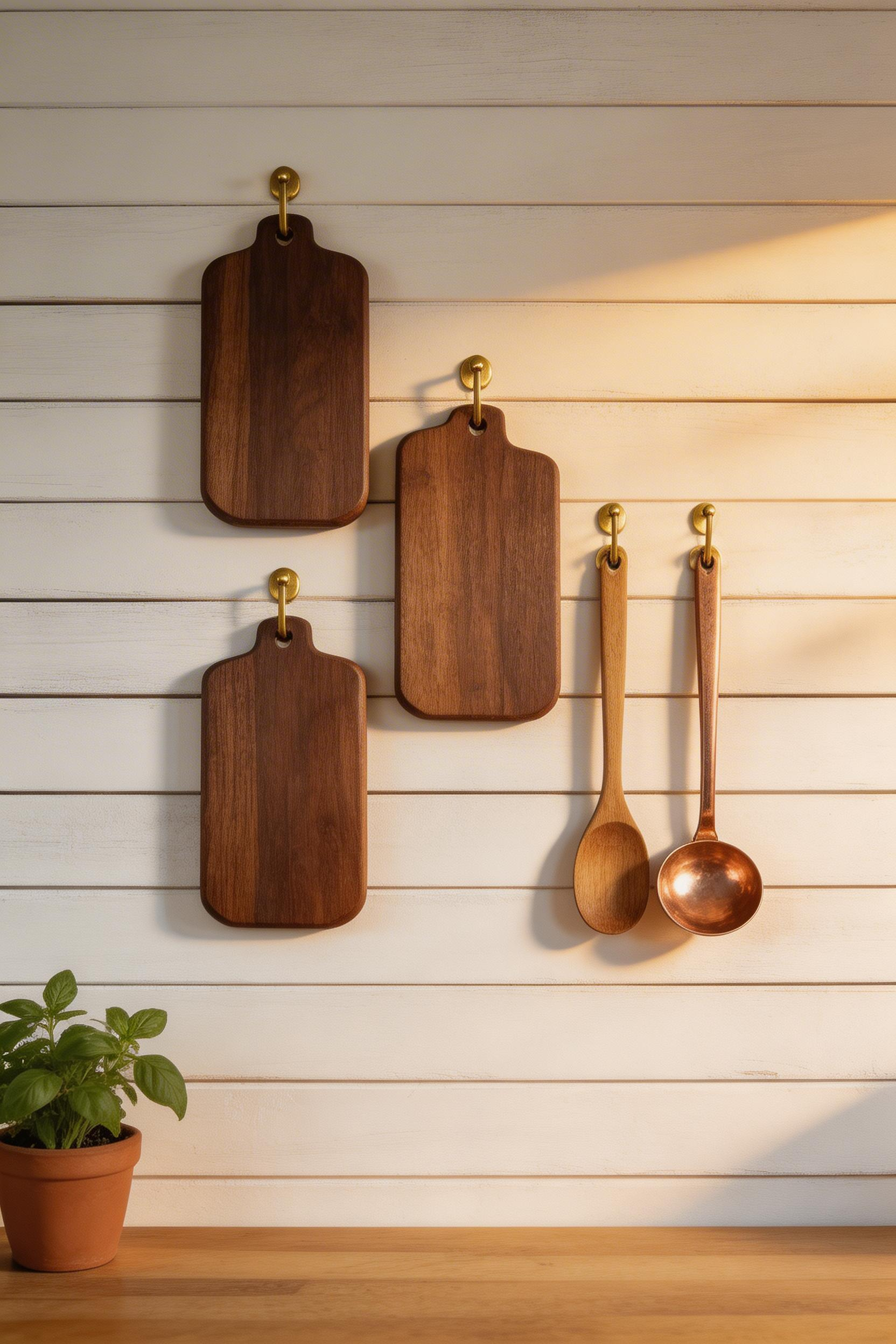
Start with three boards at different sizes — roughly 12″, 16″, and 20″ work well together. Mix shapes if you have them: one rectangle, one round, one paddle-style. A set of six brass wall hooks ($18.99 on Amazon) provides the mounting hardware and warm metal tone. Rub boards with food-safe mineral oil before hanging — it deepens the wood color and keeps them use-ready. Command strips handle boards under four pounds; heavier pieces need proper wall anchors.
Lay everything on the floor first. With irregular shapes — boards, spoons, ladles — the spacing between pieces matters as much as the pieces themselves. Aim for 2 to 4 inches between the closest edges.
Leave one board on a lower hook at grabbing height. The practicality — guests see you reach for it and use it — turns wall decoration into genuine kitchen character. A kitchen where the wall decor is also in active use is a kitchen that feels lived in, and that quality can’t be faked.
A wood sign is the kitchen wall decor idea with the highest risk-to-reward ratio. Done badly — generic font, tired quote, mass-produced finish — it looks like a chain restaurant bathroom. Done well — specific quote, clean lettering, a finish that matches your kitchen — it adds the one thing that purely visual kitchen wall decor never quite achieves: meaning.
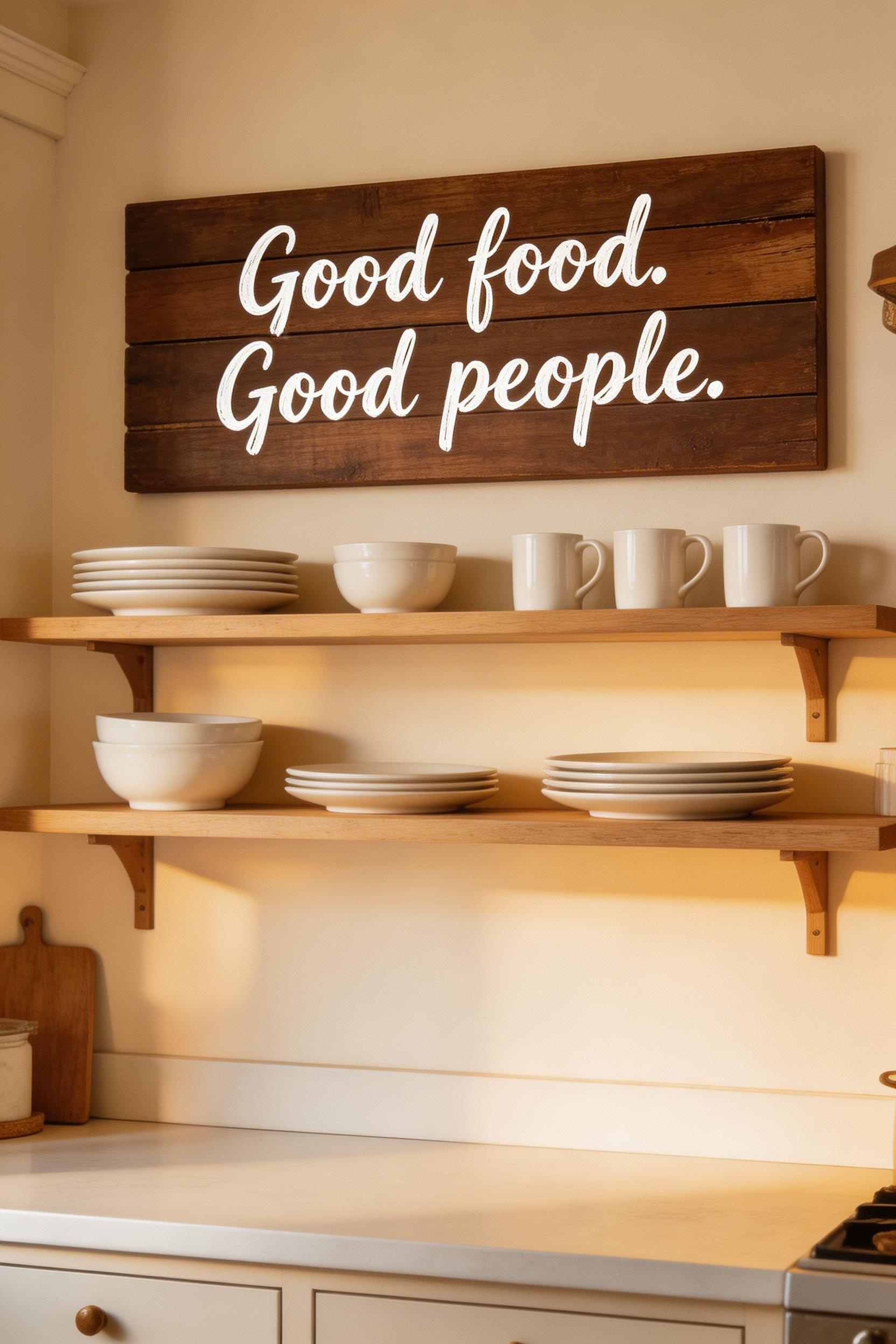
Keep the quote short: under eight words reads clearly from across the kitchen. Stained wood with white painted lettering reads well in most kitchen lighting. Etsy has custom wood sign sellers from $25–$60; many offer reclaimed wood options with more authentic grain than new lumber.
Avoid the quotes that have been on ten thousand kitchen walls before yours. Instead, look for something specific: a line from a recipe your family makes every year, a phrase a parent said while cooking, a dish specific to your heritage. Those personal references are what make a wood sign kitchen wall decor that stays relevant rather than something you grow out of in two years.
If you already own a Cricut Maker, the vinyl-cut-on-wood approach costs under $15 for materials. Without a Cricut, ordering from an Etsy seller typically produces a cleaner result than hand-painting without lettering experience. HomeGoods also carries ready-made wood signs at $14.99–$39.99 in store — the selection rotates, but the value is good when you find the right one.
Peel-and-stick tile panels are the most transformative idea on this list per dollar spent. A standard kitchen backsplash area (roughly 15 square feet) costs $200–$240 in Smart Tiles panels and installs in three to four hours without tools beyond a utility knife and a straightedge. Compare that to real tile: $800–$1,500 for the same area including labor, plus two days of drying time before you can use the kitchen.
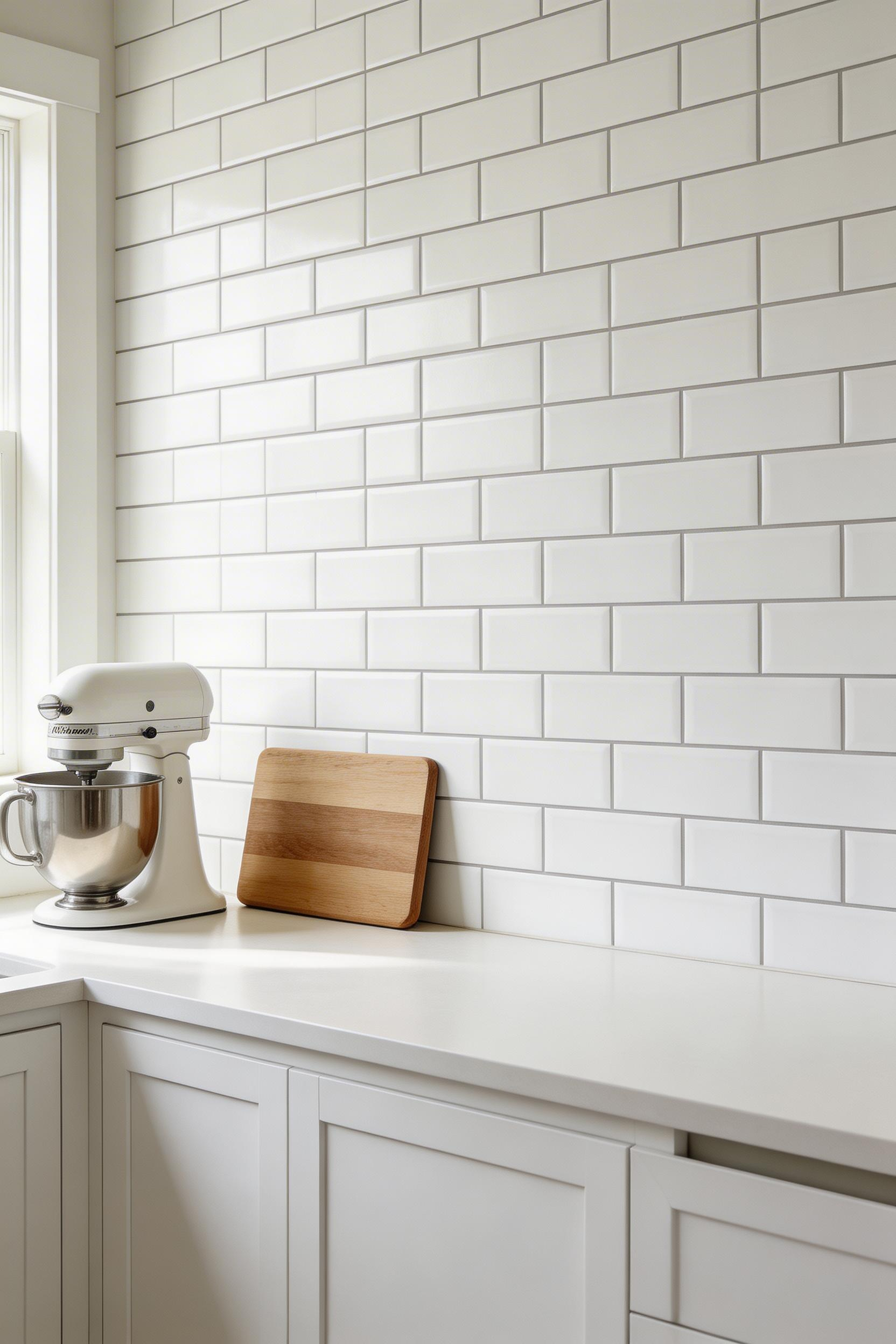
Smart Tiles Milano White panels ($14.99 each, 11.56×9 inches) are the most popular pattern and the one most likely to look like real tile from a normal viewing distance. Aspect Peel & Stick Metal Mosaic sheets ($19.99 each) use an actual metal surface rather than vinyl — they look significantly more premium. For a marble look, Art3d 12×12″ panels ($39.99 for 10) suit modern and transitional kitchens well.
Clean the surface with rubbing alcohol and let it dry 15 to 20 minutes. On surfaces with old grease deposits, clean twice. That prep step is the difference between panels that last two years and panels that start peeling at corners within months. Never install over a glossy painted surface without light sanding first.
Score the tile on the front face with a utility knife and a metal straightedge, then snap over a table edge. That technique produces a straight cut edge that butts neatly against cabinets and walls. Scissors and box cutters both leave ragged edges that show on straight-line patterns like subway tile.
After covering eighteen ideas, the most common question I hear is: where do I start? The honest answer is that it depends less on your style than on how you actually use the room.
Look at three things before buying anything: your cabinet finish, your countertop material, and your hardware metal. Those three elements create a palette that almost any kitchen wall decor can be chosen to work with. White cabinets with black hardware: matte black frames, a dark-stained wood sign, or a black pegboard. Natural wood cabinets with brass hardware: copper pot rack, woven baskets, and botanical prints in thin gold frames. The same approach — letting existing finishes guide new choices — works in every room; our small bedroom layout ideas apply the same thinking to a different space.
Before committing to a gallery wall or a full pegboard installation, try the one-piece test. Pick the single item from this list that appeals most to you and hang just that. Live with it for two weeks. If it looks right after two weeks, it’s the right direction — add more pieces in the same style. If it doesn’t, you’ve only made one hole in the wall.
The kitchen is the most functional room in the house. The wall decor should feel as natural as the rest of it. Start with what appeals to you, and build from there. The only wrong choice is the bare wall you’ve been meaning to get around to for three years — so pick one idea and hang it this weekend. Good kitchen wall decor starts the moment you decide the kitchen is worth finishing.