Physical Address
304 North Cardinal St.
Dorchester Center, MA 02124
Physical Address
304 North Cardinal St.
Dorchester Center, MA 02124

Discover 20 expert kitchen cabinet ideas on bespoke joinery, smart storage, and material harmony. Elevate your home with luxury hotel-inspired design principles.
We promise a kitchen that feels less like a workspace and more like a serene, five-star retreat. To achieve this requires mastering the delicate balance between timeless elegance and flawless functionality—a skill honed within the world’s most celebrated luxury hotels and residences. After years spent designing such spaces, I’ve curated the 20 pivotal kitchen cabinet ideas that consistently create an atmosphere of sophisticated comfort. These aren’t fleeting trends destined for obscurity; they are foundational investments in a lifestyle of effortless grace.
This guide is designed to give you an insider’s view, starting with the artisan-level details and material harmonies that define bespoke quality. We’ll then decode the aesthetics of modern luxury, from minimalist frontages to seamlessly integrated appliances—hallmarks of the most tranquil hotel suites. Next, we will connect these ideas to your daily life, exploring how innovations in smart technology and biophilic design can foster well-being. Finally, we’ll explore the advanced expertise required to craft a true legacy kitchen, where every element, down to the hardware placement and waste systems, is executed with uncompromising precision. Consider this your private consultation on transforming your kitchen into an enduring sanctuary.
As a designer specializing in translating the tenets of luxury hospitality to the home, I know that true innovation lies in the details that enhance the human experience. The kitchen is no exception. It should be a place of both creation and calm. In this section, we’ll hear from master artisans and designers whose work I admire, discussing the foundational elements—from joinery to lighting—that elevate cabinetry from mere storage to an architectural statement.
The defining difference between a standard room and a bespoke suite lies in the precision of its execution. The same holds true for your kitchen. We’re not talking about simply adjusting dimensions; we are talking about a conversation between your lifestyle and the artisan’s craft, resulting in cabinetry that fits your life as perfectly as a tailored suit. It’s about commissioning a piece of functional art.
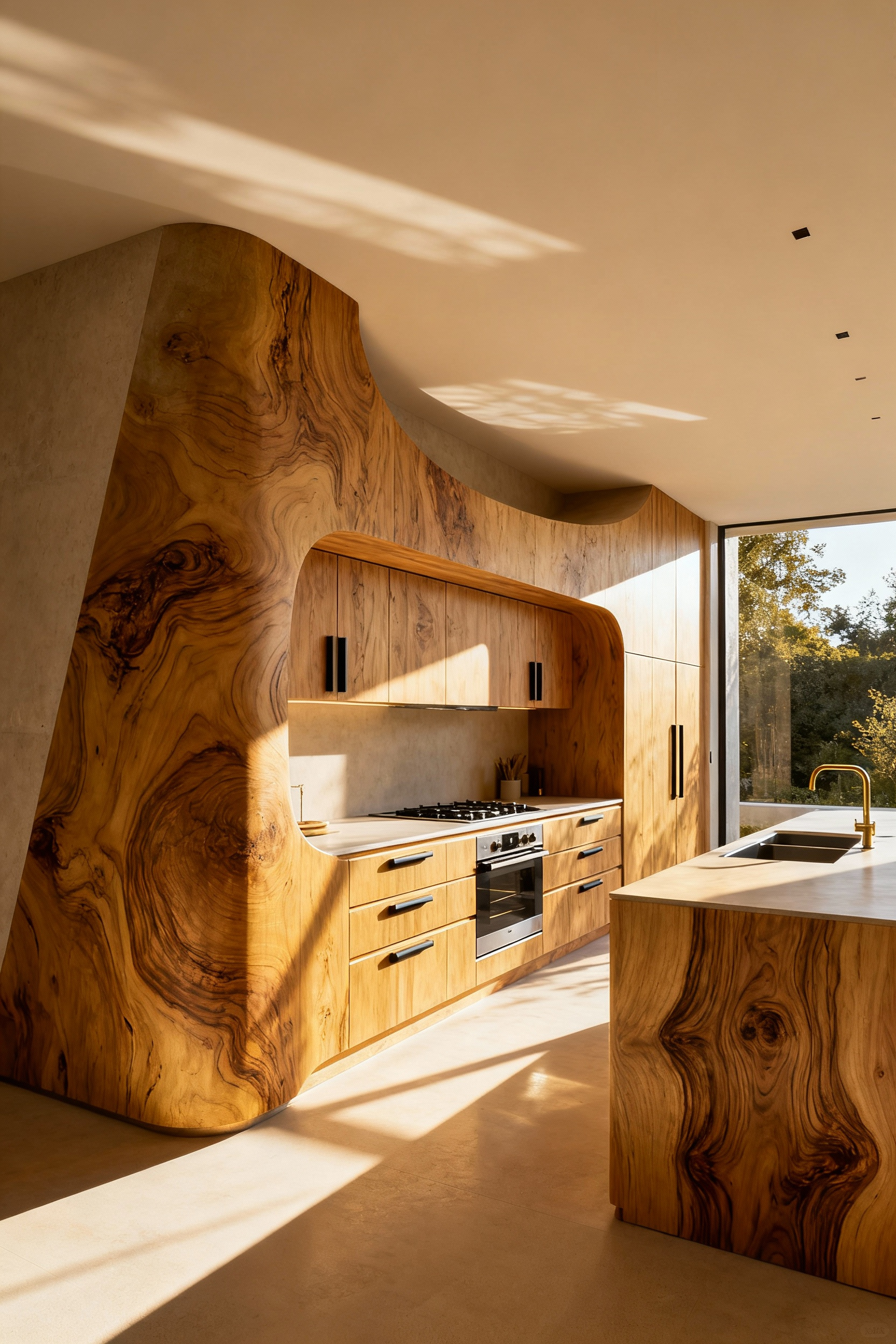
“True bespoke joinery is an immersive process where every curve, every joint, and every panel is considered a bespoke solution,” explains Julian Clarke of Clarke & Sons Cabinet Makers, whose work I’ve followed for years. His firm’s insistence on handcraft and superior timber results in details like dovetailed drawers that whisper luxury every time they glide open. In my hotel-inspired design specialist practice, this is a non-negotiable. The subtle, solid feel of perfectly executed joinery communicates quality without saying a word—it’s the silent foundation of a truly high-end experience.
This meticulous approach unlocks a level of functionality that mass production simply cannot offer. Designer Elara Vance shared a story about creating custom velvet-lined drawers for a client’s collection of antique culinary tools. The kitchen became a gallery, a celebration of the owner’s passion. Think of it this way: a five-star hotel anticipates your needs. Does your kitchen do the same? Bespoke joinery makes it possible, with hidden spice racks, integrated chopping blocks, and concealed appliance garages that make daily rituals feel effortless and elegant.
Walk into the lobby of a grand hotel. What you experience is a symphony of materials—cool stone underfoot, the warmth of a polished wood reception desk, the gleam of bronze accents. This strategic layering of textures is what creates an immersive, memorable space. Your kitchen should evoke that same sensory richness. A single-note design, no matter how expensive the material, will always fall flat.

“The interplay of materials is where a kitchen truly finds its voice,” asserts material innovator Dr. Alistair Finch. He guides designers to consider not just color, but temperature and sheen. Imagine rift-sawn white oak against honed Calacatta marble—a dialogue between warmth and coolness, organic and geologic. This is how you build a space with depth and character. What I tell my clients is to close their eyes and imagine touching the surfaces in their kitchen. The experience should be just as luxurious as the visual.
Designer Anya Sharma beautifully illustrates this by describing a kitchen with dark wood base cabinets, ethereal fluted glass uppers, and a monolithic stone island. Each material amplifies the beauty of the others. It’s an orchestrated flow, not an arbitrary mix. This is a chance to define zones and create visual intrigue. You can pair industrial stainless steel with reclaimed wood or matte lacquer with subtle concrete. The art of harmonizing materiality transforms kitchen cabinet ideas into a multi-dimensional experience, creating a sophisticated environment that engages all the senses.
Lighting is the unsung hero of hospitality design. It crafts moods, directs attention, and makes spaces feel intuitive. In the kitchen, the most sophisticated lighting is often the least visible. Integrated directly within your cabinetry, it serves the dual role of providing perfect task clarity while bathing the space in a warm, ambient glow. It’s the secret to a kitchen that works beautifully and feels incredibly inviting after dark.
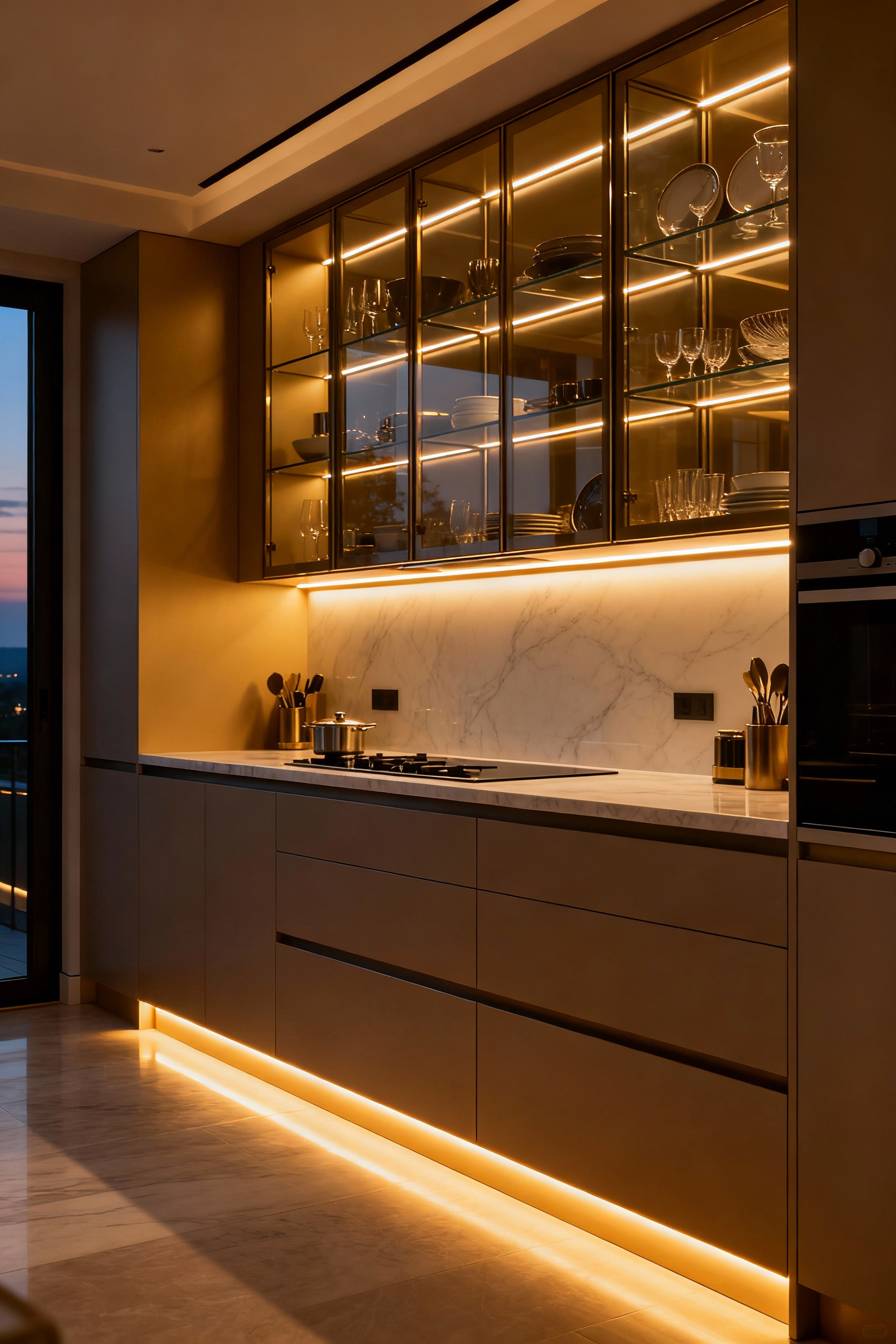
“Integrated lighting is no longer an afterthought; it’s an indispensable layer of the architectural design,” states lighting designer Leo Maxwell. He speaks of using slim LED strips with a high color rendering index (CRI), ensuring food looks as vibrant as it should. Under-cabinet lighting is essential for prep work, while lighting inside glass-front cabinets turns your glassware into a curated display. This is a technique I use constantly—it brings a sense of life and warmth to the kitchen, preventing it from feeling like a cold, utilitarian space.
Interior designer Olivia Beaumont notes the profound impact on clients. Recessed LEDs in a pantry mean no more fumbling in the dark. A motion-activated toe-kick light offers a soft, guiding glow for a late-night glass of water. It’s this kind of thoughtful detail—lighting as wayfinding, lighting as mood—that defines a luxury experience. With modern systems, you can dim the lights for entertaining or program scenes for cooking, making your kitchen responsive to your life. This subtle but powerful decision elevates simple kitchen cabinet ideas into luminous, functional masterpieces.
Hardware is the jewelry of your kitchen—the final, tactile detail that can define the entire aesthetic. To me, it’s like the custom door handle on a hotel suite; it’s the first physical interaction you have with the space, and its quality sets an immediate expectation. Choosing statement hardware is an opportunity to add a layer of sculptural, architectural impact that feels bespoke and deeply considered.
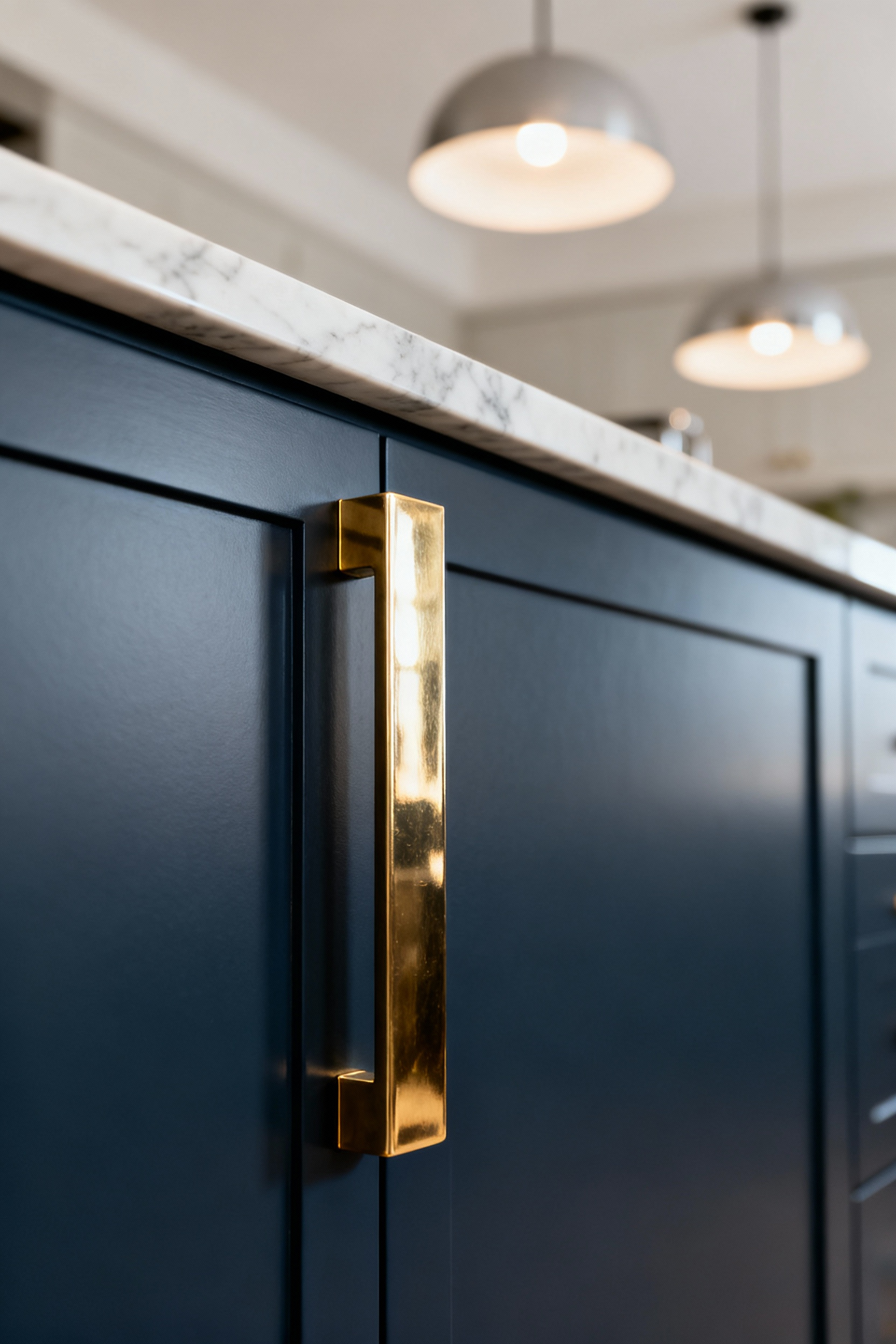
“Hardware is the final flourish, the tactile encounter that defines interaction with cabinetry,” explains Vivienne Cole, of the bespoke hardware firm Cole & Knox. She speaks of the “moment of contact”—the satisfying weight of solid, hand-patinated brass that cannot be faked. This is what I’ve seen time and again: when you invest in quality hardware, you invest in the daily experience of using your kitchen. It feels substantial, permanent.
Stylist Marcus Thorne offers a brilliant contrast: in a dramatic London kitchen, oversized steel pulls became bold vertical accents. In a minimalist Nordic kitchen, invisible push-to-open mechanisms allowed the cabinetry’s clean lines to remain the focus. The hardware can either amplify or whisper. When selecting your pieces, think about their proportion, their finish, and how they feel in your hand. This is a chance to make a choice that transcends trends, one that serves as a constant, tactile reminder of quality and meticulous design.
Beyond beautiful surfaces, the quietest luxury is often that of effortless function. A truly high-end kitchen operates like the best-trained hotel staff—anticipating your every move, making every task feel intuitive and graceful. Here, we delve into the ergonomic science that transforms a conventional layout into an extraordinarily efficient and accessible space, proving that ultimate comfort is born from intelligent design.
In a bespoke kitchen, luxury is not just seen; it’s felt in the fluid, intuitive movement through the space. The highest form of design anticipates your needs, creating a seamless workflow that feels less like a series of chores and more like a graceful dance. This commitment to ergonomic excellence is what elevates kitchen cabinet ideas from static boxes to a dynamic system built entirely around you.
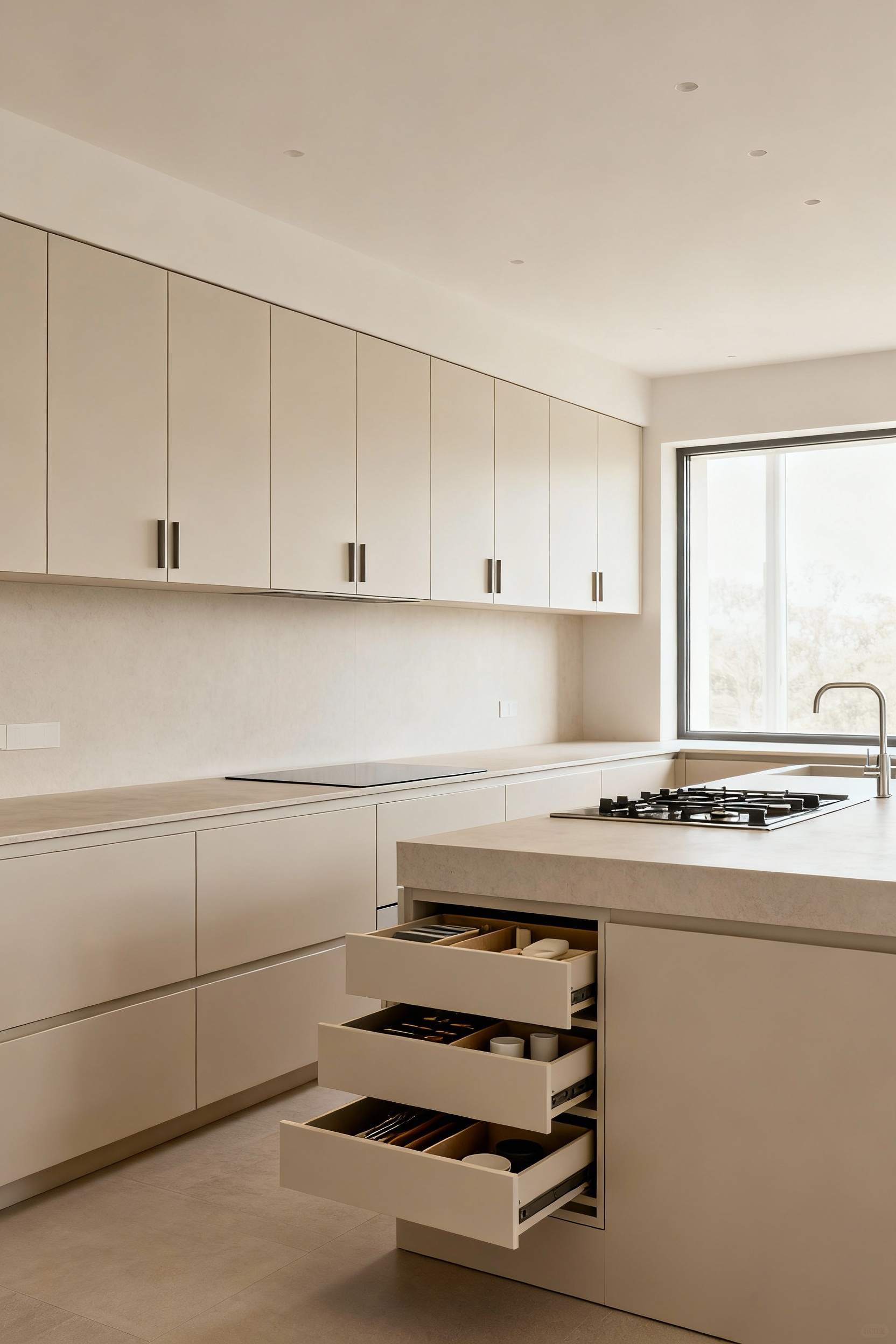
“Our initial conversations aren’t about door styles; they’re about the ‘dance’ in the kitchen,” explains architect Sarah Lattanzio, known for her work on stunning New York penthouses. She charts a client’s daily movements to create dedicated work zones—a baking station with a pull-out mixer shelf or a coffee bar where everything is within arm’s reach. Years of professional experience in luxury aesthetics have taught me that this is the essence of hospitality-level design: to remove all points of friction from the user’s experience. Your kitchen should feel like it’s working for you.
This principle extends to making the space accessible for everyone. David Chang of Horizon Home Interiors champions kitchen cabinet ideas rooted in universal design. “Accessibility shouldn’t feel like an afterthought; it should be integrated brilliance,” he remarks. Think of motorized upper cabinets that descend with a touch, or deep, full-extension drawers that eliminate the need to stoop and search. This isn’t just about meeting a code; it’s about crafting a space that is genuinely comfortable and empowering for a lifetime of use. It is the ultimate expression of thoughtful, enduring luxury.
A kitchen renovation is a rare chance to create a space that is a true reflection of your personal taste. It’s about more than just function; it’s about crafting an atmosphere. Here, we delve into the core philosophies of contemporary design, offering an insider’s look at the principles that define a truly high-end aesthetic.
In the world of luxury design, a powerful shift towards quiet elegance has taken hold. The minimalist ethos is not about emptiness; it’s about creating a sense of tranquility by eliminating visual noise. In the kitchen, this translates to cabinet frontages that are pure, seamless, and architectural. It’s a design philosophy that champions the beauty of form and material over ornamentation.
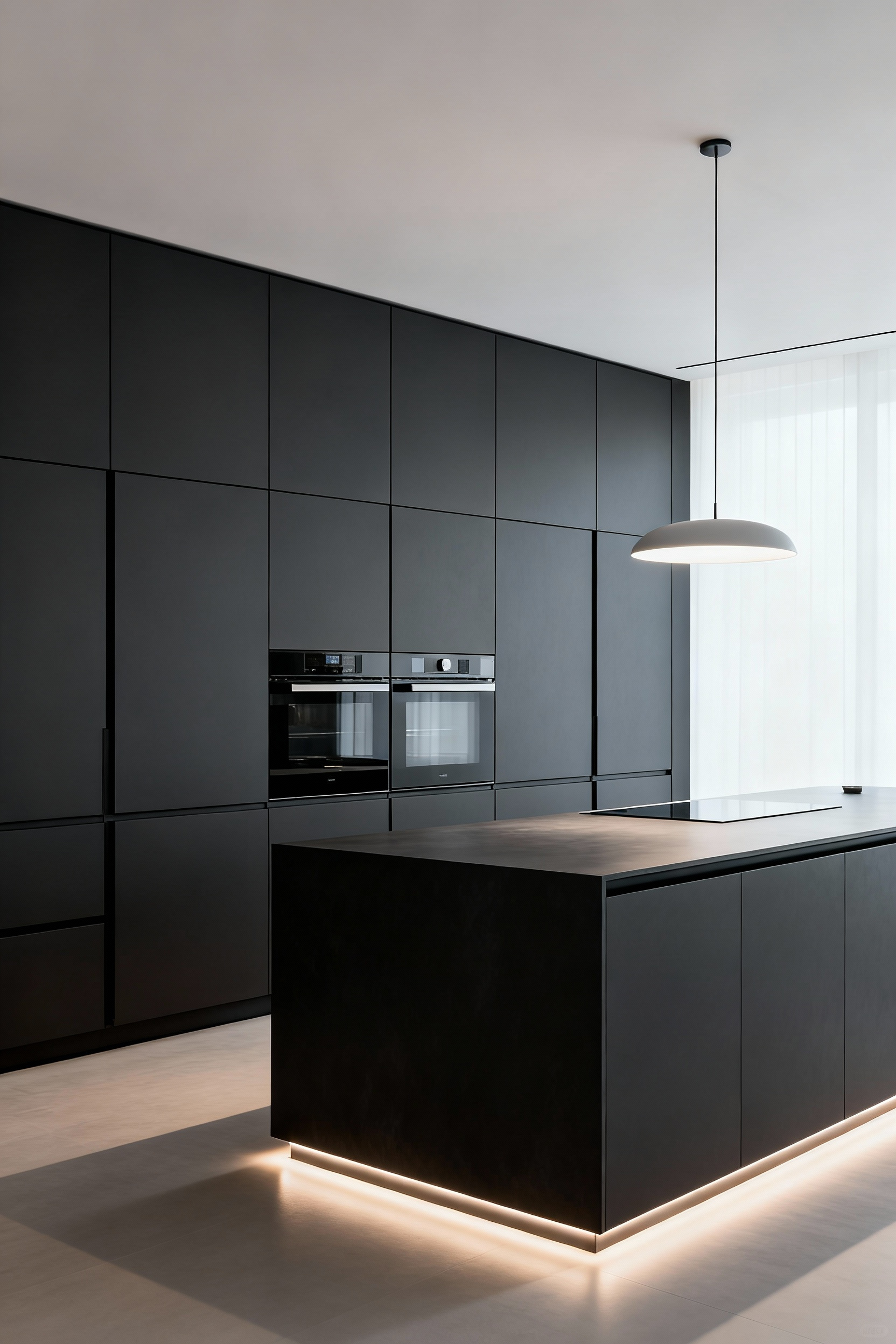
“At Studio Lumina, our ethos is built around the belief that true luxury resides in tranquility,” explains Principal Designer Isabella Rossi. Her firm achieves this with handleless designs—using integrated finger pulls or touch-to-open mechanisms—that allow cabinets to recede, creating a monolithic, calming presence. What I always tell my clients is that visual quiet is the ultimate luxury. In a world of constant overstimulation, a serene, uncluttered space is a genuine sanctuary.
This philosophy demands incredible precision. Without the distraction of hardware, the focus shifts entirely to the quality of the finish and the perfection of the alignment. Architect Thomas Sterling notes that the material itself becomes the primary tactile experience. A matte finish that absorbs light can feel grounding and serene, while the cool, smooth touch of a perfectly lacquered panel offers a different kind of minimalist pleasure. These are the subtle details that elevate simple kitchen cabinet ideas from basic to breathtaking.
The most sophisticated kitchens often feel more like finely appointed living spaces than utilitarian work zones. A key strategy to achieve this seamless, residential feel is concealing appliances behind custom integrated paneling. This isn’t just about hiding a refrigerator; it’s about transforming a wall of functional necessities into an uninterrupted architectural statement.
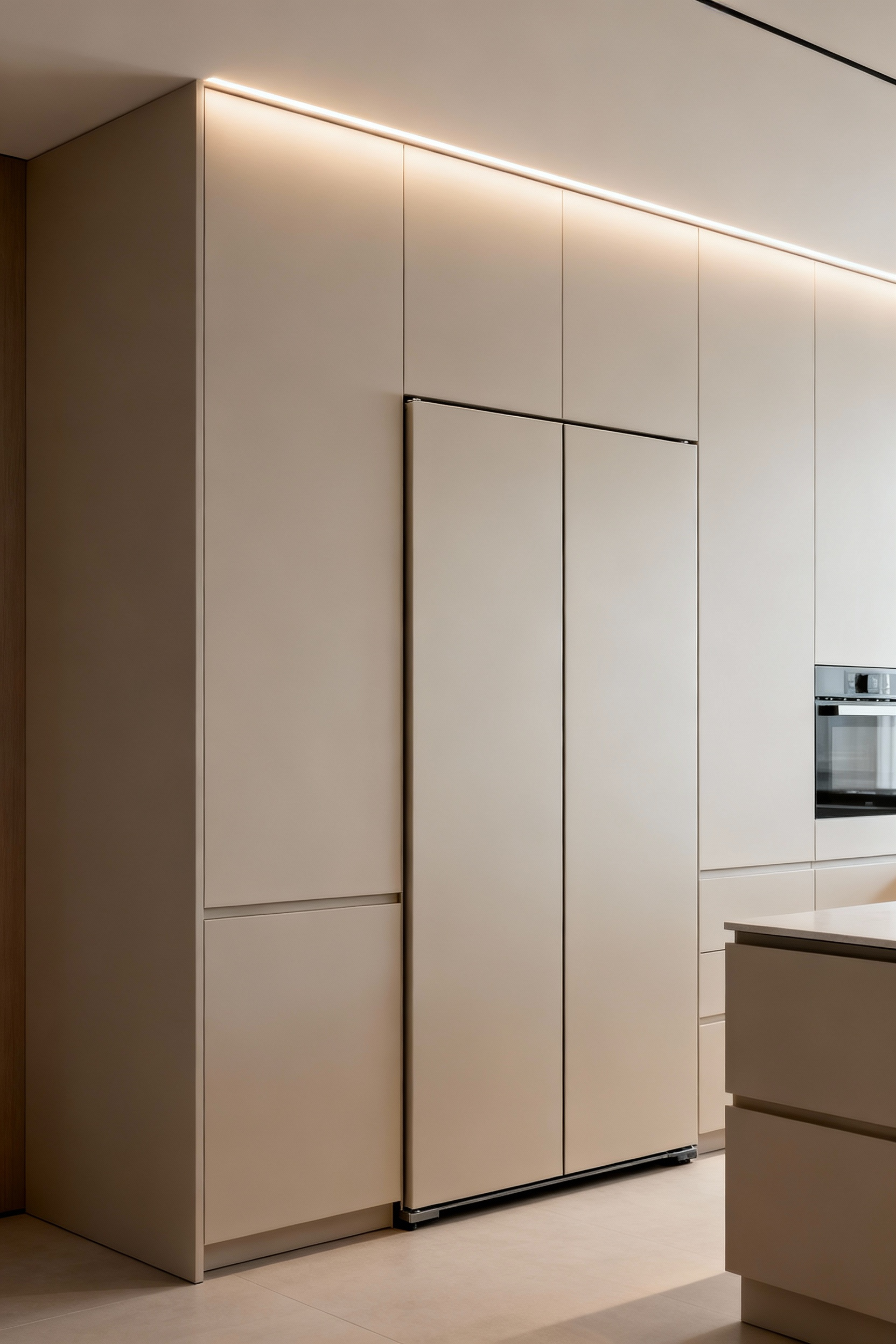
“In our projects…integrated appliance paneling is non-negotiable for achieving a truly high-end finish,” states Julian Thorne of Studio Lumina. By matching appliance fronts perfectly to the surrounding cabinetry, you erase the visual clutter of stainless steel, black glass, and various brand logos. The kitchen becomes a cohesive and tranquil whole. From my work in luxury hotel aesthetics, this is a core principle. A suite’s kitchenette should feel elegant and integrated, not like a small appliance showroom.
Of course, this requires meticulous planning and collaboration between your designer, cabinet maker, and appliance supplier. “The challenge…lies in achieving flawless alignment and functionality,” explains millworker Clara Bennett. The panels must be engineered to handle the weight and swing of a refrigerator door without compromising the perfect, flush fit. While it’s a technical feat, the aesthetic reward is immense. It’s a definitive hallmark of sophisticated design, representing a commitment to an uninterrupted, serene visual experience.
Corner cabinets have long been the awkward, unresolved puzzle of kitchen design—often a black hole where pots and pans go to be forgotten. But in a well-conceived kitchen, there is no such thing as wasted space. Modern engineering has transformed these challenging corners into zones of incredible efficiency, all while maintaining the seamless visual flow of the cabinetry line.
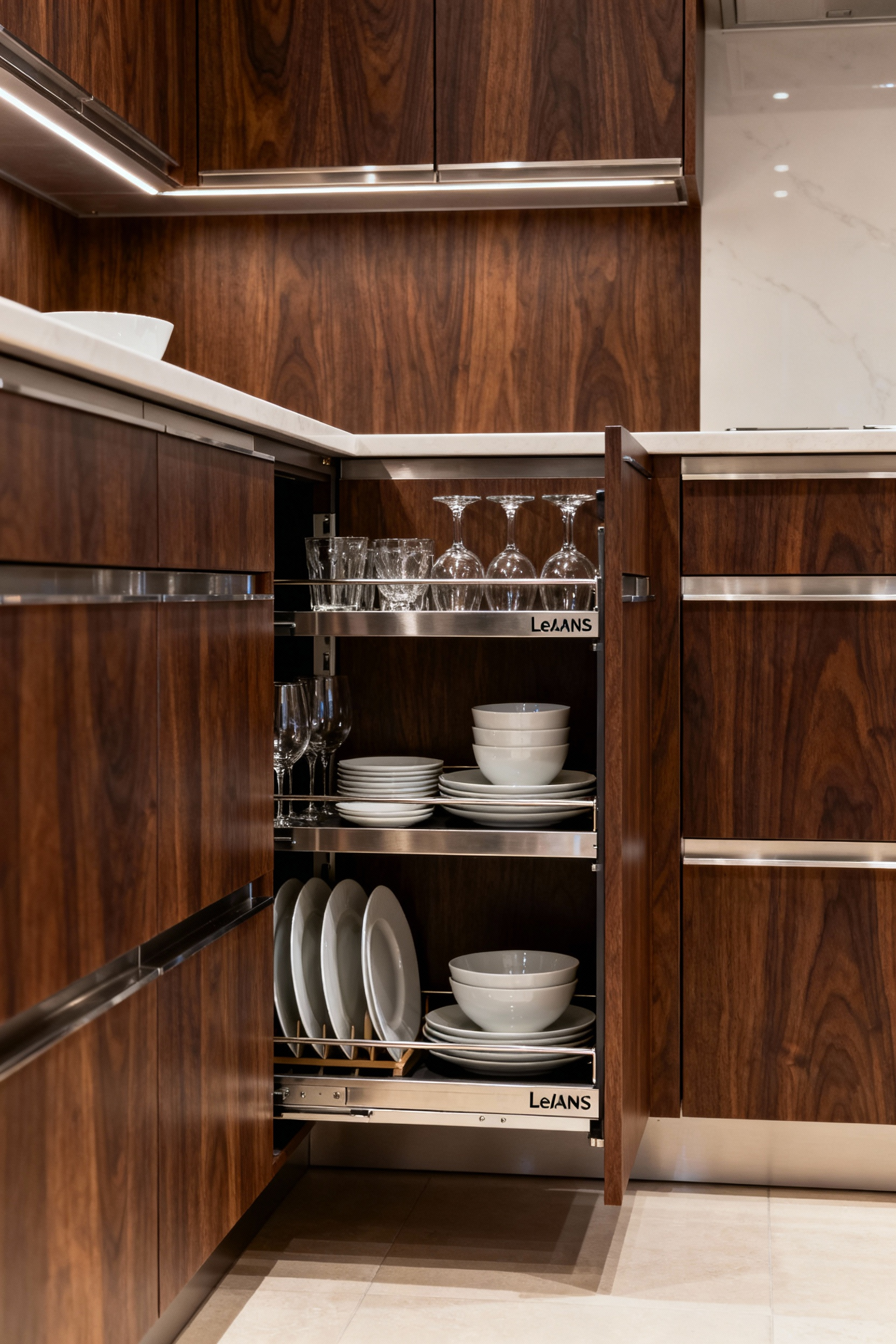
“The corner cabinet no longer has to be a Bermuda Triangle for kitchenware,” asserts Liam O’Connell of Kitch Innovations. He points to brilliant hardware like the ‘LeMans’ pull-out system, where kidney-shaped shelves pivot and glide completely out of the cabinet, bringing everything into easy reach. In luxury hotel design, every square inch must be thoughtfully planned for a frictionless guest experience. Applying this discipline to your kitchen corners unlocks a surprising amount of highly usable storage.
From a design perspective, it’s just as important to handle the exterior with grace. “The exterior design of corner cabinets must maintain the kitchen’s visual rhythm,” explains interior architect Sarah Chen. You can achieve this with a continuous L-shaped door or a blind corner cabinet that visually disappears into the adjacent run. The goal is to avoid a clunky, chopped-up look that breaks the clean line. By marrying innovative interior hardware with intelligent exterior design, you can turn a former problem area into a perfect example of thoughtful, high-performance kitchen planning.
The finish of your cabinetry is the single most dominant element of your kitchen’s aesthetic. It dictates not just the color, but the texture, the way it reflects light, and the overall perception of luxury. Understanding the distinct personalities of lacquer, veneer, and solid wood is essential to making a choice that truly aligns with your design vision. This is where kitchen cabinet ideas come to life.
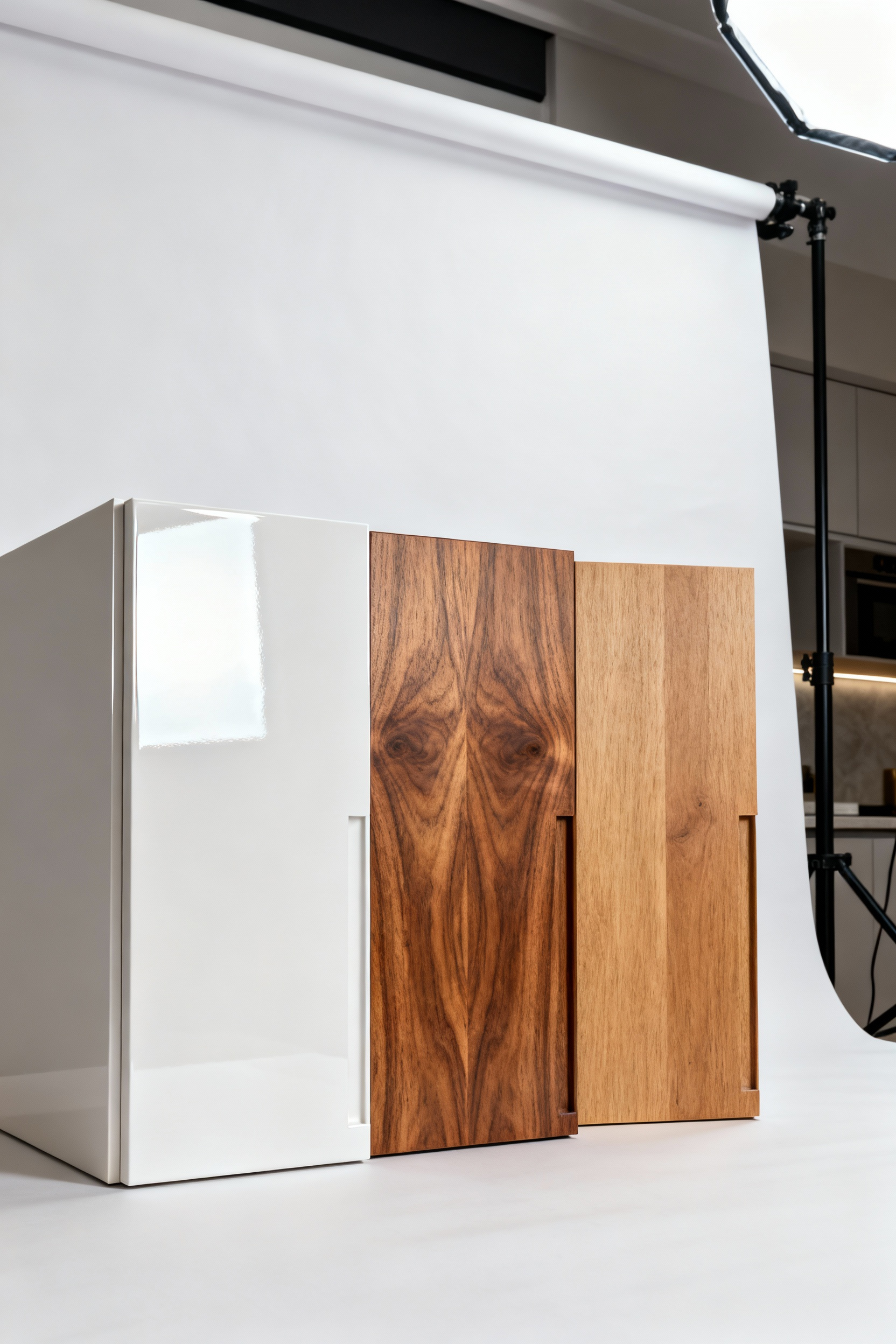
“Lacquer…offers an unparalleled level of luminosity and a profoundly modern aesthetic,” states finishes specialist Elena Petrova. A high-gloss lacquer, built up in many meticulous layers, creates a deep, glass-like surface that makes a powerful statement. It’s dramatic and sleek. What I’ve seen in the most cutting-edge hotel bars and suites is that a perfect lacquer finish feels impossibly smooth and reflects light in a way that energizes the entire space.
In contrast, master cabinetmaker Marcus Blackwood speaks to the “organic elegance” of wood. Solid wood offers timeless durability and a character that deepens with age, while high-quality veneer allows for stunning, consistent grain patterns over large surfaces with enhanced stability. Each material has its place. Lacquer is for bold, contemporary drama. Wood brings warmth and authenticity. The art is in selecting the material that not only looks right but feels right for the story your home is trying to tell.
As we venture beyond the visible surfaces, we discover that the soul of a modern luxury kitchen lies within its interior organization. The true genius is not just in how the kitchen looks, but in how it feels to use—the silent, intuitive order that makes every action effortless. Here, we reveal advanced strategies for creating highly personalized storage that anticipates your needs.
In a high-end kitchen, the concept of luxury extends deep inside the cabinets. We move beyond simple shelves to create a bespoke “inner architecture”—a meticulously planned ecosystem that cradles every utensil, pot, and spice jar in its logical home. These intelligent kitchen cabinet ideas transform daily routines into experiences of effortless grace and order.
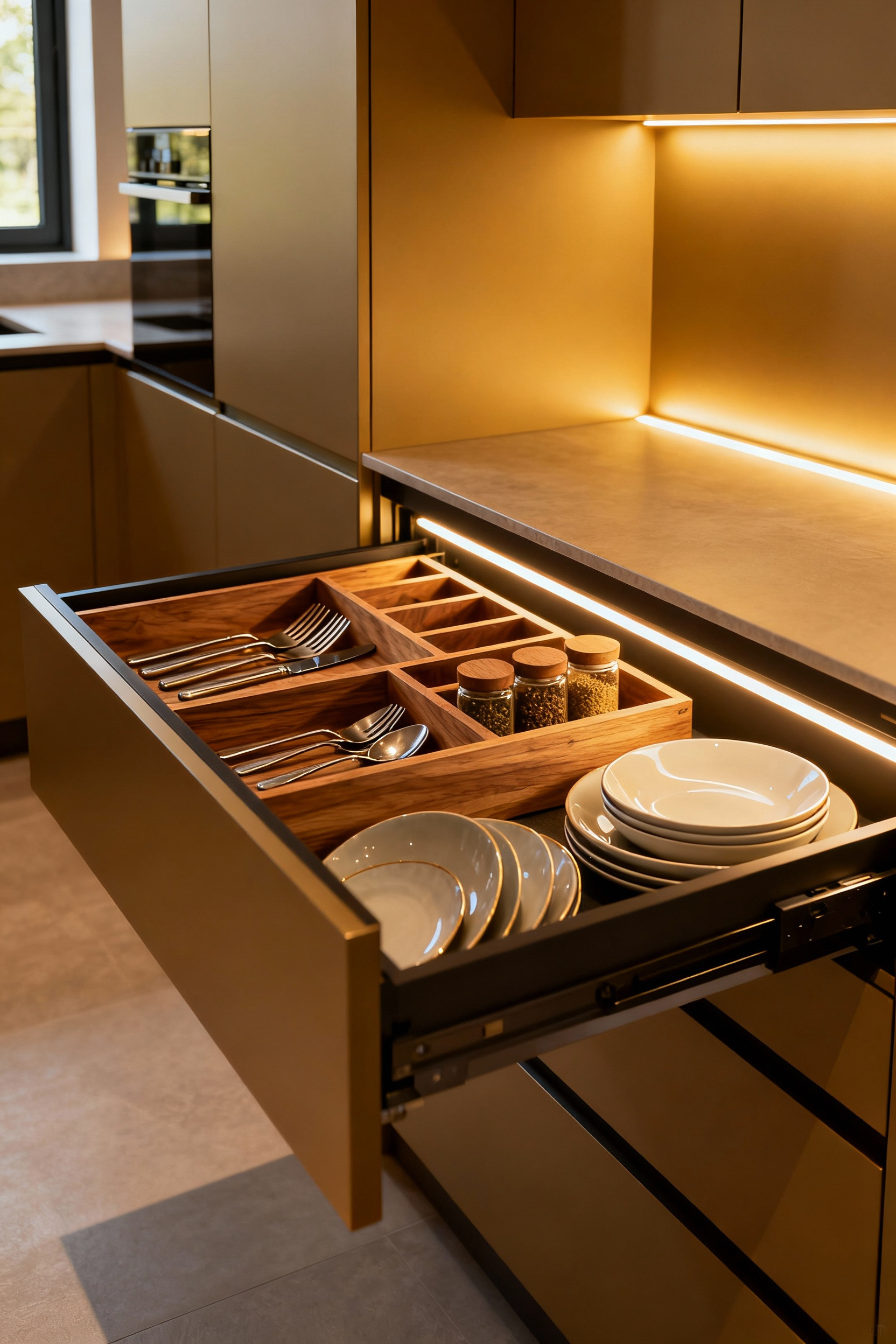
“A kitchen’s true efficiency…is measured not by volume, a bit by how elegantly and intuitively it supports daily routines,” says designer Isabelle Dubois. Her work focuses on creating tailored solutions: custom-fit cutlery dividers, pull-out pantries with adjustable tiers, and drawers that glide open with a silent, soft-close motion. This reminds me of the impeccable service at a fine hotel, where everything is anticipated. Having your luggage unpacked into a perfectly organized closet is a small luxury; having your entire kitchen organized this way is a daily one.
James Carmichael takes this a step further by integrating technology, describing deep, illuminated pantry pull-outs that activate with a touch sensor, revealing the contents at a glance. Think of concealed charging stations for electronics, keeping countertops free of wire clutter, or specialized wine storage. This is about commissioning a system that enhances efficiency, reduces stress, and preserves the calm, sophisticated aesthetic of your kitchen. It is an investment in a more organized, and therefore more serene, way of life.
As we aspire to create kitchens that are more than just functional rooms, we must weave together the timeless principles of good design with the innovations that will shape how we live tomorrow. This section bridges that gap, exploring how to bring the serenity of nature indoors and how technology can create an intuitive, responsive environment—key ingredients for a kitchen that is truly built for the future.
In our increasingly digital world, there’s a deep-seated human need to connect with nature. This is the core of biophilic design, and it’s profoundly influencing how we create our most personal spaces. Bringing natural elements into your kitchen cabinetry isn’t about simply adding a plant; it’s about infusing the room with the textures, patterns, and colors of the natural world to foster a sense of calm and well-being.
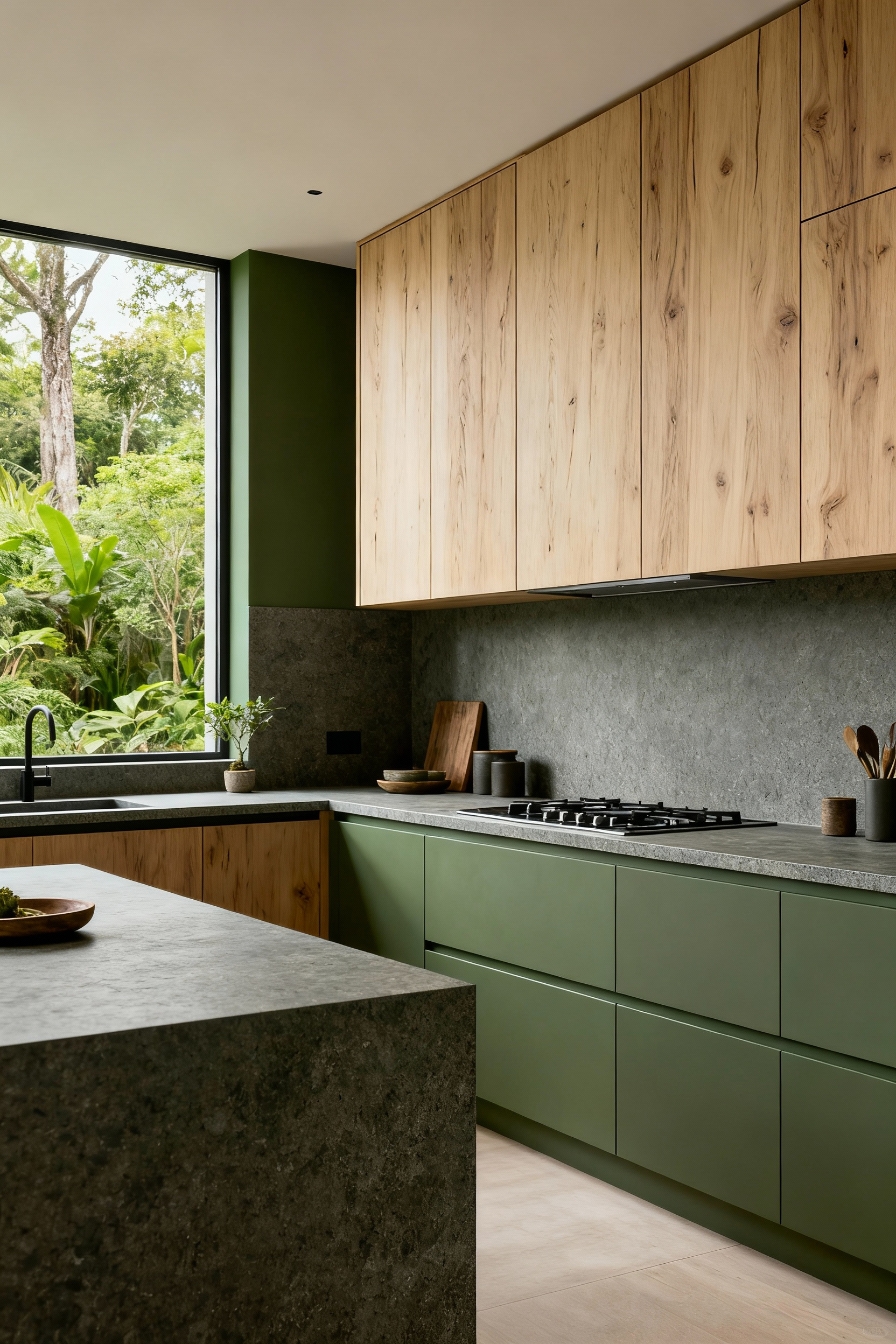
“The true genius of biophilic design in cabinetry lies in its subtle yet profound ability to soothe the senses,” notes interior architect Elena Petrov. It’s a design philosophy that elevates kitchen cabinet ideas beyond sterile utility into something that actively nurtures you. The best luxury resorts are masters of this, blurring the lines between indoor and outdoor spaces to create an immersive, restorative experience. You can bring that same feeling home.
Think of cabinetry crafted from sustainably sourced oak or walnut, their unique grains celebrated rather than concealed. Imagine doors finished in earthy palettes—sage green, deep sea blue, or soft terracotta—that evoke a natural landscape. Dr. Liam Chen, an expert in environmental psychology, confirms that these connections to nature can measurably reduce stress. By embracing organic forms and textures, your kitchen becomes more than a place to cook; it becomes a sanctuary.
The future of luxury is one of invisible technology—seamless, intuitive, and designed to simplify life without adding complexity. This ethos is now transforming kitchen cabinetry. We are moving beyond static storage boxes to dynamic systems that anticipate your needs, making the kitchen a more responsive and intelligent part of your home.
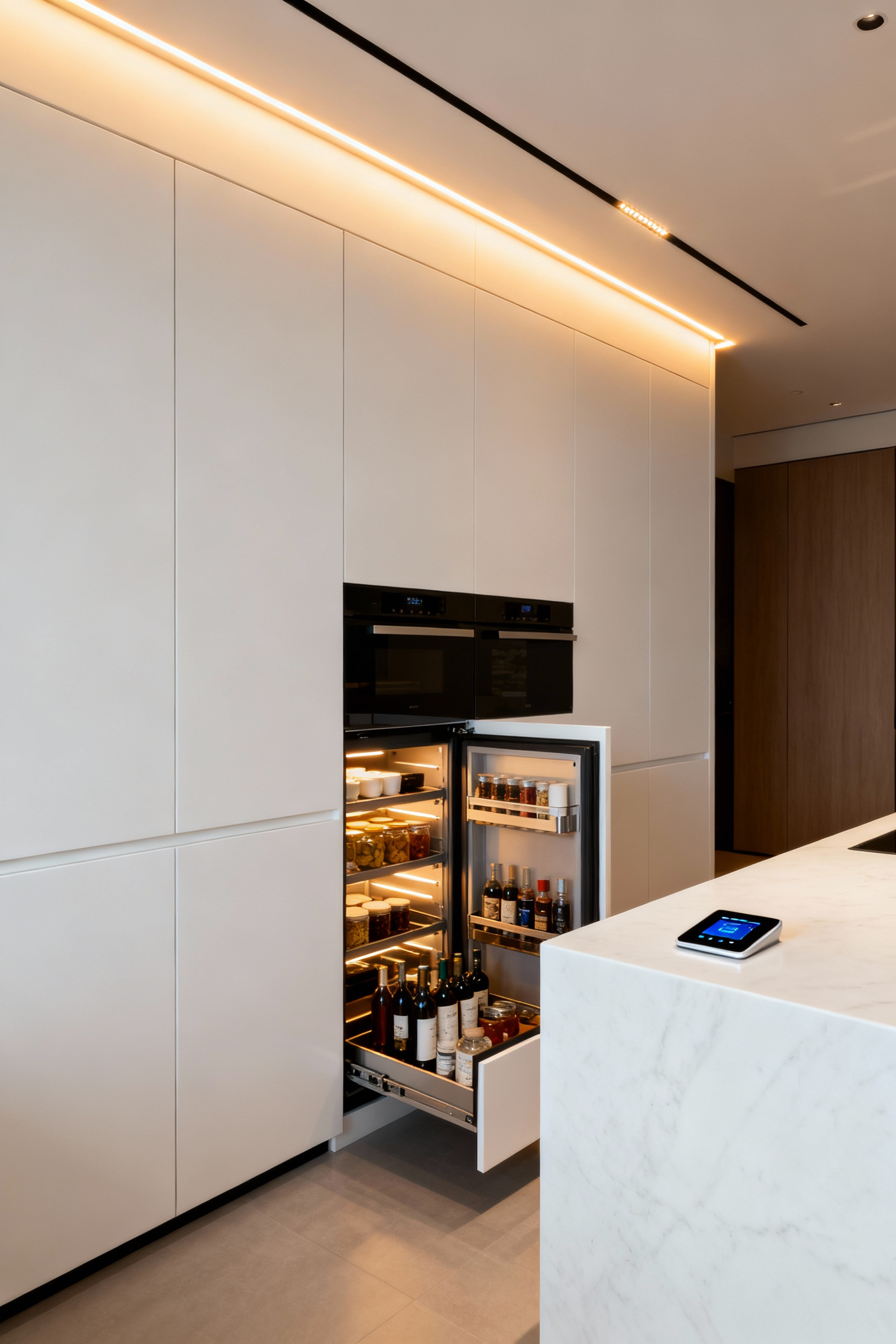
“The future of kitchen cabinet ideas is intrinsically linked with intelligent automation,” declares Isabella Rossi, a designer specializing in smart home integration. Think of drawers that open with a gentle touch, especially helpful when your hands are full, or lighting that illuminates a cabinet’s interior the moment you open the door. What really excites me is how this mirrors the evolution of the modern hotel room, where lighting, temperature, and shades all respond to you with effortless grace.
Engineer Marc Dubois emphasizes that the best technology disappears completely, feeling “almost instinctual.” This could mean motorized upper cabinets that lower for easy access, a charging station discreetly integrated inside a drawer to keep counters clear, or touchless waste bins. These aren’t gadgets for the sake of it. They are thoughtful innovations designed to remove small points of friction from your day, elevating the entire experience of being in your kitchen to a new level of ease and sophistication.
In an era of perfect, machine-made surfaces, the subtle texture of a hand-painted finish stands apart. It carries a sense of history, personality, and human touch that cannot be replicated. Choosing a hand-painted finish for your kitchen cabinet ideas is an investment in timeless artisanship—a choice that values character and soul over flawless uniformity.
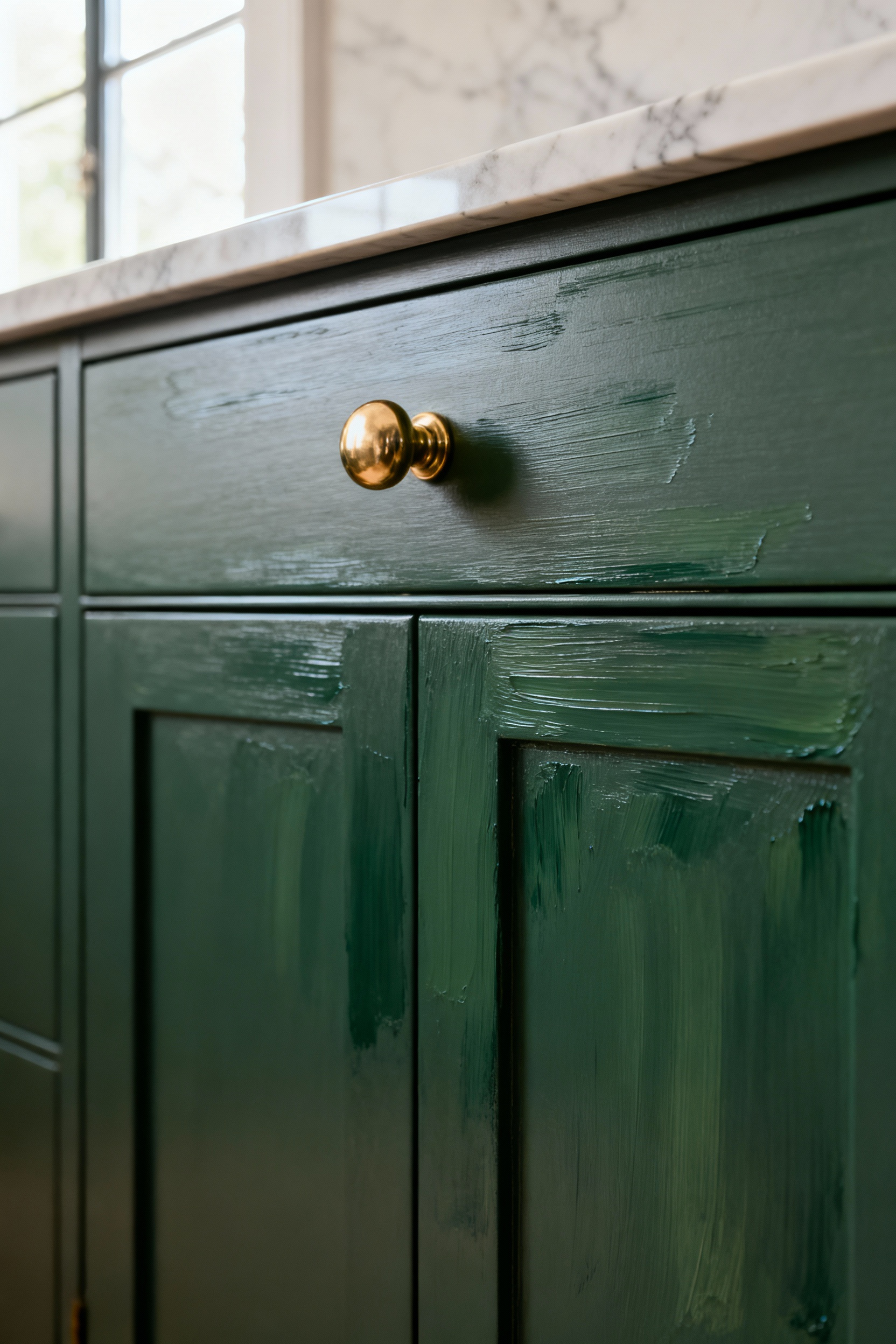
“Each brushstroke contributes to a nuanced texture, a subtle play of light that imbues the cabinetry with life and personality,” observes Master Cabinet Maker Alistair Finch. This tactile quality is something I’ve always admired in historic grand hotels, where centuries-old paneling has a depth and softness that tells a story. A hand-painted finish brings that same warmth and authenticity into your home.
Beyond its unique beauty, this finish offers remarkable longevity. “Hand-painted…finishes age gracefully…and crucially, they are incredibly easy to touch up,” explains designer Vivienne Laurent. A small nick or scratch can be repaired invisibly, and years down the line, the entire kitchen can be repainted in a new color without the massive expense and disruption of a full replacement. It is a sustainable luxury—a choice that allows your kitchen to evolve with you, ensuring it remains a focal point of refined beauty for decades.
The fundamental structure of your cabinets sets the entire aesthetic tone for your kitchen. Understanding the difference between European-style frameless construction and traditional framed construction is like choosing the architectural language your kitchen will speak. It’s a foundational decision that impacts both the look and the everyday utility of the space.

“The core distinction…lies in the face frame,” clarifies Lars Jensen of ScandiForm Kitchens. Traditional framed cabinets have a solid wood frame on the front of the cabinet box, to which the doors are attached. Frameless cabinetry, dominant in European design, eliminates this frame entirely, attaching doors directly to the cabinet box. From my professional experience, choosing between them is like deciding between the charm of a classic London hotel with detailed moldings and the sleek minimalism of a contemporary hotel in Tokyo.
Frameless, or “full access,” cabinetry offers a clean, monolithic appearance perfect for modern kitchen cabinet ideas. The minimal gaps between doors create a seamless look and provide slightly more interior storage space. Framed cabinetry, in contrast, offers more stylistic versatility. With inset doors that sit perfectly flush inside the frame, it showcases exquisite craftsmanship and offers a timeless, classic feel. The choice is a design statement: do you prefer seamless modernity or detailed tradition?
As we delve into the heart of enduring design, we see that the most successful kitchens are those where thoughtful planning translates into long-term value. This isn’t just about creating a beautiful space for today; it’s about making strategic investments that enrich your daily life and become an integral part of your home’s legacy. Understanding this connection is the key to creating a kitchen that will stand the test of time.
In any significant design project, the conversation inevitably turns to cost. But for a discerning homeowner, the question shouldn’t just be “What is the expense?” but rather, “What is the return?” I firmly believe that high-quality, custom cabinetry is one of the most intelligent investments you can make in your home. It moves beyond being a mere line item to become an asset that enhances both your daily life and your property’s enduring value.
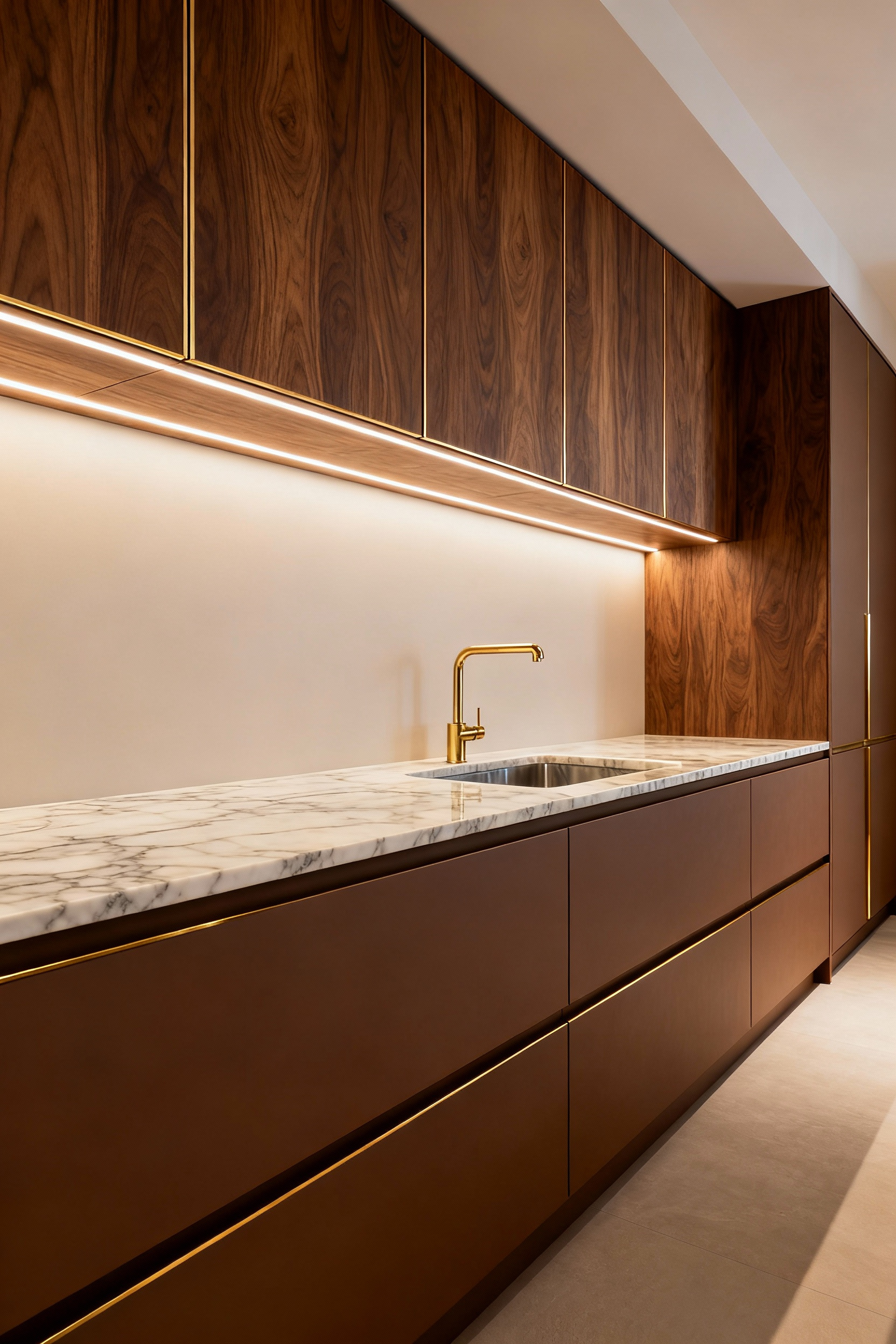
“Bespoke cabinetry offers precision—a fundamental difference that pays dividends daily,” says architect Eleanor Vance. It’s about crafting an ergonomic environment perfectly tailored to your cooking style and your collection of tools. This intuitive functionality, this seamless flow, is an investment in your own well-being. This is the core philosophy of hospitality: a well-designed space should make you feel cared for. Custom cabinetry brings that level of personal attention into your home.
From a purely financial standpoint, the return is clear. “High-end custom…cabinetry…don’t just furnish a kitchen; they significantly fortify its valuation,” asserts property specialist Marcus Thorne. A kitchen with expertly crafted custom millwork signals a level of quality and care that resonates deeply with sophisticated buyers. It speaks a language of permanence and refinement that elevates the perception of the entire home. It is an investment that pays you back every day in pleasure and convenience, and again in tangible equity down the line.
Now we move beyond the fundamentals into the realm of true mastery. Crafting a legacy kitchen—one that is as beautiful and functional in twenty years as it is today—requires an obsessive attention to detail. This is where we discuss the nuanced decisions that separate a good kitchen from an unforgettable one, creating a space that is a testament to bespoke luxury and refined living.
The placement of a simple knob or pull can make the difference between an irritating daily interaction and a moment of seamless grace. This is a detail that is often overlooked, but it is profoundly important. Hardware is where your hand meets the kitchen, and its placement must be guided by both perfect ergonomics and a sophisticated understanding of visual rhythm.
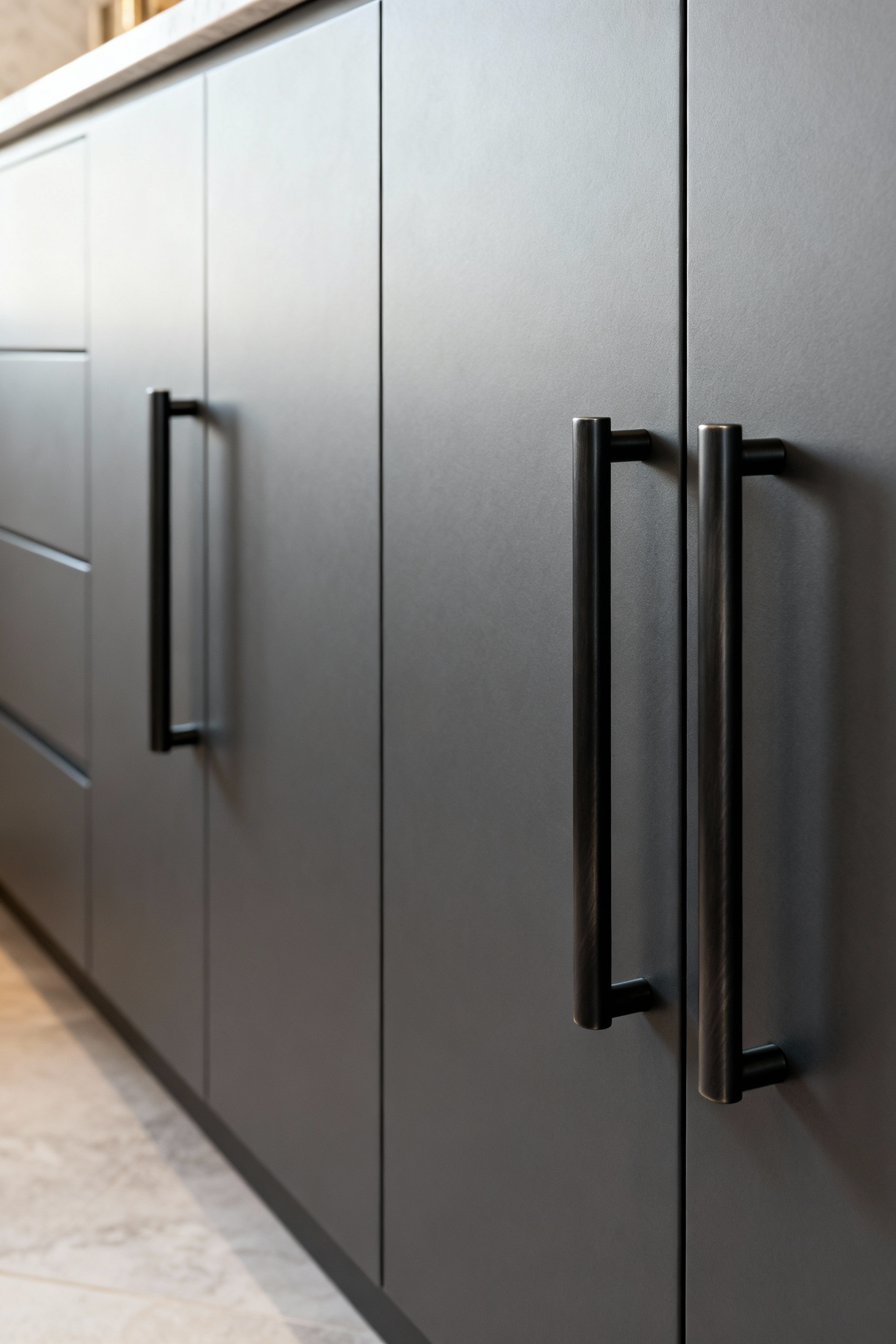
Expert Eleanor Vance’s philosophy is that hardware should “disappear into the hand” yet command visual respect. Her approach is a masterclass in anthropometrics—understanding how the human body moves. For taller upper cabinets, pulls are placed slightly lower for an easy reach. For heavy pot drawers, a robust handle is centered for optimal leverage. What I learned from designing for high-traffic, high-end hospitality spaces is that these tiny ergonomic details have a massive cumulative impact on the user’s experience. You notice when it’s wrong, but when it’s right, it just feels…effortless.
Vance also uses hardware to tell a “hardware story” that reinforces the kitchen’s architecture. Flush pulls on an appliance wall create an uninterrupted monolith. Elegant vertical pulls on pantry towers draw the eye upward, emphasizing the room’s height. This interplay of subtle engineering and overt artistry ensures your hardware serves both your hand and your eye, creating a symphony of convenience and quiet luxury.
True sophistication is often found in how elegantly a design solves life’s most practical challenges. And there are few challenges more constant in a kitchen than waste management. The legacy kitchen doesn’t hide an unsightly bin in a corner; it incorporates a discreet, hyper-functional system that makes disposal and recycling utterly seamless and hygienic.
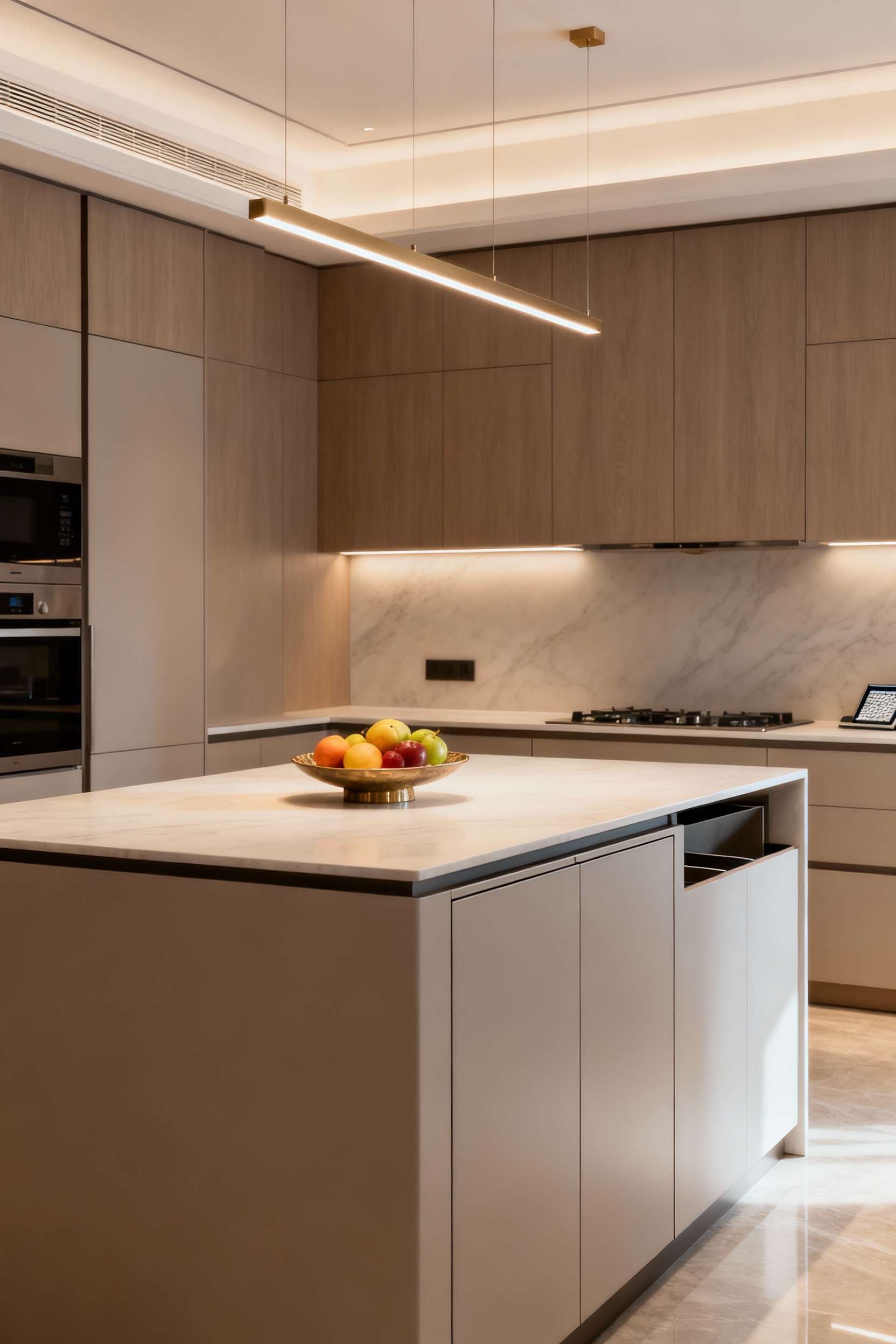
“Waste management isn’t a problem to hide, but an opportunity for intelligent design,” says Marcus Thorne of Vanguard Designs. This is precisely the kind of ‘back-of-house’ thinking from the hotel world that I love to bring into residential design. We want the efficiency of a commercial kitchen but with the pristine aesthetic of a luxury suite. Vanguard Designs engineers multi-bin pull-out systems with airtight seals, antimicrobial linings, and even motion-activated lids.
The placement is just as critical as the technology. By integrating these systems next to the primary prep sink or under the island, you minimize steps and reduce the risk of cross-contamination. With hands-free, sensor-activated opening, the process becomes effortless. These are the thoughtful kitchen cabinet ideas that may go unnoticed by guests, but you will appreciate them every single day. They are a testament to a design that prioritizes both beauty and impeccable function.
The new definition of luxury has a conscience. A truly advanced kitchen design considers not just its aesthetic impact, but its environmental and human impact as well. Specifying sustainable materials for your cabinetry has become a foundational pillar of high-end design, marrying a deep sense of responsibility with uncompromised refinement.
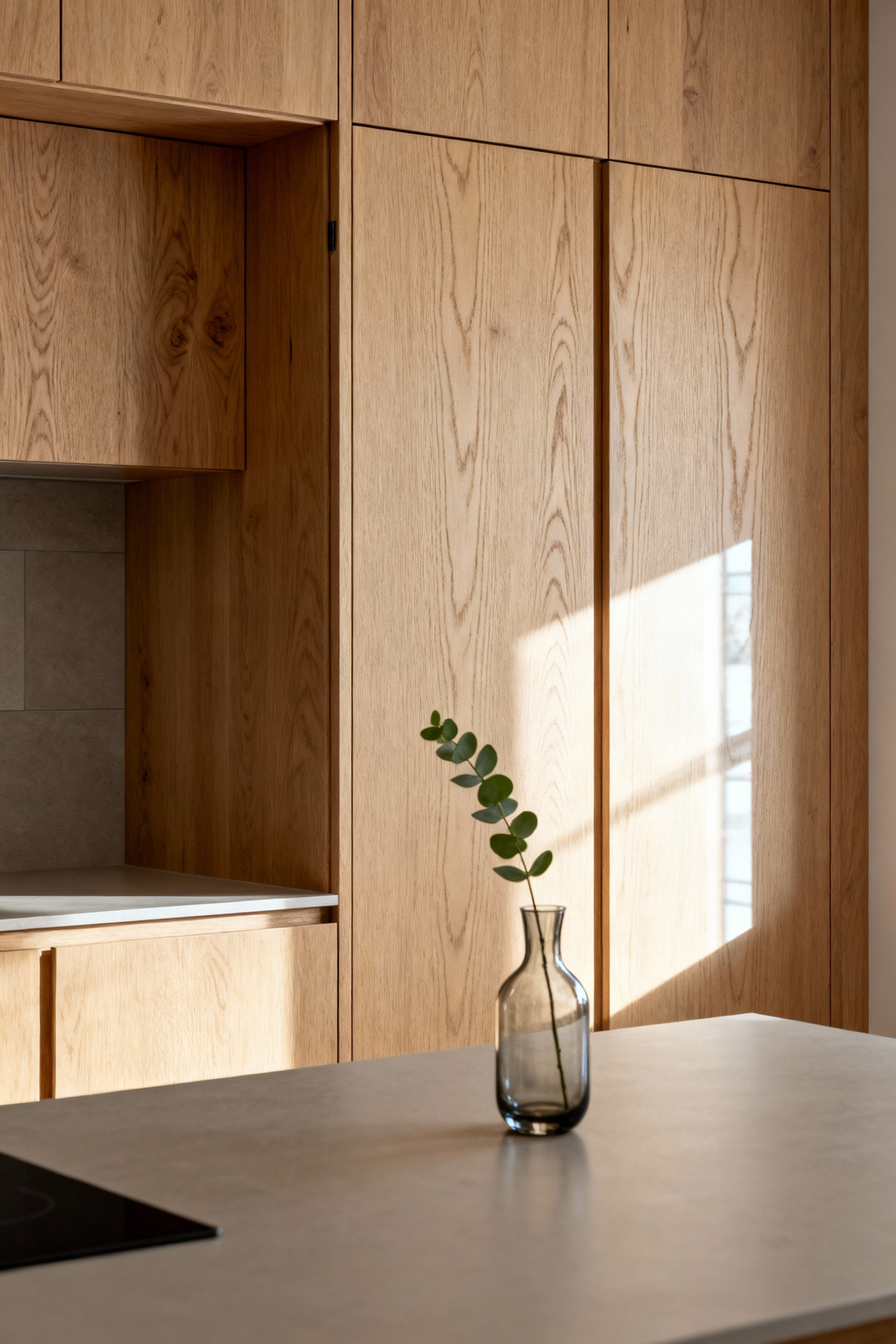
“Sustainable wood choices extend the narrative of luxury beyond the visual; they imbue the kitchen with integrity,” explains Dr. Elara Chen, a sustainable design consultant. She champions the use of FSC-certified woods, which guarantee responsible forest management. This is a movement I’ve seen take hold in the world’s leading eco-luxury resorts, where the connection to the location and a respect for nature are paramount. Choosing these materials brings that same sense of integrity into your home.
The focus extends beyond the wood to the finishes. Traditional paints and lacquers can off-gas VOCs, compromising indoor air quality. We now specify zero or low-VOC finishes like water-based polyurethanes or natural oils that are both durable and healthy. These thoughtful material choices ensure your kitchen is a source of well-being for both your family and the planet—a testament to a modern, mindful approach to luxury.
Creating a kitchen that lasts requires more than just durable materials; it demands foresight. As a designer, I am always thinking about how a space will live and evolve over time. Future-proofing your cabinetry means designing with an inherent adaptability that can accommodate shifting lifestyles and inevitable technological advancements. Your kitchen shouldn’t just serve you today; it should be ready to serve you for decades to come.
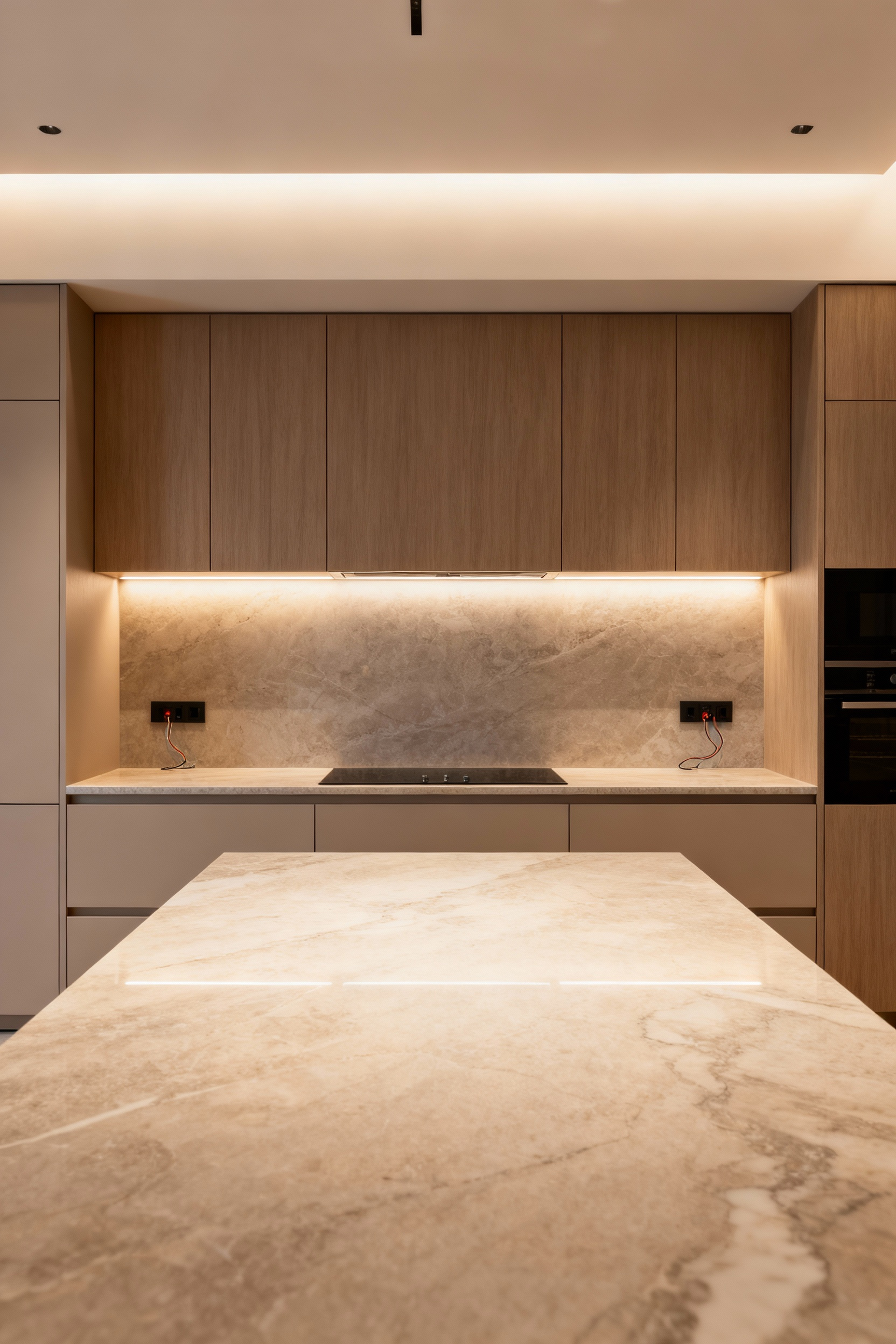
“A truly future-proof kitchen isn’t static; it’s a dynamic organism capable of evolving with its occupants,” says futurist-architect Kai Sharma. He champions modularity—adjustable shelving and reconfigurable drawer systems that can change as your needs do. A baking station today might become a home bar setup in five years. What if your next must-have gadget is a countertop sous-vide machine? A future-proof kitchen has a dedicated, ventilated spot waiting for it.
We also anticipate technology by building in the infrastructure for it now. This means discreet charging stations inside drawers, running conduits for future smart appliances, and ensuring you have reinforced shelving and dedicated outlets where you might need them. It also means incorporating principles of universal design—like easy-to-use lever handles and clear pathways—that will enhance usability for all ages. This proactive approach ensures your kitchen remains a relevant, functional, and beautiful hub of your home, effortlessly adapting to the story of your life.
We now arrive at the pinnacle of design consideration, where a kitchen transcends its function to become a seamless and resonant part of the home’s soul. This final section is about the masterstroke of cohesion—ensuring that your cabinetry is not an isolated statement but a harmonious extension of your home’s unique architectural narrative. This is what transforms a beautiful kitchen into an unforgettable one.
The most masterful kitchens I’ve had the pleasure of designing or visiting are never conceived in isolation. They feel as though they have grown organically from the very bones of the house. The ultimate mark of a legacy kitchen is this profound sense of belonging, where the cabinetry echoes the home’s architectural story, creating a seamless and deeply harmonious integration.
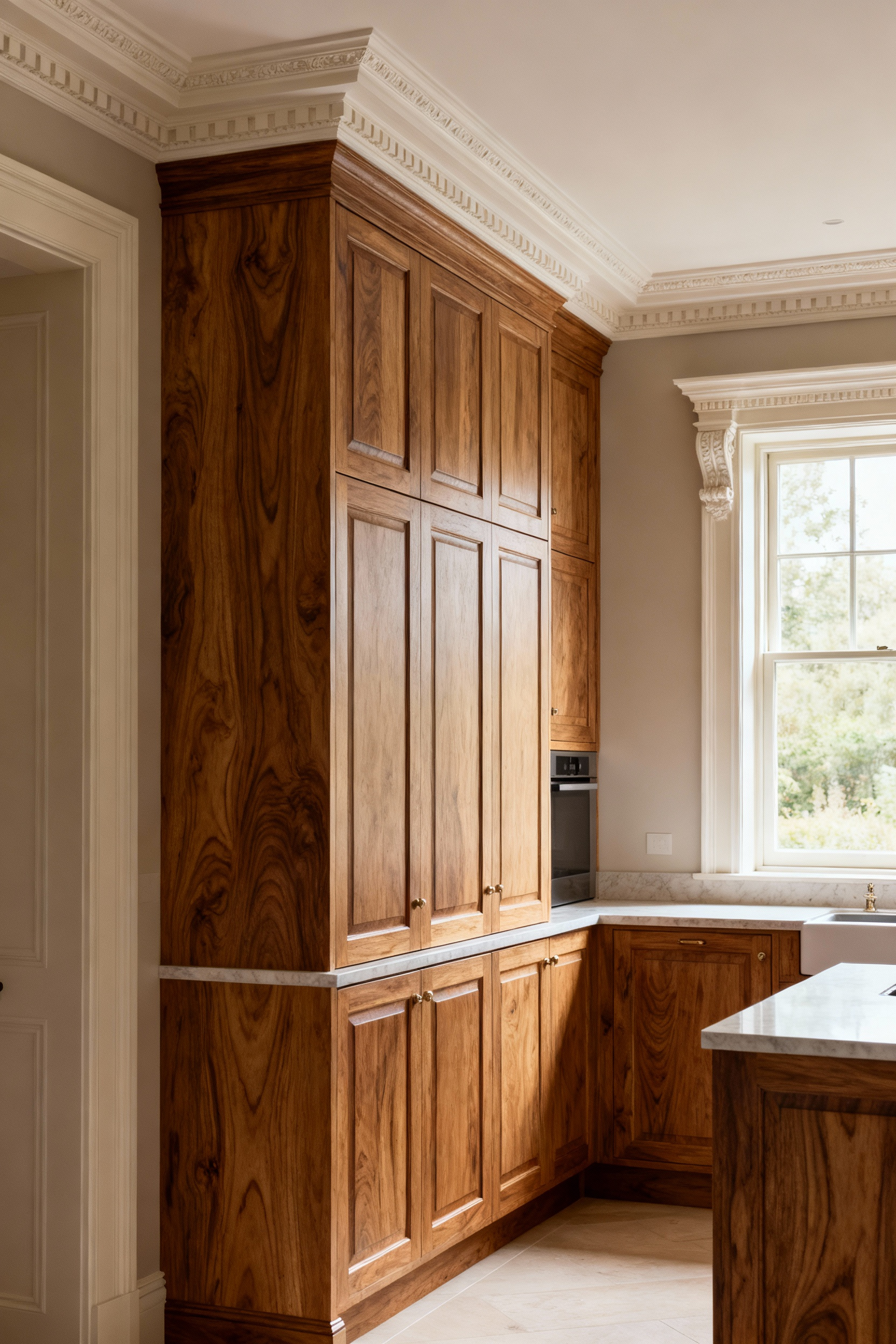
“We…view the kitchen cabinet not as an isolated unit but as an architectural skin,” explains renowned architect Eleanor Vance. For a pre-war brownstone, her firm’s custom oak cabinetry might subtly mirror the proportions of the home’s original wall paneling. For a minimalist loft, the clean, horizontal lines of the cabinets would echo the vast windowscapes. This isn’t about creating a period piece; it’s an intelligent, contemporary dialogue with the home’s history and form.
Designer Marcus Thorne beautifully describes blending a modern kitchen into a Victorian home by painting sleek, handle-less cabinets in a color pulled from the original plasterwork and incorporating subtle traditional skirting. The intervention was contemporary, but it showed a deep respect for its historical shell. The best kitchen cabinet ideas emerge from this level of deep consideration. Do the cabinet profiles reflect the window casements? Does the hardware finish resonate with the home’s original door handles? This is how you achieve a space that feels both timeless and perfectly, intentionally yours.
You’ve now moved beyond merely looking at kitchen cabinet ideas to understanding the principles that create them. From the artisan’s touch in bespoke joinery to the strategic foresight of future-proof design, you have an insider’s perspective on what truly constitutes informed luxury. These 20 insights are your new foundation, empowering you to make choices that value enduring quality over fleeting trends.
The goal was to arm you with a curatorial confidence, to help you see your kitchen not just as a room for cooking, but as the heart of your personal retreat. It is a space that should bring you a sense of calm, efficiency, and delight every single day. This is the core philosophy of hospitality, and it is now yours to apply.
With this knowledge, you are ready to create more than just a beautiful kitchen. You are prepared to craft an environment that is a testament to sophisticated living—a legacy space, thoughtfully curated and impeccably realized, that will serve you beautifully for years to come. Your masterpiece awaits.