Physical Address
304 North Cardinal St.
Dorchester Center, MA 02124
Physical Address
304 North Cardinal St.
Dorchester Center, MA 02124
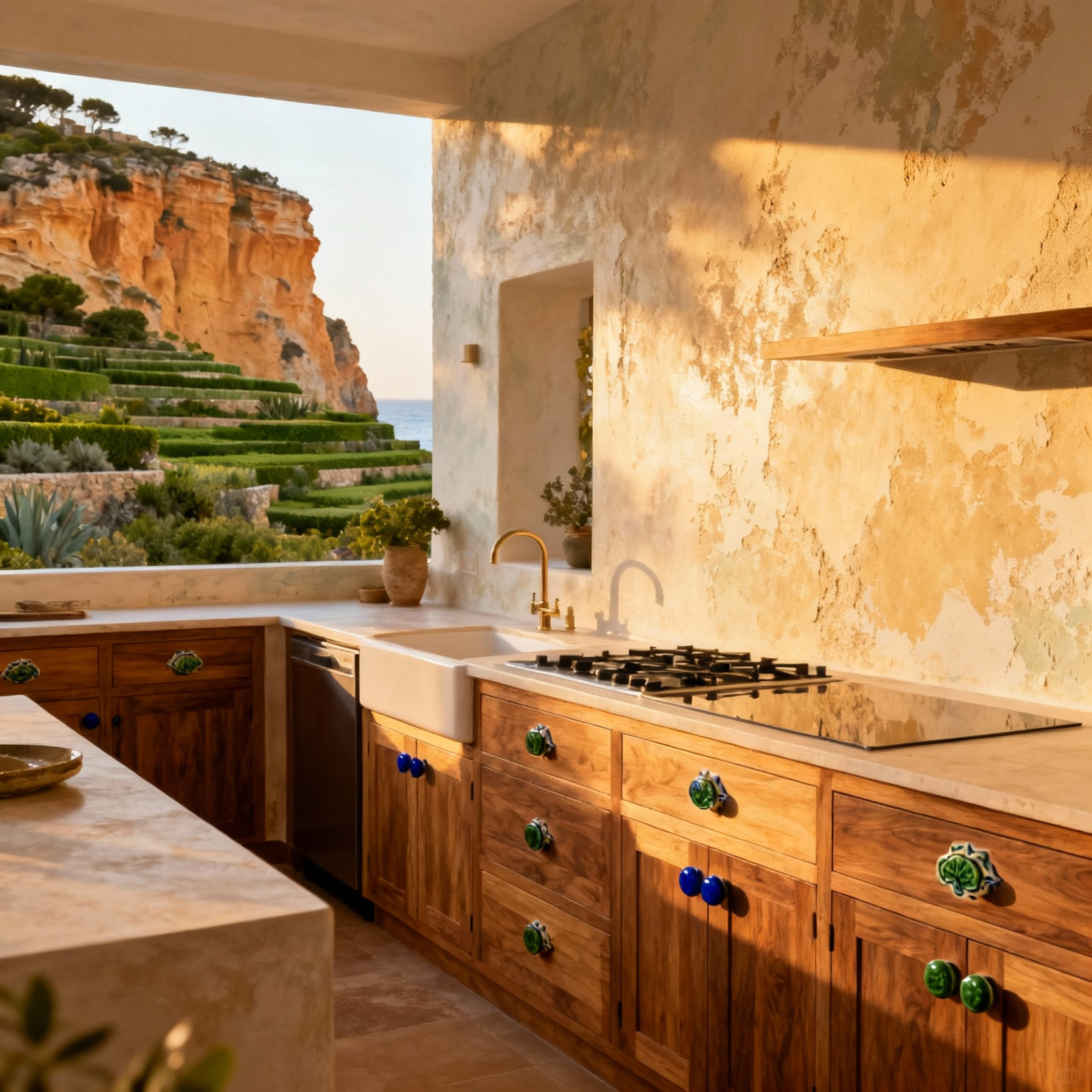
Discover 20 exquisite coastal kitchen cabinet designs with Mediterranean expert Diana. Explore timeless materials and functionality for a serene, elegant home.
Since antiquity, the lifeblood of coastal living has shaped homes across the Mediterranean basin, turning them into sanctuaries that breathe with the sea. This profound connection is felt nowhere more deeply than in the kitchen, where coastal kitchen cabinets have always been more than just storage; they are the aesthetic bedrock of the home. Evolving from simple, sun-bleached forms born of necessity to sophisticated expressions of tranquility, today’s most soulful coastal kitchens understand a vital principle: cabinetry must ground a space in tradition while elevating it through timeless design. The four foundational principles that separate a genuinely inspired kitchen from a fleeting trend haven’t changed in centuries.
In my experience designing these spaces, I’ve learned this isn’t about slapping on a coat of blue paint. It’s about capturing a feeling—a design ethos steeped in the rhythm of the tides, marrying rugged functionality with a deep respect for natural beauty. True coastal elegance speaks of durable materials, artisan hands, and a palette drawn directly from the sea, sand, and sky. It’s about creating an atmosphere where every detail whispers stories of sun-drenched shores and generations of relaxed, effortless living. Here, we’ll walk through 20 exquisite designs, organized to guide you from the core philosophy to the final, beautiful result.
Before we even think about materials or layouts, we must understand the spirit of a coastal kitchen. It’s about capturing a feeling of serenity and sun-drenched elegance. These principles are the heart of that effort.
The soul of a Mediterranean space is its color, a direct reflection of the world just outside its windows. When choosing a palette for coastal kitchen cabinets, we’re not just picking paint chips; we’re channeling the sea and sky. My approach is to move beyond trendy blues and anchor the choices in nature. I always start with the Aegean and Ionian seas—not a bright, loud blue, but the softened, nuanced shades: the pale cerulean of a morning sky, the muted turquoise of a shallow cove, or the deep indigo of dusk.
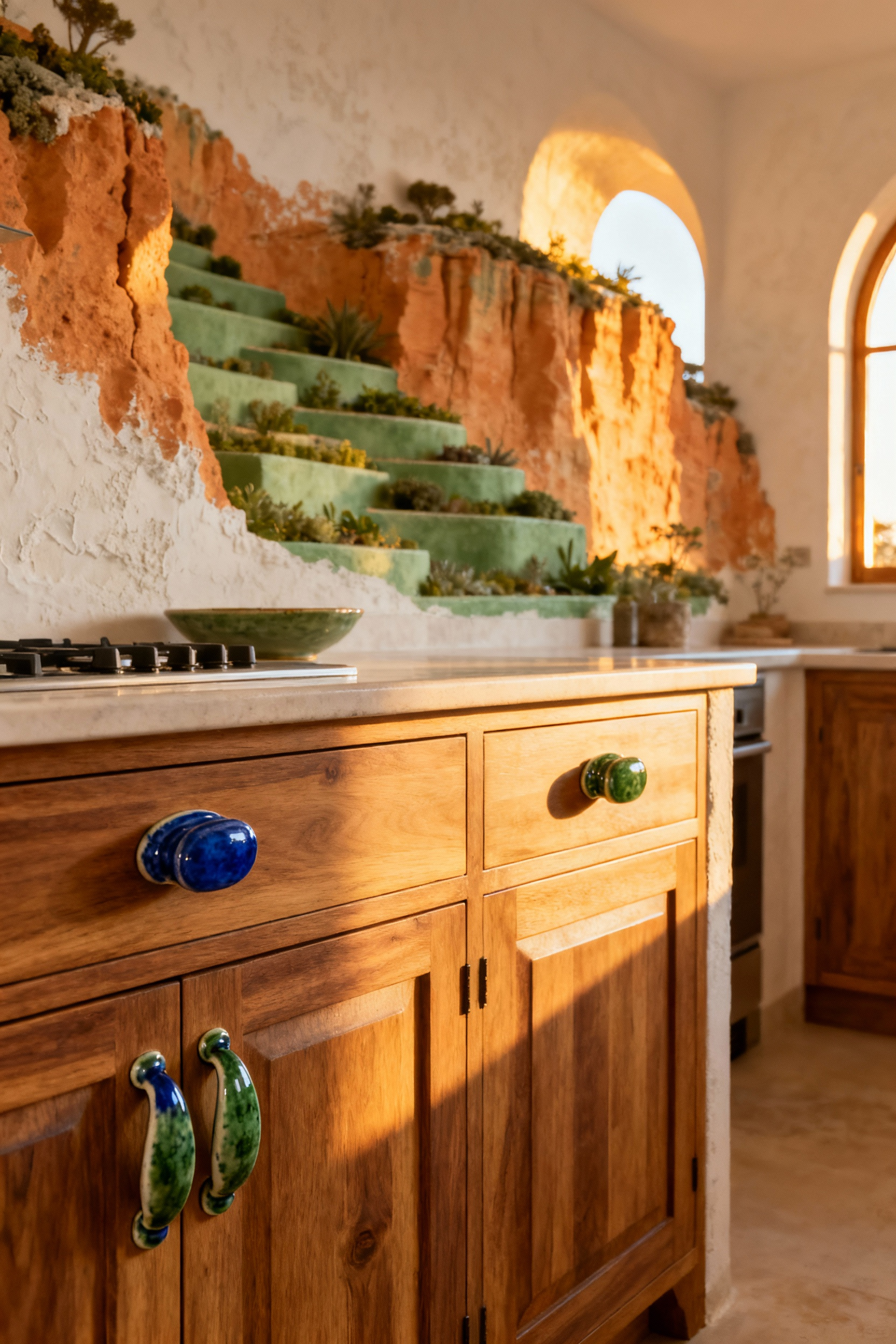
To balance these marine tones, we look to the earth. Imagine the chalky whites of a cliffside village, the sandy beiges of the shore, and the warm off-whites of ancient plaster. These shades form a perfect, tranquil canvas. What I tell my clients is that the magic lies in the subtle accents—a hint of terracotta from a roof tile, the gentle sage of an olive grove, or a whisper of sun-drenched ochre. A soft sage on lower cabinets paired with an antique white on the uppers, for instance, mimics the landscape perfectly. The goal is to use these colors to enhance the kitchen’s natural light, making the space feel expansive and airy, a soothing backdrop that makes daily rituals feel like a sun-drenched escape.
Color sets the mood, but texture tells the story. For coastal kitchen cabinets to feel authentic, they must invite touch and show character. My philosophy is to embrace the beauty of imperfection, celebrating natural materials that have a history. We move away from sterile, factory-smooth surfaces and toward finishes that feel alive. Think lightly distressed oak or cypress with a wire-brushed finish that highlights the grain, or a limewashed treatment that creates a chalky patina like ancient stone.
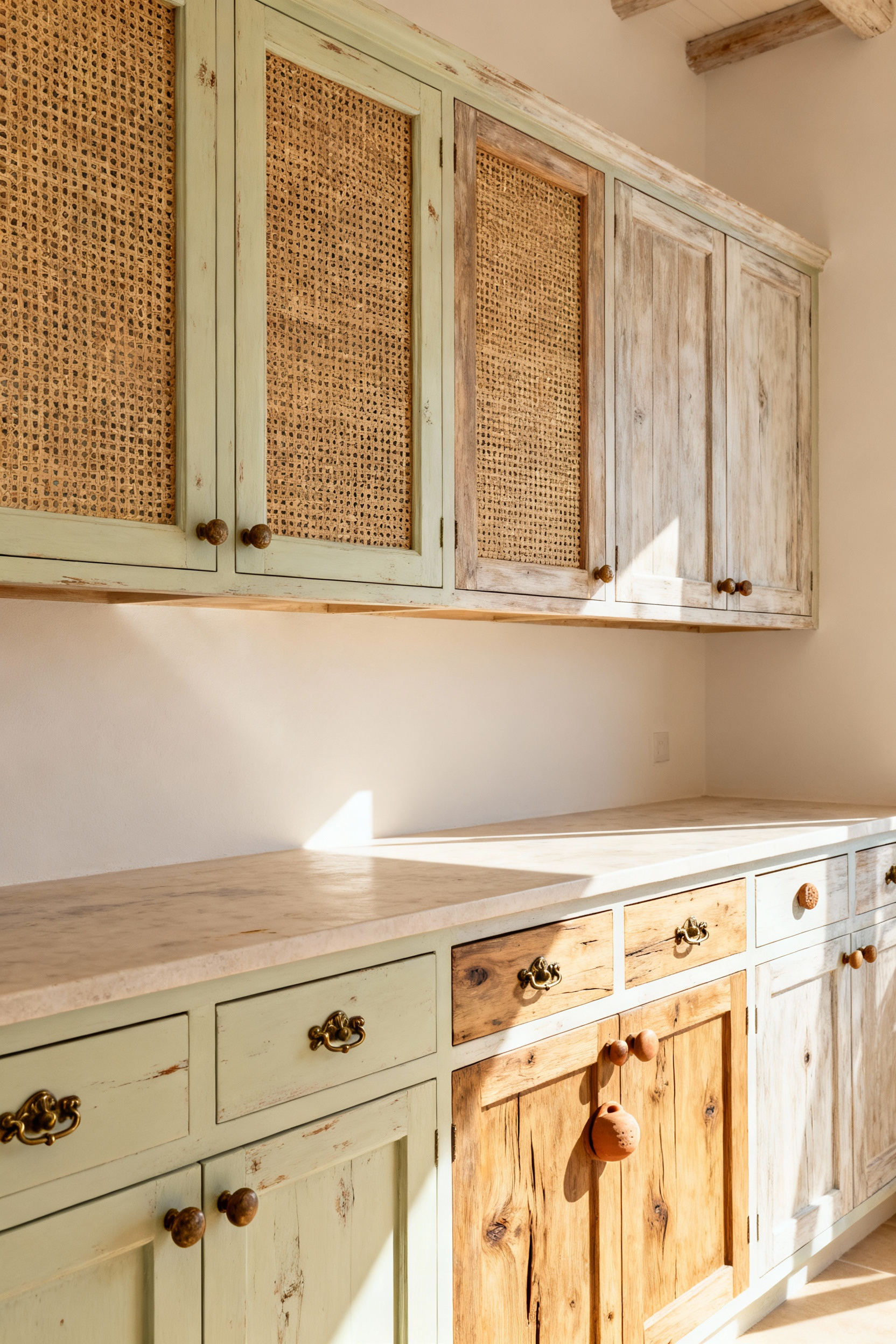
This extends to hardware, too. Instead of sleek chrome, I lean toward aged brass, hammered copper, or hand-forged iron that patinates over time, as if it’s been exposed to the sea air. Sometimes, a touch of woven texture—cane or rattan inserts in select cabinet doors—adds a breath of island charm. It’s all about creating a dynamic landscape where the rustic grain of a cabinet plays against the smoothness of a marble countertop. It’s this contrast that makes a kitchen feel inviting and soulful, a space that feels like it has gracefully weathered generations.
In Mediterranean design, light is a building material. It shapes the space, breathes life into it. The goal with coastal kitchen cabinets is to work with the light, not against it. We select finishes and elements that actively engage with the sunlight, helping it dance across surfaces and fill every corner. This means favoring light, matte finishes—pale, sun-bleached woods or soft, creamy paints—that diffuse light gently instead of creating harsh glares.
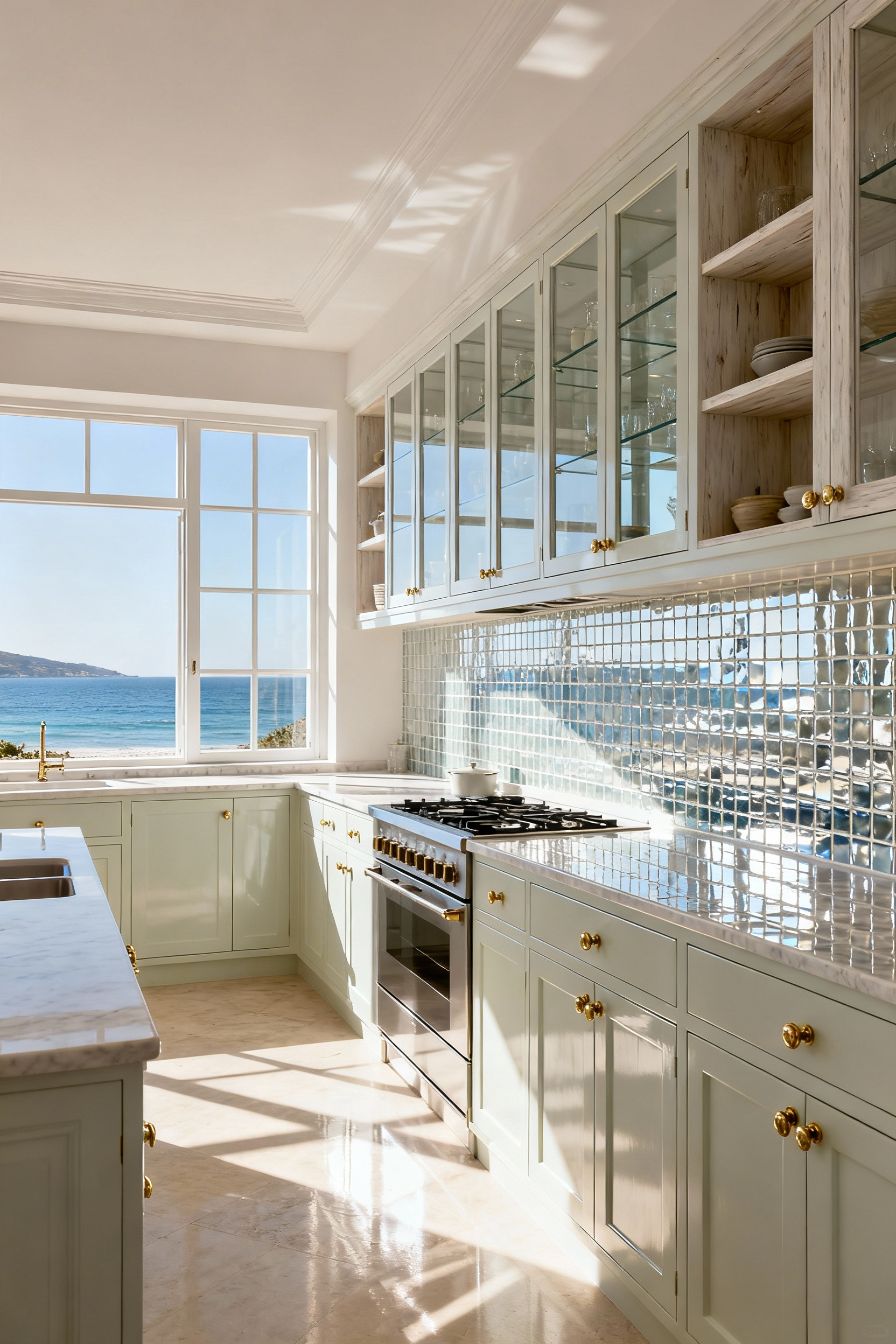
Beyond the main cabinet material, integrating reflective surfaces is key. I’ve always loved using glass-front cabinets, particularly with reeded or seeded glass. They aren’t just for display; they act as delicate filters, allowing light to bounce and scatter, adding a luminous quality. The strategic placement is just as important. Rather than heavy upper cabinets everywhere, I often suggest balancing them with open shelving, especially opposite windows. This allows light to flow unobstructed, making the entire kitchen feel brighter and more open. A kitchen bathed in natural light simply lifts the spirit, fostering a connection to the rhythms of the day.
True coastal elegance is rooted in architectural authenticity. The cabinetry should feel as if it belongs, woven into the very fabric of the home. This means choosing cabinet profiles that echo regional traditions without being overly ornate. What I’ve seen in my years of studying Mediterranean architecture is that beauty is often found in understated sophistication. Clean, simple lines, like a classic Shaker-style door, offer a timeless simplicity that lets the quality of the materials shine.
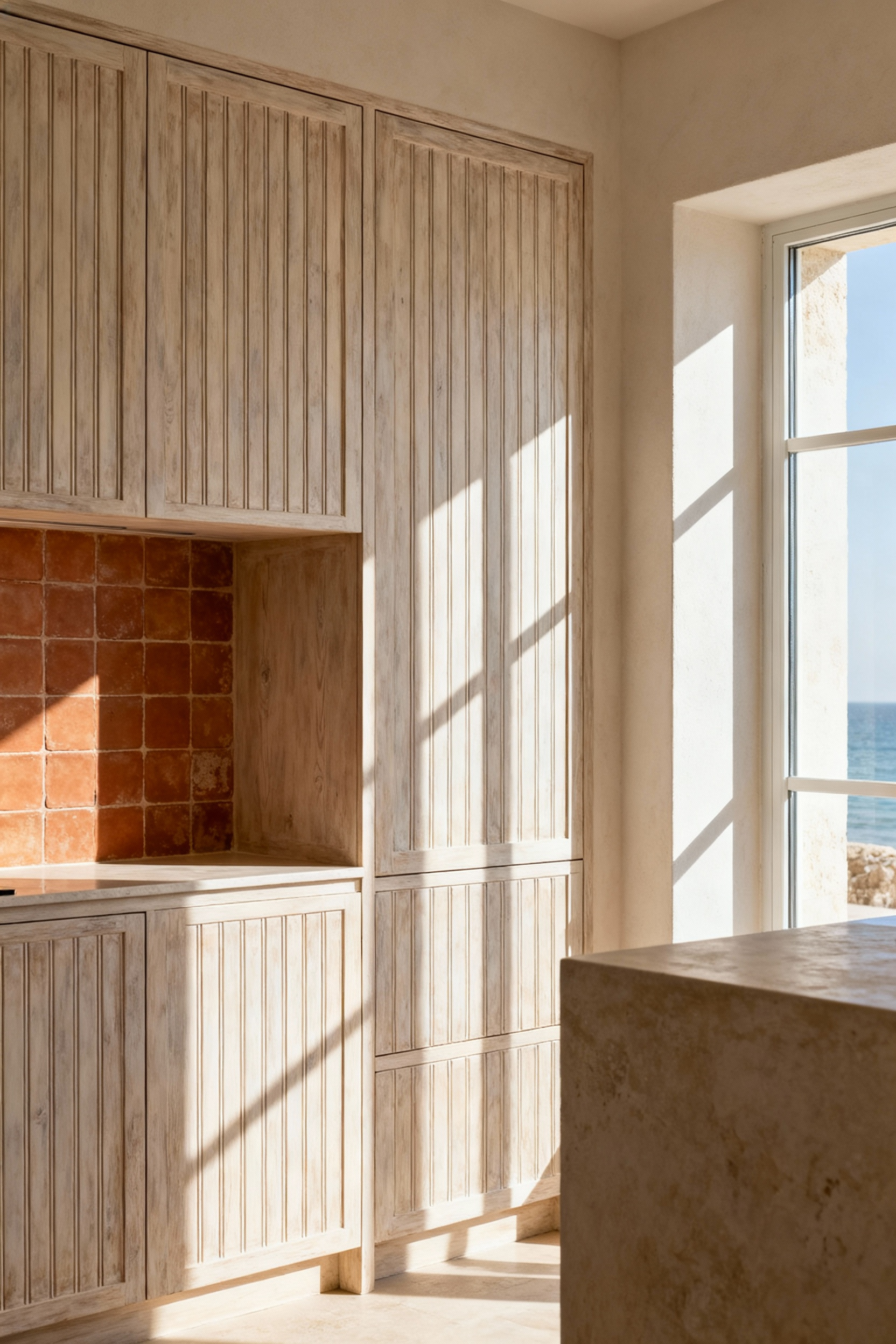
A delicate bead detail along the inside edge of a panel can add just enough architectural interest without feeling fussy. It’s about finding that balance. Proportion and scale are everything. Taller, slim pantry units can evoke the elegant stature of an old-world armoire, while wide drawers can ground a central island. The goal is to create a coherent architectural language throughout the kitchen so that the cabinetry complements features like archways or exposed beams. This imbues the kitchen with a quiet dignity, a feeling that its beauty will only deepen with time.
Continuing our journey, we delve into the finishes that give cabinets their soul. This is where we capture the essence of a life lived by the sea, embracing the beauty of graceful aging and stories told through texture.
In the Mediterranean, true beauty is often found in things that have been loved and lived with—a surface that carries the memory of countless sunrises. This philosophy is the soul of creating a subtle patina on coastal kitchen cabinets. It’s not about faking decay; it’s about evoking a natural evolution, like the gentle aging of sea-weathered timber. It’s a quiet dialogue between the material and its environment.
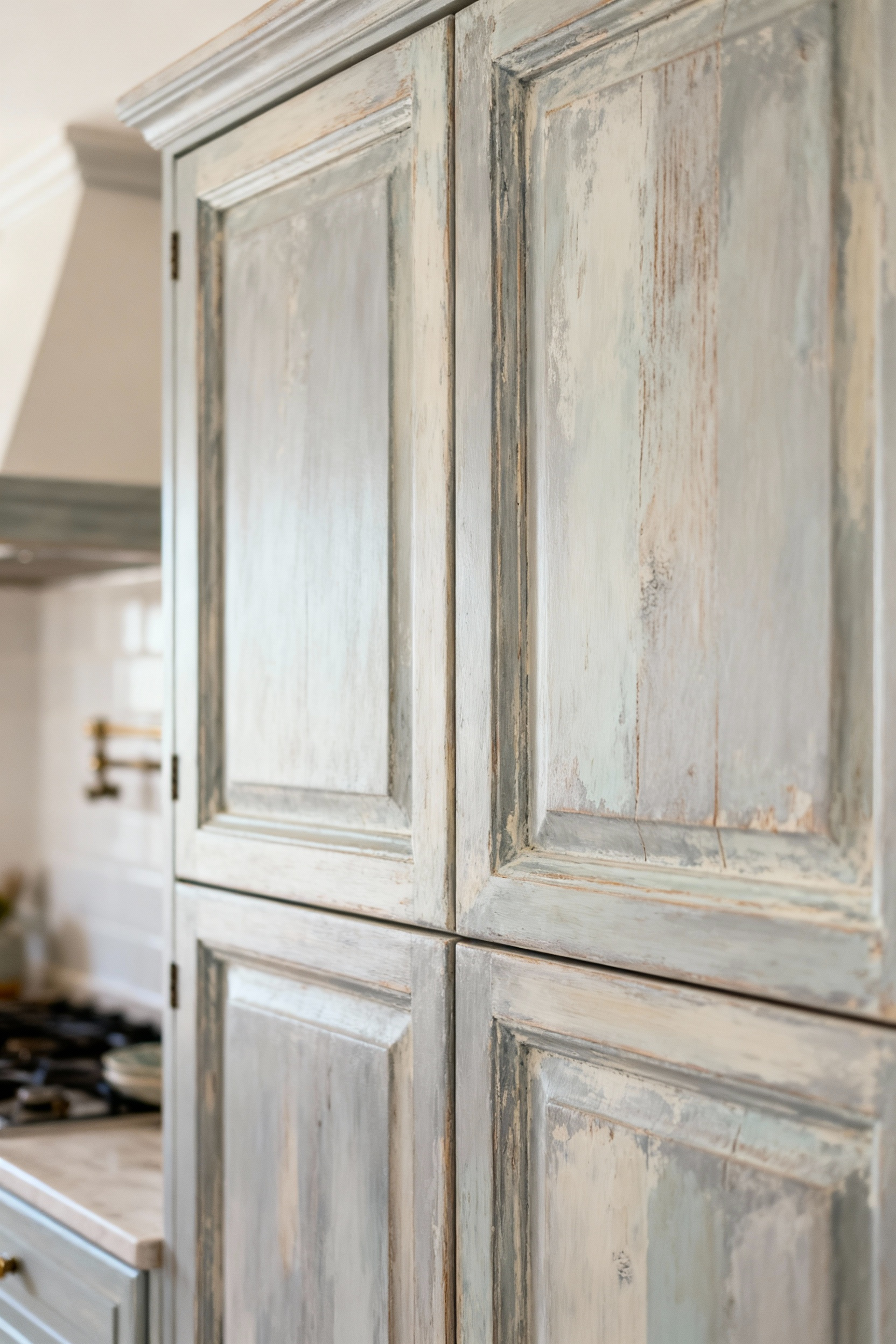
The artistry here is in the restraint. For painted cabinets, think of soft, muted hues applied with hand-brushed techniques. A layered finish, maybe a base coat with a translucent white or grey glaze gently rubbed away at the edges, can mimic the sun-bleached charm of salt-kissed paintwork without looking contrived. For natural woods like bleached oak or reclaimed pine, a limewash can create a “driftwood” effect that allows the beautiful grain to shine through. These nuanced finishes should harmonize with the kitchen’s light and architecture, creating visual depth and a dynamic surface that changes throughout the day. A kitchen with a subtle patina feels not just designed, but evolved—a welcoming sanctuary where life’s beautiful imperfections are celebrated.
Now we get to the heart of the matter: the materials themselves. The choices we make here are the foundation of a kitchen that not only looks coastal but feels it—solid, authentic, and connected to the natural world.
A core belief in my design practice is a profound respect for materials. For coastal kitchen cabinets that will truly last, selecting sustainable hardwoods is about both durability and connecting the home to the natural world. Imagine the serene strength of European White Oak, its subtle grain allowing light to dance across its surface, or the warmth of walnut grounding the space with its rich patina. These woods offer resilience against the humidity common in coastal areas, ensuring your cabinetry stands the test of time, much like an ancient olive grove.
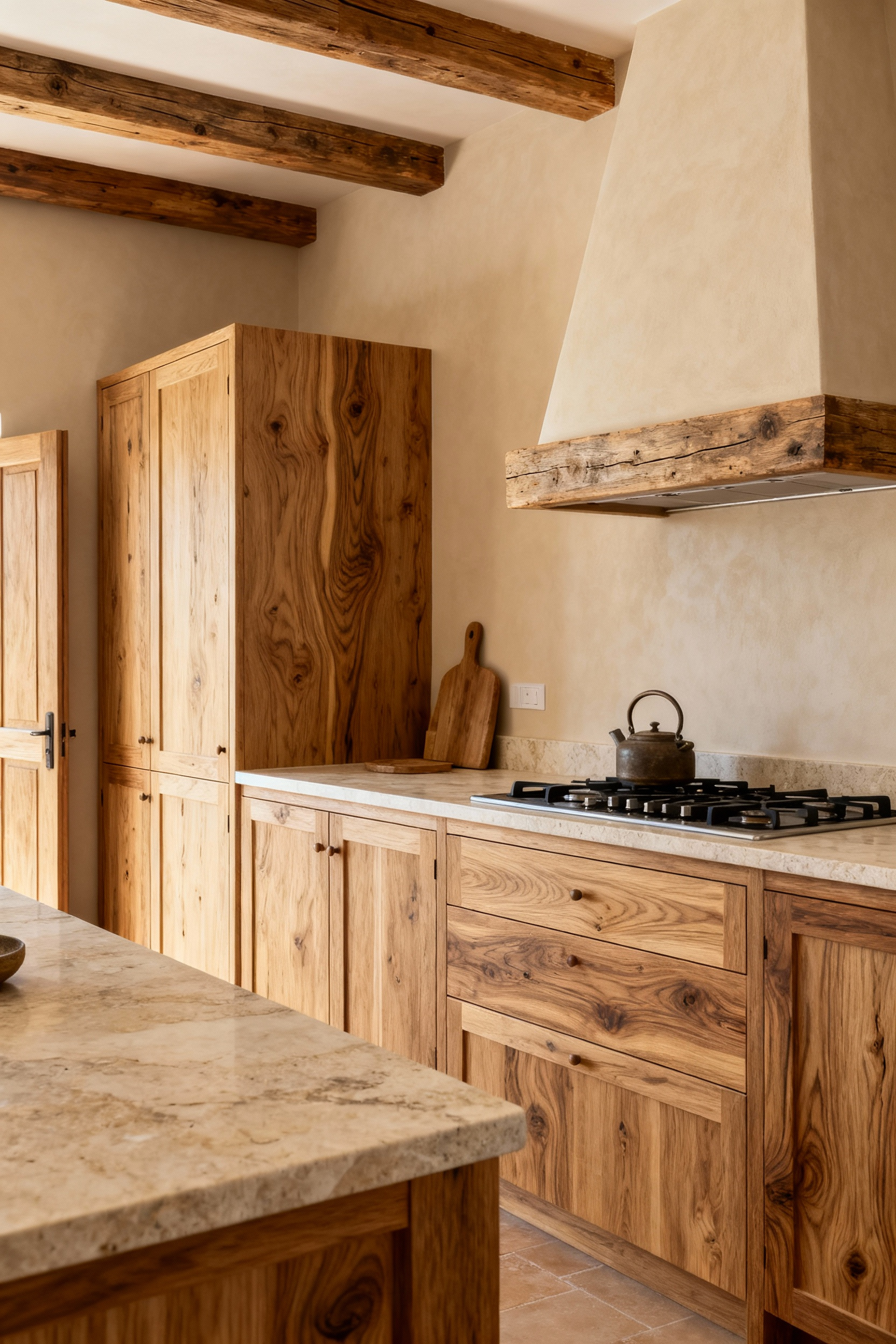
The ethereal grain patterns—the rhythmic swirls of Ash or the character of Quarter-Sawn White Oak—act as a canvas. A light wash or a natural oil finish can highlight their innate beauty without creating a heavy feeling. This choice elevates cabinets from mere storage to sculptural elements. It speaks to a lifestyle that values authenticity and longevity, creating an environment that feels both luxurious and responsibly curated.
Building on exquisite materials, the construction method defines the kitchen’s architectural integrity. Inset cabinetry, a hallmark of bespoke European craftsmanship, offers a refined profile that perfectly embodies quiet, understated luxury. Unlike overlay doors, inset doors and drawers fit flush within the cabinet frame, demanding incredible precision from the artisan. This creates clean, unbroken lines that give the cabinetry a custom, furniture-like quality.
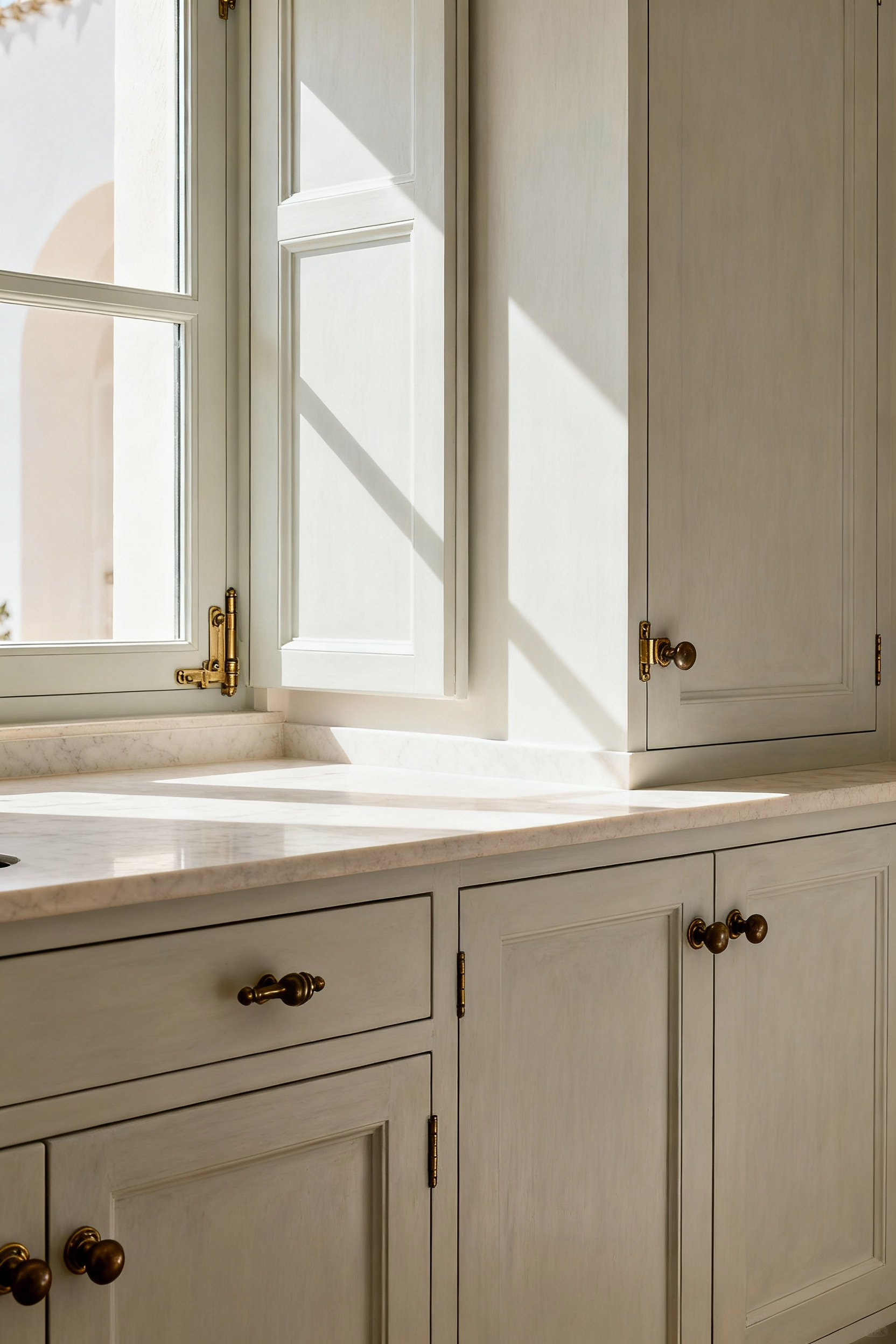
This level of detail is paramount in a coastal kitchen; it suggests a space that was composed, not just decorated. When painted in a soft, sun-bleached hue, these inset cabinets appear to float, contributing to that airy feeling we crave. The exposed hinges and hardware become jewel-like accents, affirming the solid construction. It’s a testament to how structural integrity ultimately creates a more sophisticated and enjoyable experience, turning everyday interactions into moments of appreciation for fine design.
To introduce another layer of organic warmth and casual sophistication, I love to integrate woven textures. Rattan, cane, and grasscloth are essential for creating a “breathable” design that mimics the breezy ambiance of seaside living. I learned this when visiting a small hotel on the Amalfi coast; the simple cane panels in the armoires made the entire room feel lighter and more connected to the outdoors. Rattan panels on cabinet doors infuse a palpable sense of the outdoors within.
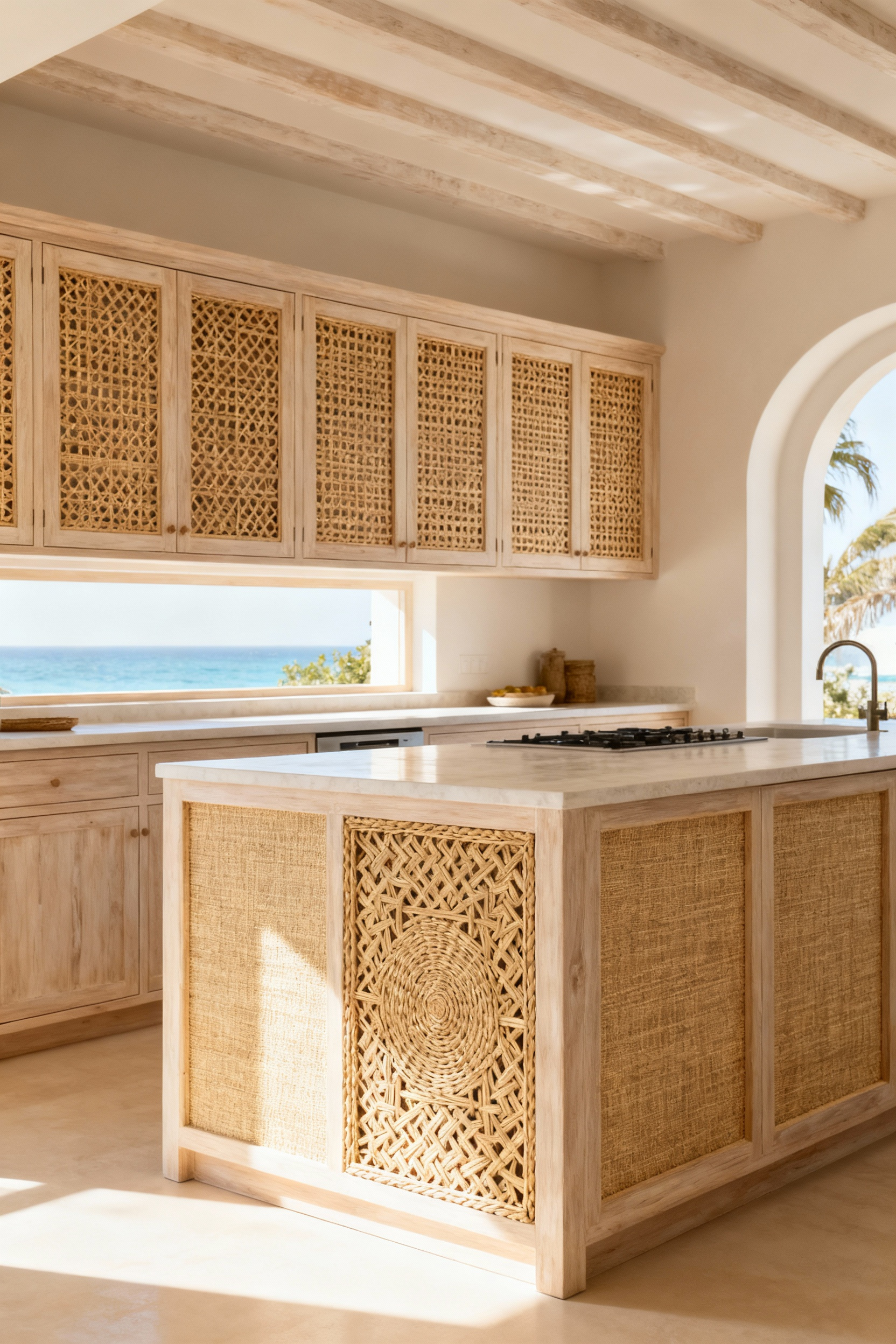
Cane, with its intricate patterns, offers a more delicate, transparent texture for upper cabinet fronts, creating an elegant visual lightness that still offers a whisper of what lies within. For larger surfaces or behind glass doors, grasscloth brings a finely textured backdrop, its subtle variations catching the light beautifully. These elements do more than decorate; they invite touch and soften the hard lines of cabinetry, creating pockets of visual respite and a relaxed sensibility that is the true embodiment of Mediterranean leisure.
The final layer of artistry lies in the masterful application of finishes like glazes and washes. This is how we imbue surfaces with the nuanced depth of light playing on water. Glazing involves applying a translucent color over a base coat, allowing it to settle into the recesses of a cabinet door profile. The effect is one of age and character, as if the cabinetry has gracefully acquired a patina over years of coastal living.
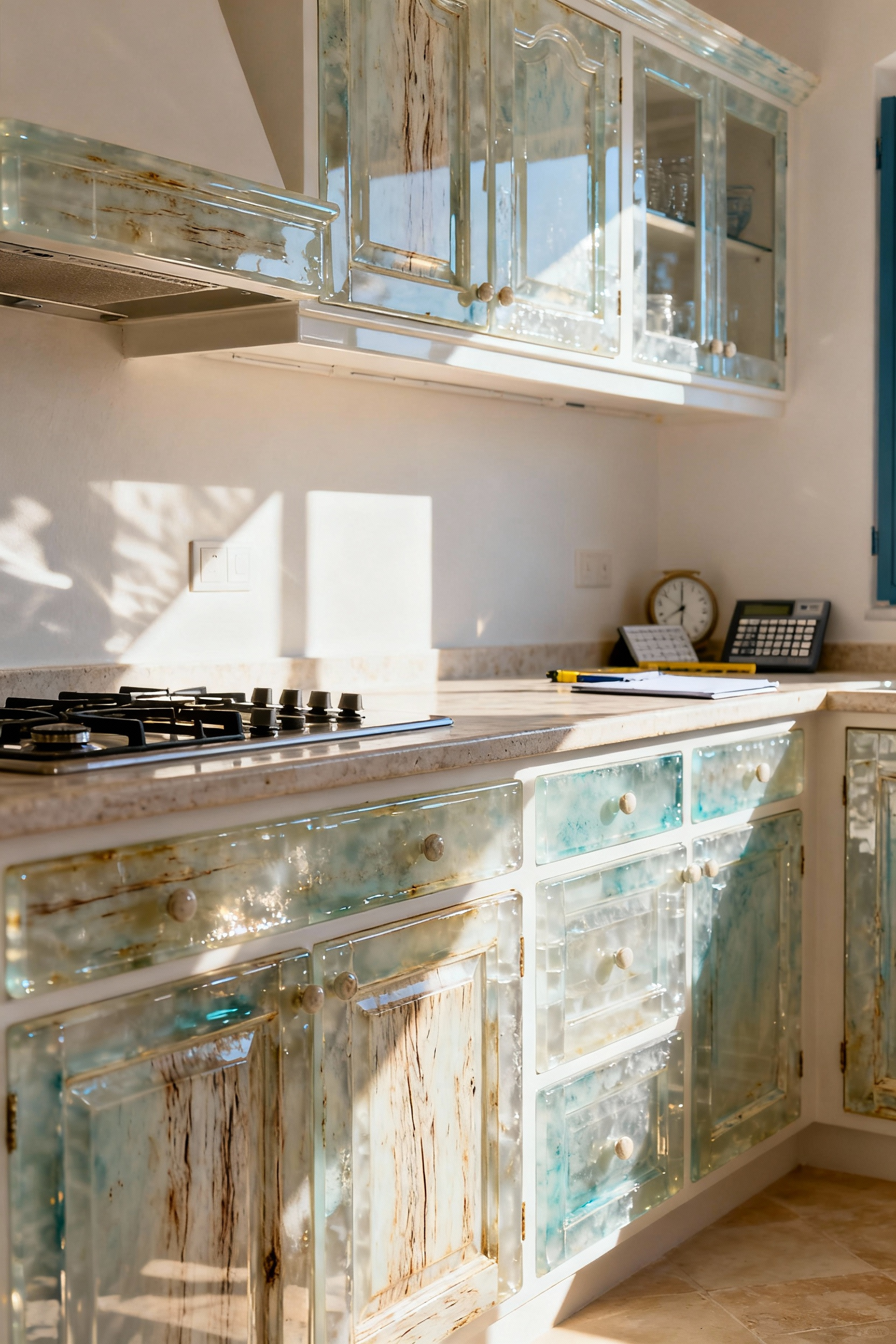
Washes, on the other hand, use highly diluted paints or stains to create a barely-there veil of color over a painted surface or to let the wood grain show through. This is quintessential for that coveted, sun-bleached, driftwood look—a gentle grey wash over white oak, for instance. Both techniques are about creating transparency and depth, playing with light and shadow to transform flat surfaces into dynamic canvases. This detailed work brings a profound sense of tranquility, reflecting a lifestyle that finds beauty in natural variations and the gentle passage of time.
With the larger structures defined, we now turn to the details that personalize a space. Hardware is the jewelry of the kitchen—the tactile elements that connect us to the room every single day. Here, the spirit of the sea finds its most intimate expression.
I see cabinet pulls and knobs as so much more than functional pieces; they are the jewelry of a kitchen, each one a chance to infuse the space with character and story. For coastal kitchen cabinets, the hardware should whisper tales of the sea. I often source hardware that feels like it has a history—it’s where my professional experience in sourcing unique, artisanal pieces really comes into play. Think of unlacquered brass, which develops a warm patina over time, reminding me of weathered fittings on historic vessels.
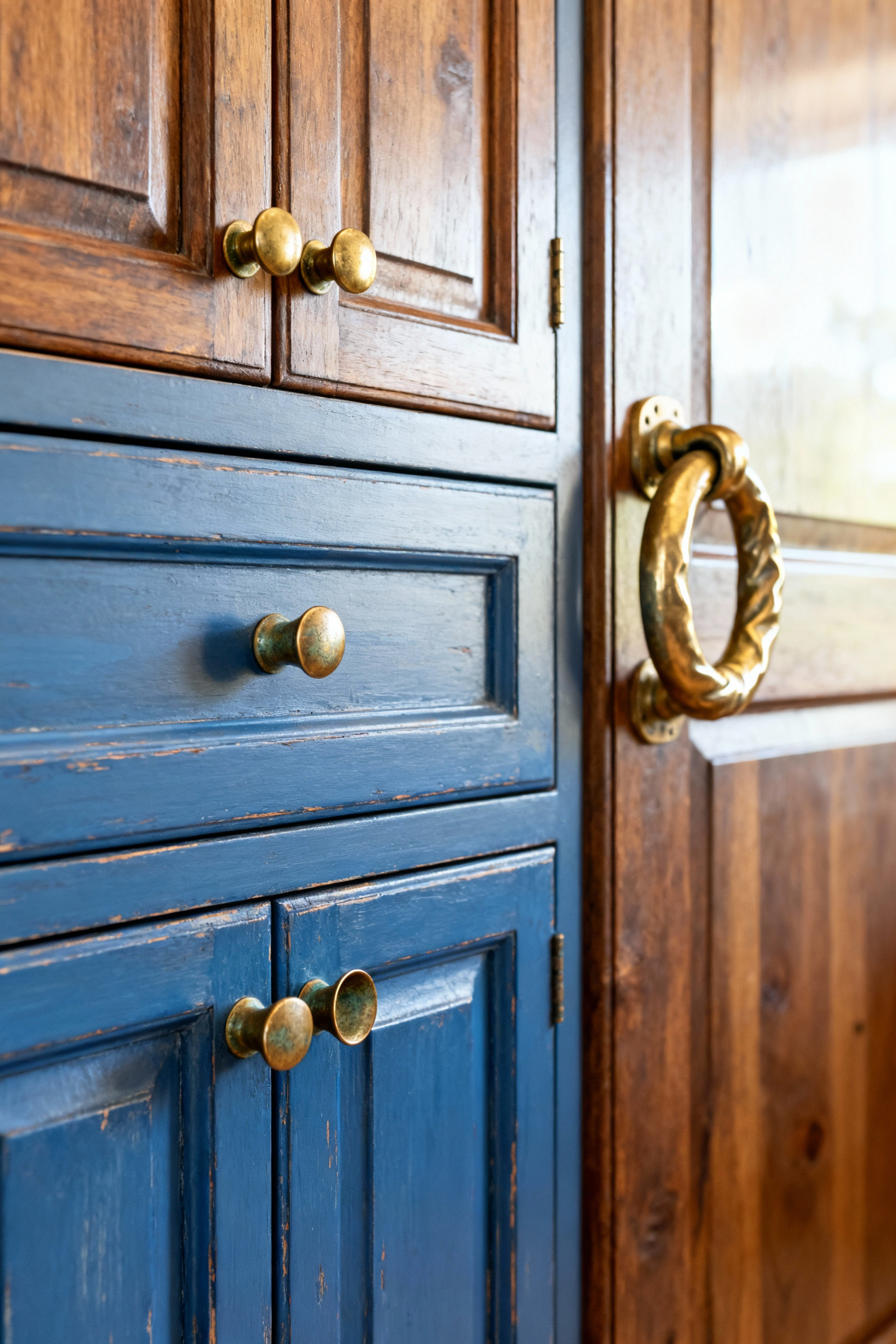
Polished nickel can evoke the sleek, reflective surface of calm waters, while hand-forged iron mimics coastal rock formations or anchor chains. And then there are the organic choices: cool porcelain knobs that recall sea glass, or genuine rope and leather pulls that introduce tactile warmth. These elevated selections are where the vision truly comes to life, turning simple storage into a statement. Every time you open a drawer, you have a tactile connection to a well-considered design—a daily reminder of the serene, robust spirit of the coast.
A beautiful kitchen must also be a joy to live in. Here, we explore how intelligent design creates a seamless flow between form and function, turning the kitchen into a space that is as effortlessly useful as it is breathtaking.
At the heart of coastal elegance is a sense of joyful revelation. Artisanal open shelving is not just about storage; it’s an ode to the beauty of objects that hold our stories. My approach to coastal kitchen cabinets almost always integrates these moments of openness, turning practical items into a poetic display. It allows the kitchen to breathe. Imagine shelves crafted from sun-bleached reclaimed oak, their grain whispering tales of time and tide, holding handmade ceramics from a village market or sea-glass votives catching the morning light.
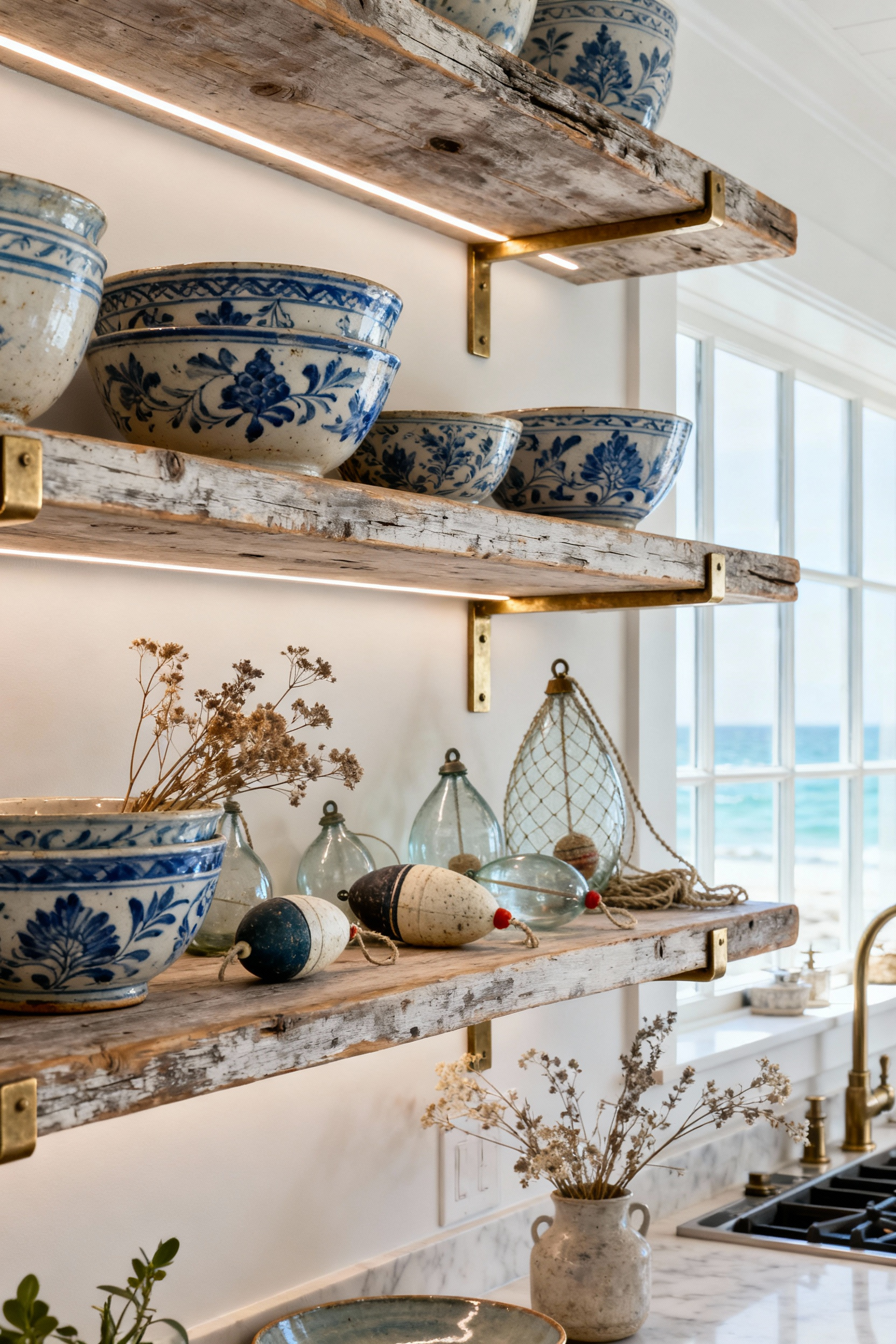
Spatially, these open elements can transform a kitchen’s dynamic. I love placing them to flank a large window, allowing natural light to pour in unobstructed and blurring the line between inside and out. They break up the monolithic presence of traditional upper cabinets, adding to the overall sense of spaciousness. This isn’t just a design choice; it invites a life of mindful curation, where each displayed item is chosen for its beauty or sentimental value. Open shelving offers a stage for the quiet poetry of everyday life.
Sophisticated coastal design lies not just in what’s revealed, but in what’s thoughtfully concealed. My philosophy is that modern appliances should never disrupt the serene aesthetic of a coastal kitchen. We achieve this by mastering seamless paneling solutions, allowing the practicalities of a busy kitchen to disappear into the architectural fabric. This is where meticulous attention to detail is everything: flush-mount installations, precise alignment of grain, and hardware that either vanishes or is subtly integrated.
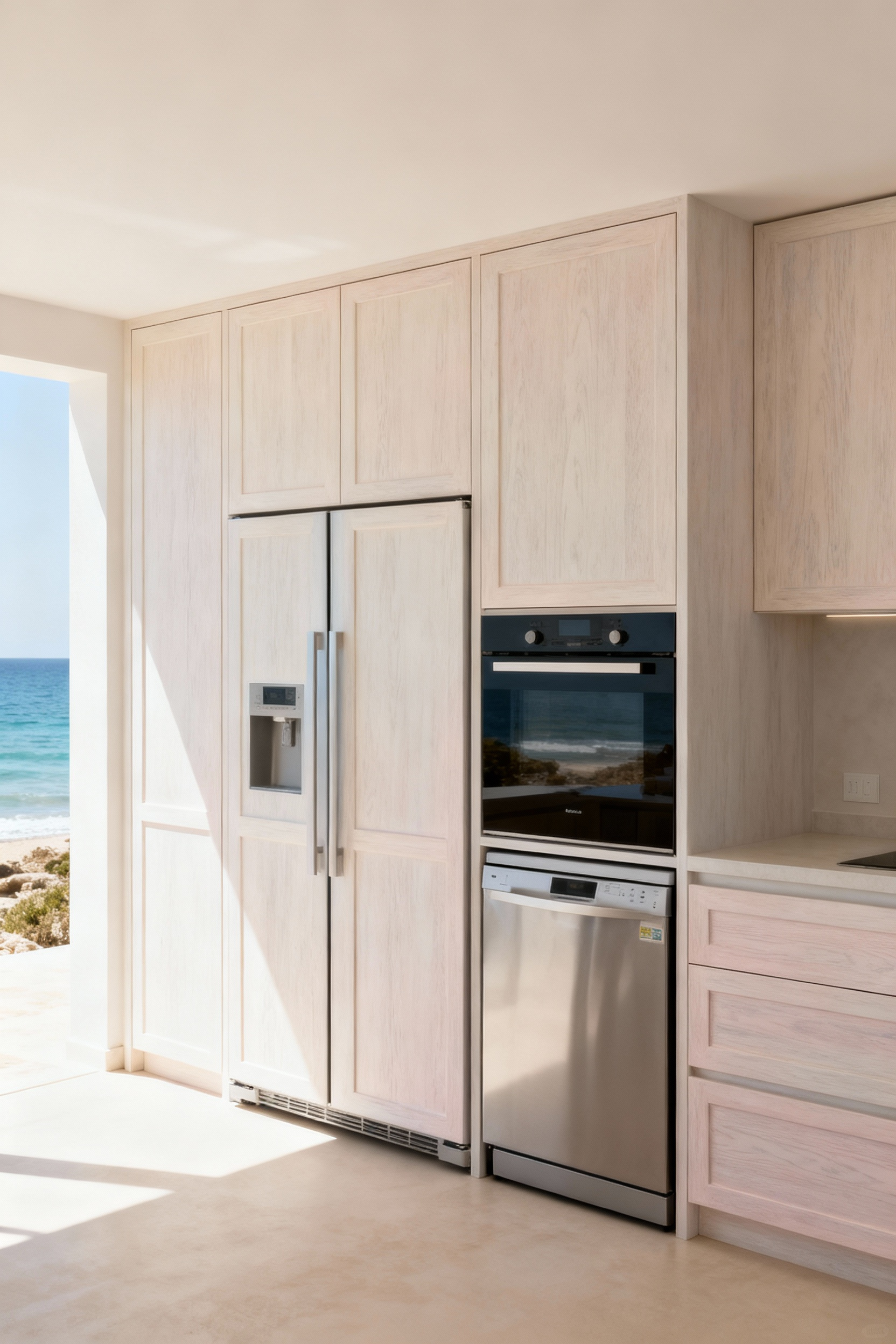
Imagine an expansive wall of cabinetry where the refrigerator vanishes behind panels that mimic a grand armoire. A dishwasher can be artfully hidden beneath a continuous countertop run. Even a microwave can be tucked away in a deep drawer or behind a pocket door. This is especially crucial in open-concept spaces where the kitchen flows into living areas. By concealing the operational aspects, we allow the kitchen to transform from a functional zone into an elegant extension of the home, fostering an atmosphere of profound calm and order.
In a home with high ceilings, maximizing vertical grandeur is an act of design intentionality. Stacked cabinets are about more than just storage; they bestow upon the kitchen a sense of stately permanence and generosity, drawing the eye upward and echoing the grand vistas of the sea and sky. Years of mediterranean architecture taught me that connecting a room to its full height creates an inherent sense of grace. For coastal kitchen cabinets, consistency in finish is paramount to achieving a unified, soaring look.
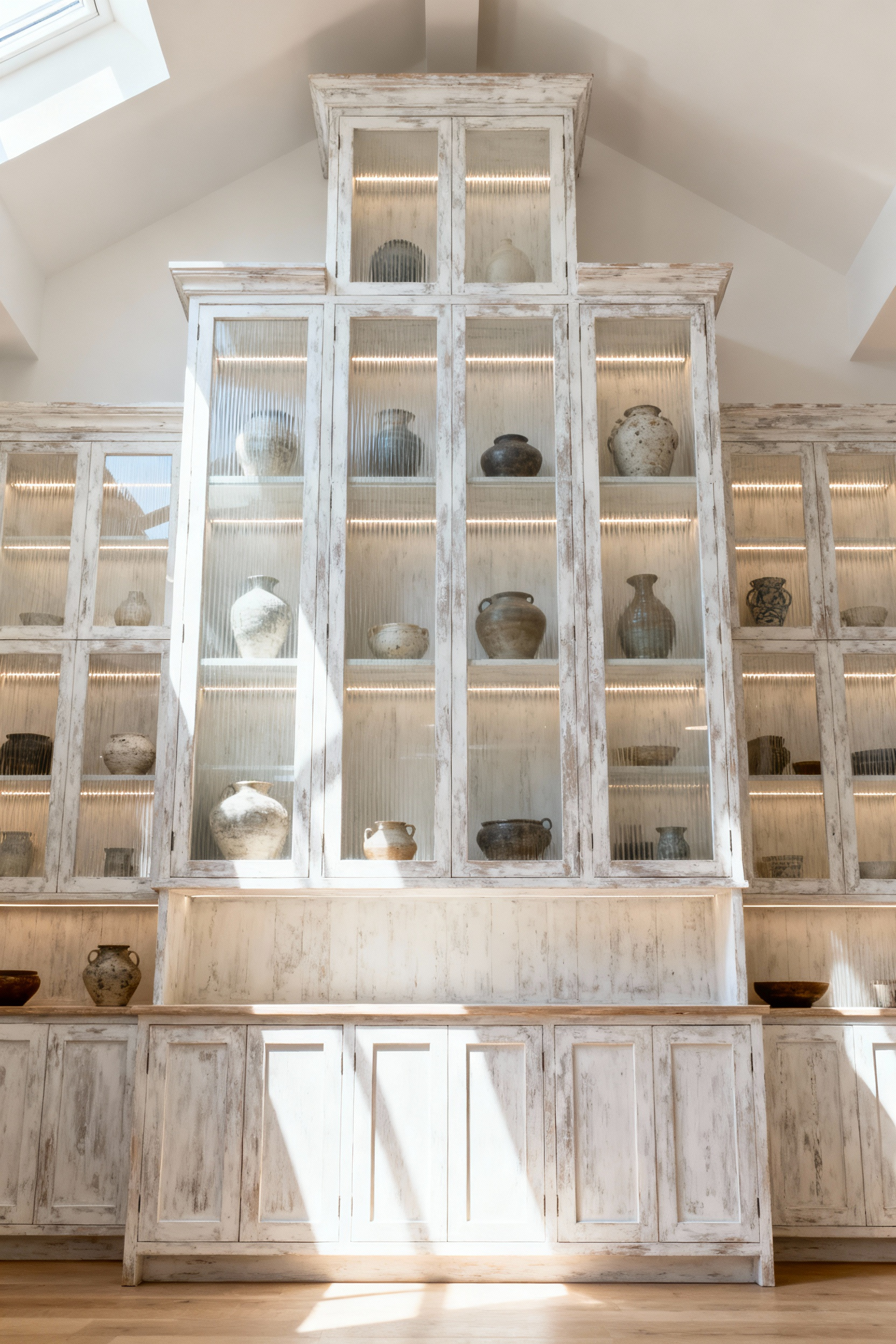
To add interest to the uppermost cabinets, I often use reeded glass or wire mesh inserts for a layer of sophistication and lightness. Robust crown molding completes the installation, ensuring the cabinets feel like an intrinsic part of the home’s architecture. Spatially, stacked cabinets are incredibly effective at framing a large window, turning what could be dead space into prime storage. This abundant storage means every item has a designated home, fostering a calm, uncluttered environment and allowing the effortless flow of daily life.
The kitchen island, in a coastal home, is the heart—the communal hearth, the stage for culinary creativity, and the anchor around which life unfolds. My philosophy is that this central element should be a magnificent focal point, a work of art blending utility with breathtaking design. Here, we can introduce a subtle contrast. Imagine an island base in richly stained walnut against lighter oak perimeter cabinetry, topped with a single, dramatic slab of Calacatta marble.
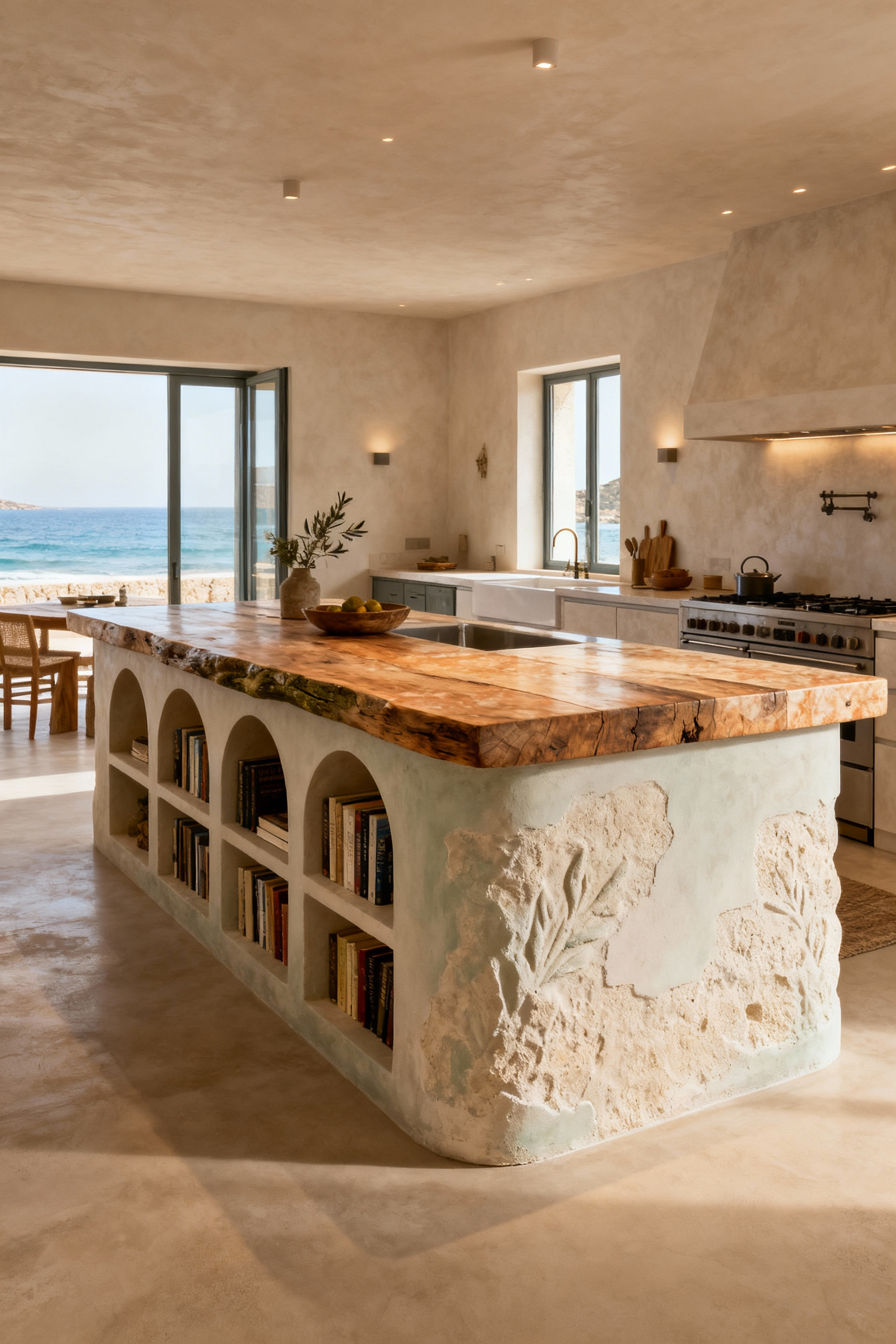
Beautifully turned legs, intricate reeded panels, or integrated display niches can add a furniture-like quality. Its generous surface can be zoned for different functions: a prep area, a workspace, and informal seating for morning coffee or conversation. This application is about more than just looks; it’s about lifestyle. The island encourages impromptu gatherings and shared moments, becoming a testament to a life lived generously and openly, which is quintessentially Mediterranean.
As we continue, our focus shifts to nuanced elements that influence the atmosphere. Here, strategic choices create a feeling of expansiveness and lightness, echoing the boundless horizons of the coast.
The coastal vernacular values an unburdened spirit. This is intricately woven into our architectural choices, and glass-front upper cabinets are a perfect expression of this. They are not just functional boxes; they are visual conduits that prevent a kitchen from feeling heavy or enclosed. The choice of glass itself is a textural conversation—pristine clarity to display curated treasures, or reeded and seeded variants to diffuse light and hint at the contents within.
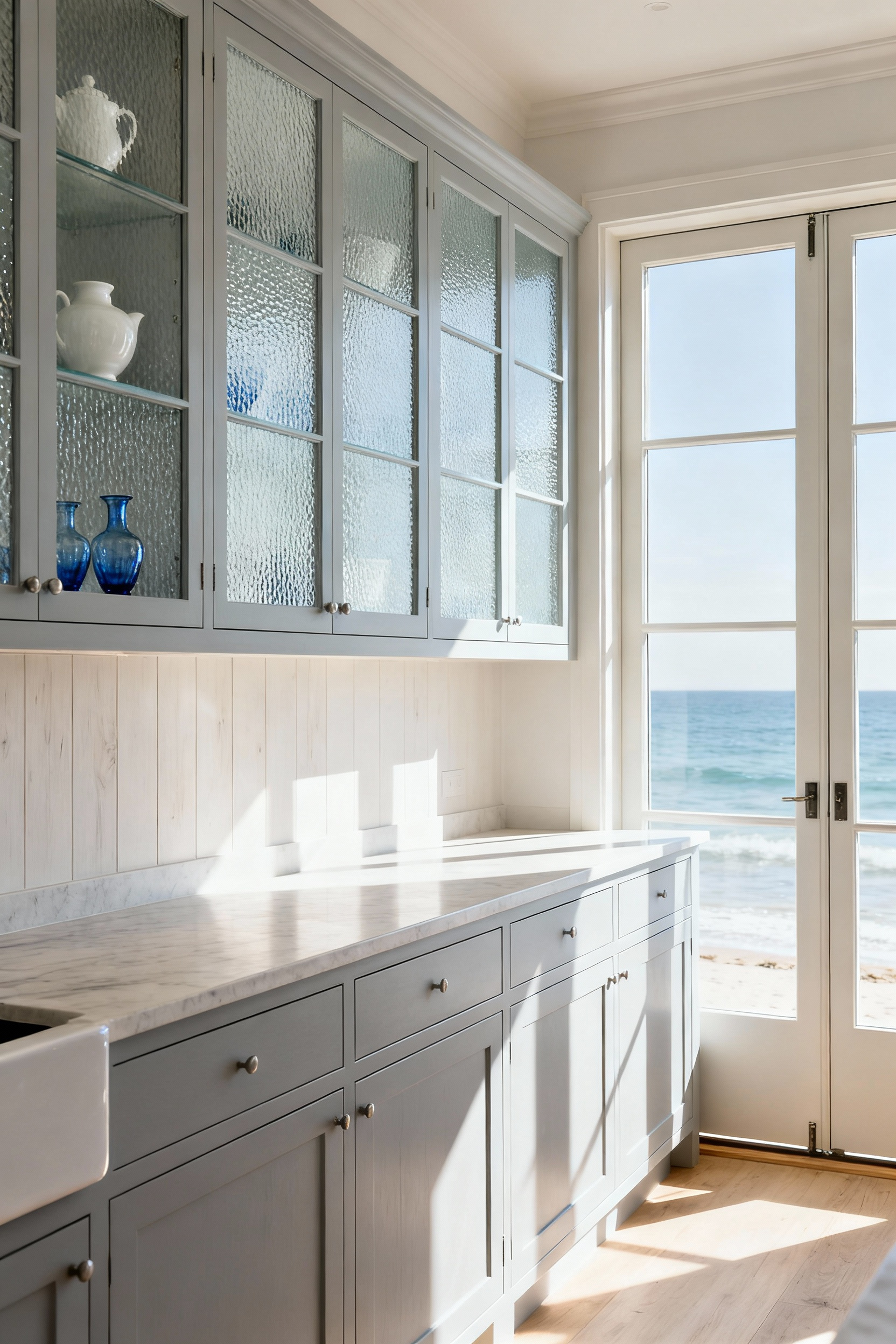
Strategically placed, glass-front uppers become architectural breaths. Consider them artfully positioned on either side of a range hood, framing a focal point with a delicate transparency. In corners, they can transform a dense area into a luminous intersection, reflecting light and extending the visual plane. Their power lies in dissolving the perceived barrier of the cabinet door, optically pushing the boundaries of the room. This fosters a sense of relaxed elegance where beauty is both accessible and integrated into daily rhythms.
A truly magnificent kitchen transcends utility to become a silent storyteller. Here we unveil how cabinetry can be meticulously curated to enhance daily rituals and infuse your home with an enduring sense of relaxed elegance.
The essence of Mediterranean living is found in effortless hospitality. Here’s what’s interesting: intelligent storage within coastal kitchen cabinets is less about cramming things in and more about choreographing a dance of ease and efficiency. Think of custom-fitted drawers for olive oils and vinegars with elegant dividers, or integrated spice racks that glide silently into view next to the stove. The interiors of these cabinets matter, too—I love using lighter woods like maple or birch for a fresh feel upon opening.
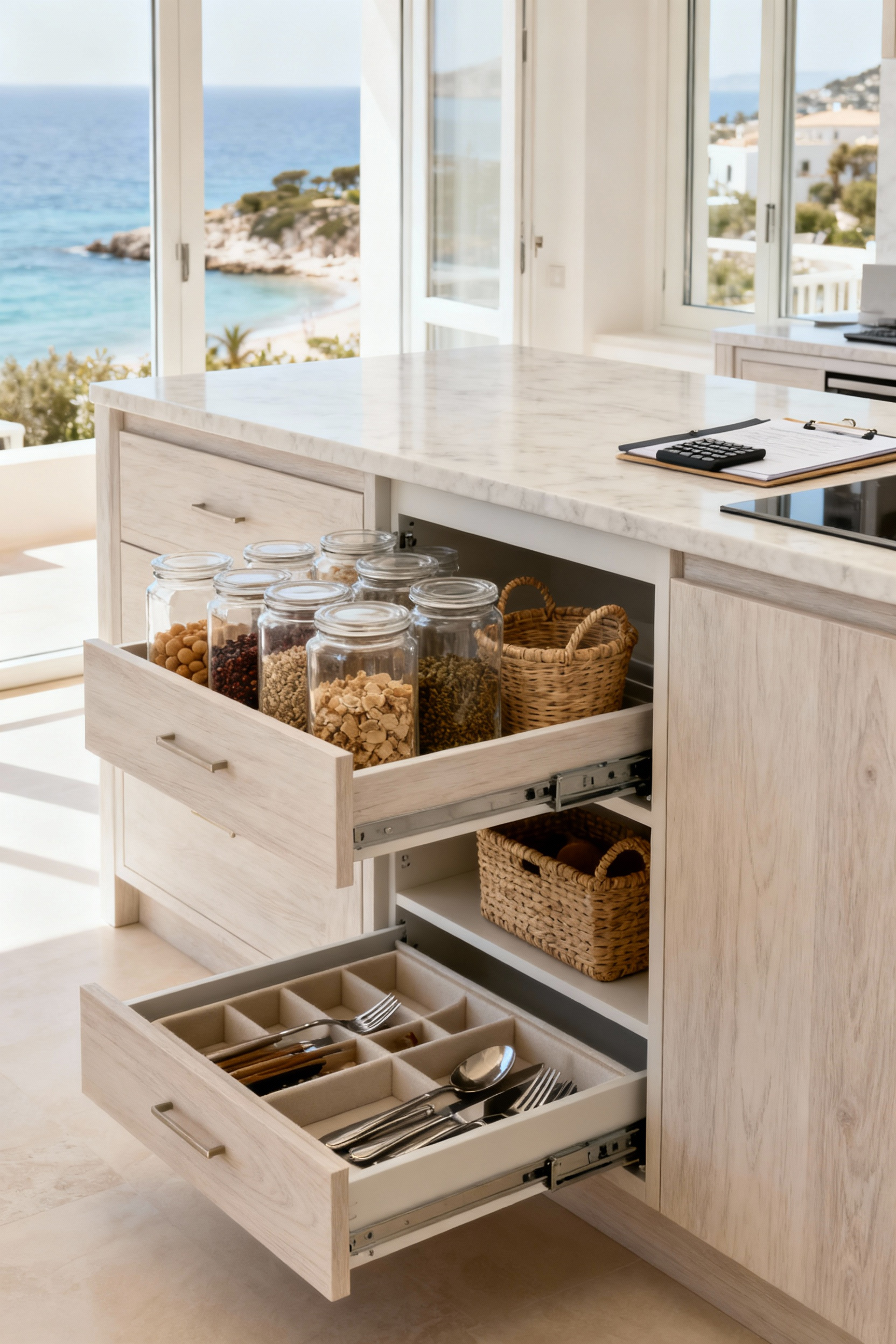
Hidden appliance garages keep countertops serene and uncluttered. Deep, pull-out drawers are invaluable for stowing large serving dishes for family meals. The goal is to reduce visual noise and promote a sense of calm. Imagine retrieving everything needed for an impromptu gathering with fluid grace. This bespoke approach ensures that every utensil and ingredient has its appointed sanctuary, allowing life to unfold with understated elegance.
The principle of timelessness ensures that the beauty of your coastal kitchen cabinets endures for generations, deepening with time like the venerable architecture of the Mediterranean coast. A coastal environment presents unique challenges: salt air, humidity, and sun. For painted cabinets, this means durable, water-resistant paints. For natural wood, a robust sealant or lacquer is paramount to protect against moisture and UV damage.
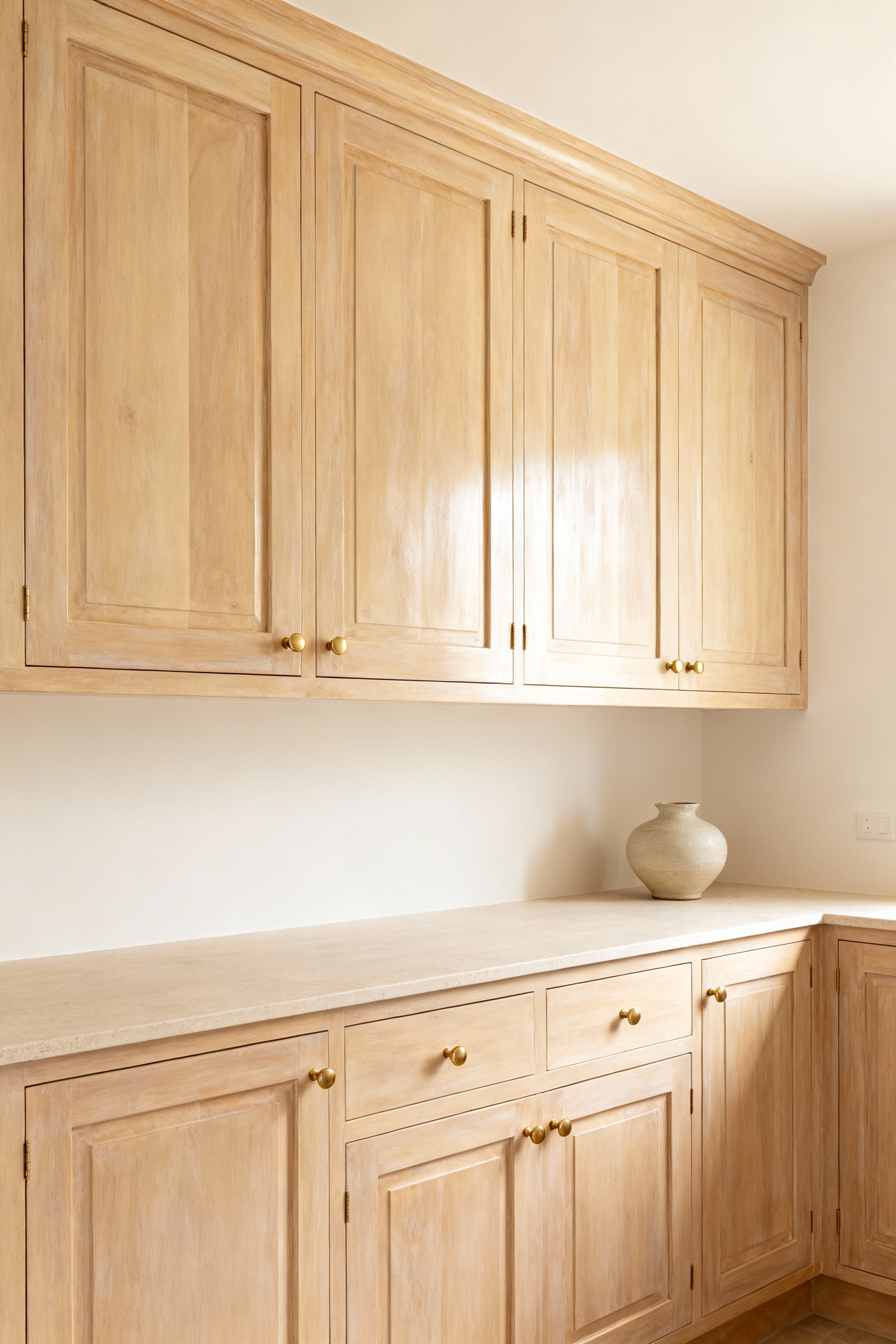
This isn’t a chore; it’s an extension of the design process. Regular, gentle cleaning with a pH-neutral cleaner is essential. Swiftly address spills to prevent staining, and use cabinet bumpers to cushion door closures. This conscious effort of care fosters a deeper connection to your home, ensuring your kitchen remains a vibrant, welcoming heart, gracefully bearing the marks of time and memory without compromising its splendor.
A kitchen is the heart of the home, a sacred space where culinary rituals become expressions of love. Customizing coastal kitchen cabinets for gourmet pursuits is about making every step of the cooking process an intuitive pleasure. I learned this when designing a kitchen for a passionate baker; we created a dedicated station with a pull-out shelf for her heavy mixer and drawers pre-fitted with containers for flour and sugar. The design was born directly from her daily ritual.
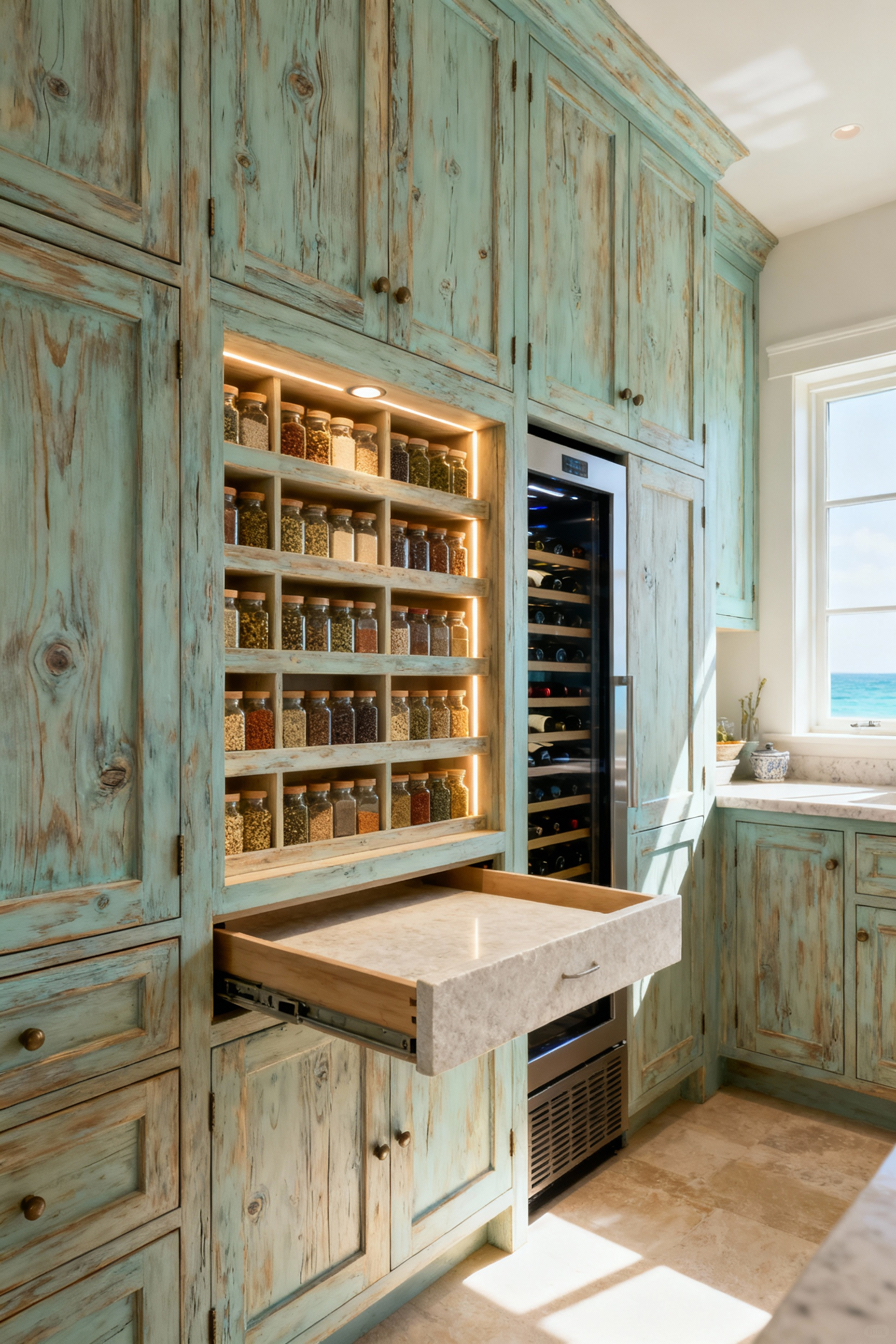
A coffee connoisseur might desire a cabinetry niche with plumbing for an espresso machine and drawers for cups and pods. A home chef might want a knife block drawer perfectly sized for their collection. These bespoke integrations create a streamlined workflow where creativity can flourish. They reflect a deeper understanding of how you live, imbuing every meal preparation with joy and transforming routine into ritual.
The final harmony is created by the synergy of surfaces, where the interplay between cabinets, backsplashes, and countertops elevates the kitchen to a sophisticated, artistic statement. I often gravitate toward countertops that echo the natural world: honed white quartz like pristine sand, or natural marble whose veins recall ancient ruins. The backsplash is where artistry can truly unfold. Hand-painted ceramic tiles or shimmering Zellige tiles, with their irregular surfaces, reflect light like the sun dancing on water.
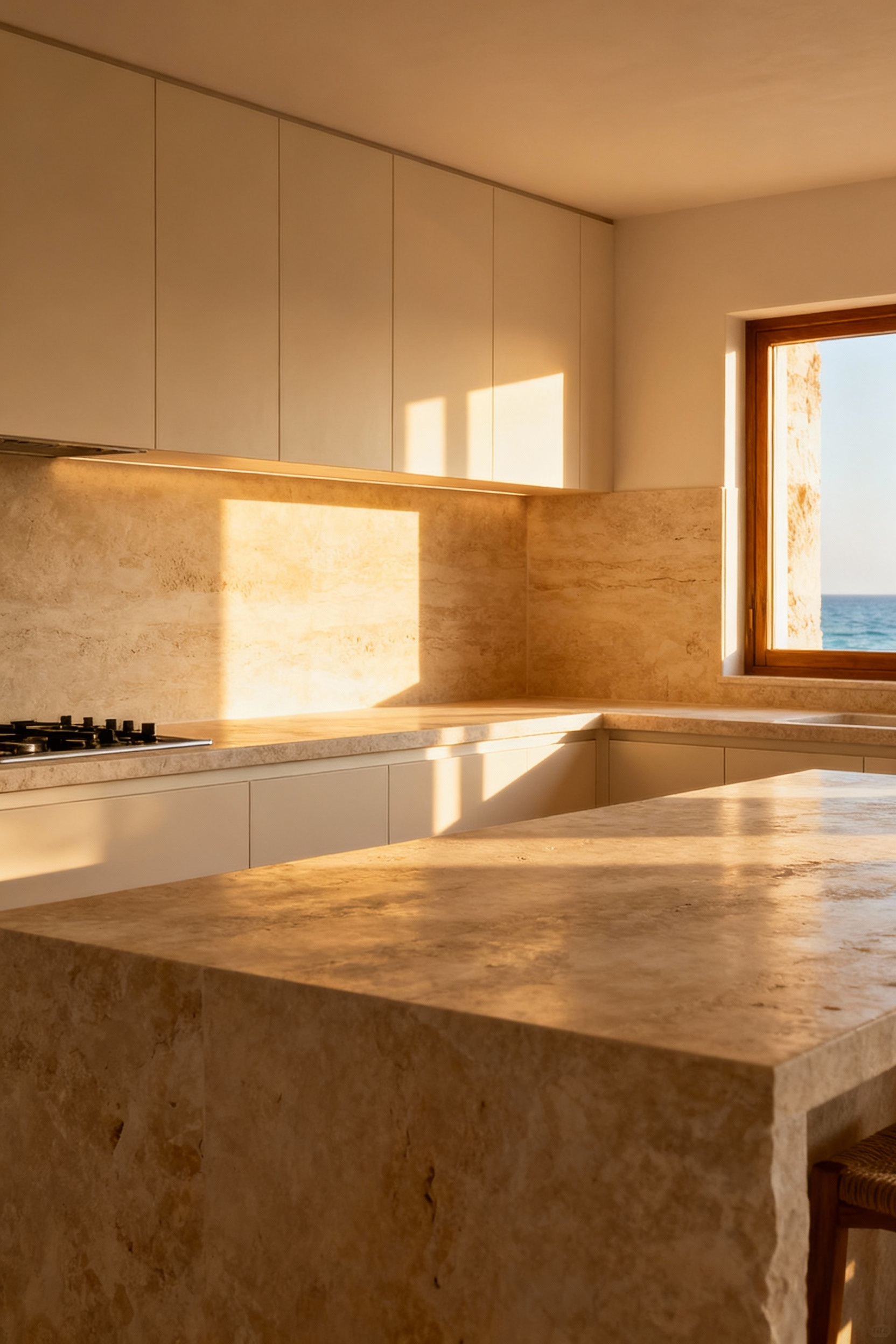
For understated elegance, a smooth plaster finish is a hallmark of Mediterranean design. I also love using a slab backsplash that extends the countertop material upwards for a clean, architectural look. A waterfall edge on an island can seamlessly meet the floor, anchoring it as a sculptural centerpiece. This thoughtful harmony of surfaces cultivates a backdrop that fosters peace and encourages presence, mirroring the relaxed ambiance of a sun-drenched coastal villa.
Exceptional design integrates seamlessly into the rhythm of daily life. In the coastal home, this means cultivating spaces that exude comfort and invite connection. Through considered details, we weave this narrative into the very fabric of our living spaces.
The coastal ethos extends beautifully into the dining nook, elevating it from a simple eating area to a sanctuary for gathering. When we design architectural built-in cabinetry for banquette seating, we’re not just adding storage; we’re sculpting an environment. It’s a very Mediterranean philosophy where comfort and communion are paramount. To resonate with a coastal sensibility, the material choices are key. The warmth of bleached oak can echo driftwood, while soft, muted paint finishes lend an ethereal quality.
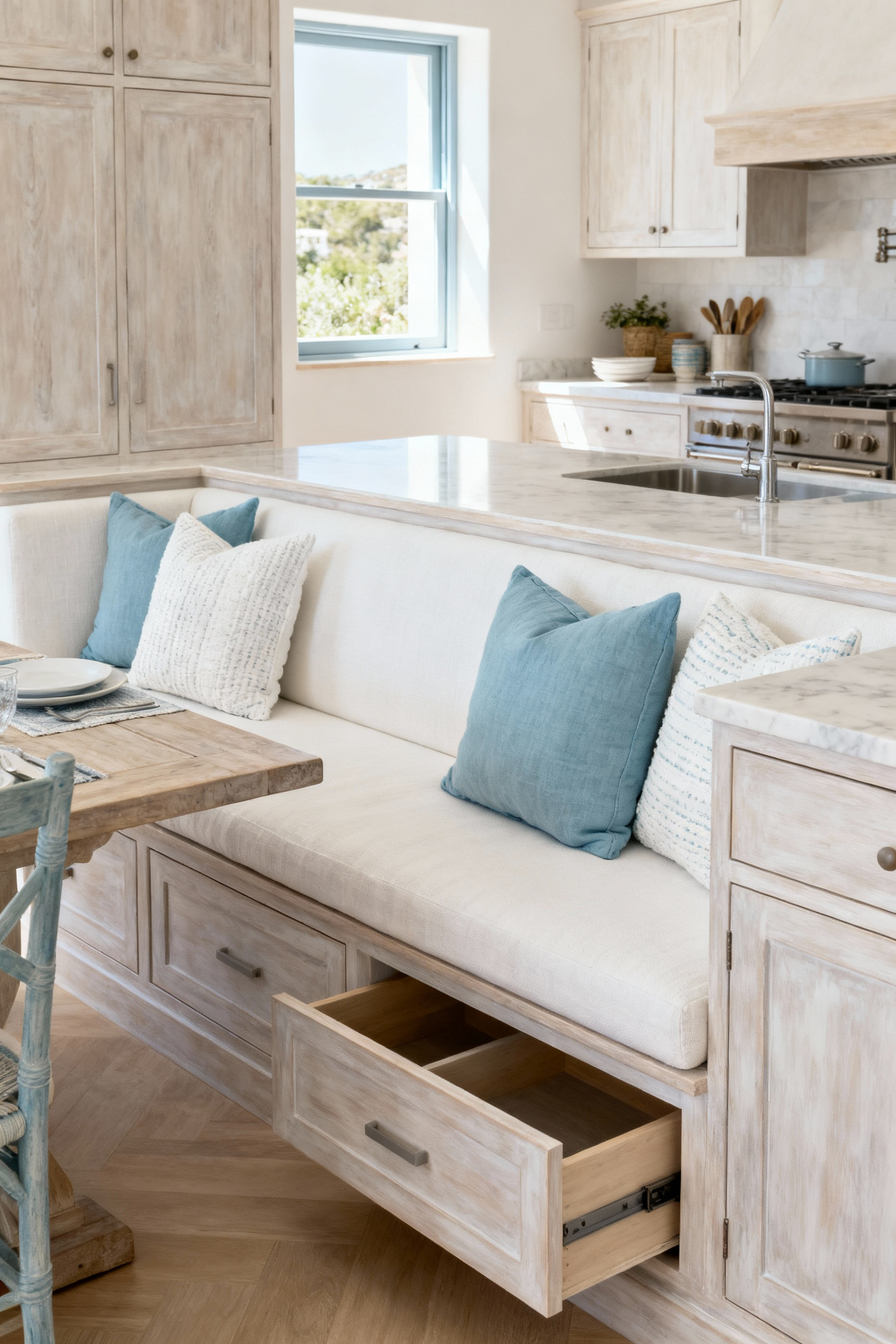
Beneath the plush seating, cleverly designed drawers provide discreet storage for linens or serveware, maintaining an uncluttered visual plane. Flanking the banquette, integrated shelving can frame the space, offering a place for cherished objects. These integrations ensure the dining nook feels intentional, an integral part of the home’s soul. It’s about crafting moments—a dedicated haven where the act of dining becomes a ritual of connection and repose.
As our journey through these designs comes to a close, it’s clear that the allure of a coastal kitchen goes far beyond aesthetics. It’s about capturing a story—one of sun, sea, and timeless traditions. These coastal kitchen cabinets are more than just storage; they are the vessels of a philosophy of relaxed elegance, where utility is always imbued with beauty and heart.
My work is centered on creating kitchens that feel both authentically lived-in and refreshingly refined—sanctuaries designed for both culinary creativity and the simple joy of gathering. I invite you to take these ideas and translate them into the heart of your own home. Let this guide be a starting point to infuse your kitchen with the serene grandeur of the coast, crafting a space that breathes with the light and warmth of its storied origins. May your kitchen become a testament to enduring design, a true haven that celebrates the sun-drenched spirit of life by the sea.