Physical Address
304 North Cardinal St.
Dorchester Center, MA 02124
Physical Address
304 North Cardinal St.
Dorchester Center, MA 02124
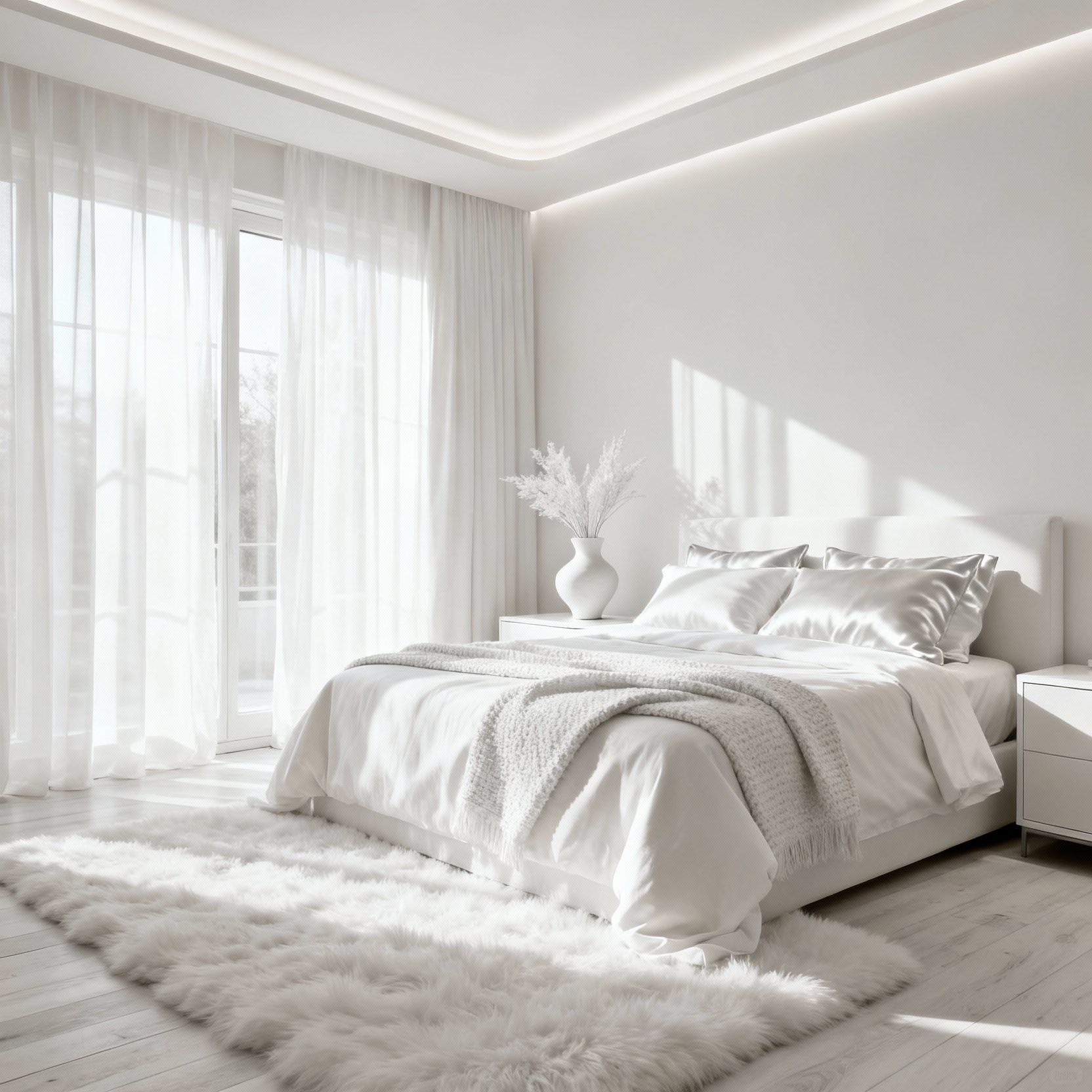
Discover 20 luxurious white bedroom ideas from Alexandra Winters, Hotel-Inspired Design Specialist. Create serene, sophisticated sanctuaries & debunk myths of sterile white spaces.
Most people believe a white bedroom is a design shortcut—a simple, perhaps even uninspired, choice that leads to a sterile, clinical environment. Interior design blogs often reinforce this, treating it as a safe but boring default. Here’s what they are not telling you: My career designing suites for the world’s most exclusive hotels has taught me that a masterfully executed white room is the absolute pinnacle of luxury. It’s an exercise in discipline and nuance. These twenty insights, drawn from years of creating five-star sanctuaries, will show you how to move beyond blandness and compose a white bedroom that feels impossibly serene and deeply personal.
What these mainstream depictions fail to grasp is that white is not an absence of color; it is a spectrum of light and texture. My work revolves around this very principle—revealing the profound richness a white palette holds when approached with strategic intent. From the crisp whisper of Italian-milled linens to the profound gleam of lacquered millwork, true elegance emerges when you remove chromatic distraction. This curation will guide you from the foundational philosophy of white, through its materialization into a sensory experience, into the art of spatial choreography, and finally, into the daily rituals of luxe living. This is not about painting a room white; it is about cultivating a sanctuary.
Before we even consider a swatch of paint, we must understand the why behind a white bedroom. This is about deconstructing the aesthetic to its core principles. To master this design, one must appreciate white not as a mere color choice, but as a deliberate statement—one of serenity, clarity, and sophisticated restraint.
The greatest misconception about white is that it is a singular color. Nothing could be further from the truth. In the world of high-end hospitality design, “white” is a complex language of undertones that set the entire mood of a space. It isn’t an absence of color, but a subtle confluence of pigments—cool whites with hints of grey for architectural crispness, or warm, gallery-esque whites with creamy undertones that feel like a gentle embrace. In my hotel-inspired design specialist practice, the first decision is never just ‘white’; it is which white, as this single choice dictates every feeling the room will evoke.
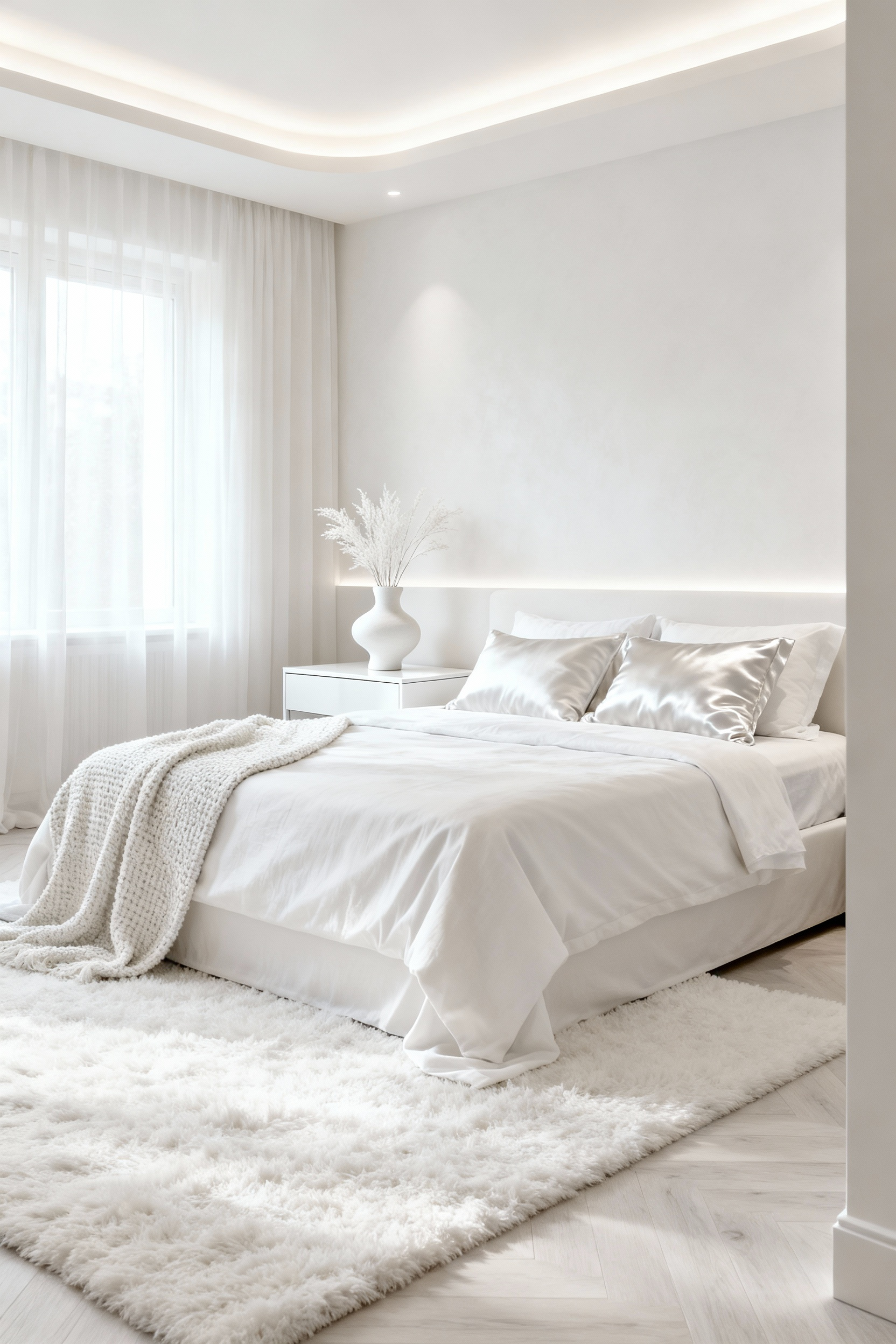
Recognizing these distinctions is paramount. For a bedroom that feels ethereal and expansive, you would select a cool, brilliant white to amplify natural light and push the walls away. But to create a cocooning retreat, your palette would shift to warmer, chalkier whites layered across textiles and trim, enveloping you in softness. The art lies in layering these nuanced whites—pairing a creamy ivory wall with crisp, pure white bed linens. This isn’t just a neutral backdrop; it’s a deliberate choice of emotional tonality that makes a room feel custom-tailored and deeply resonant.
In a world saturated with visual noise, the deliberate removal of competing colors is a radical act of peace. This is the core philosophy behind the most tranquil hotel suites I’ve designed. By stripping away chromatic dominance, we create an environment that quiets the mind, minimizes cognitive load, and allows for genuine restoration. The white bedroom becomes a sanctuary precisely because of what it lacks: visual clutter.
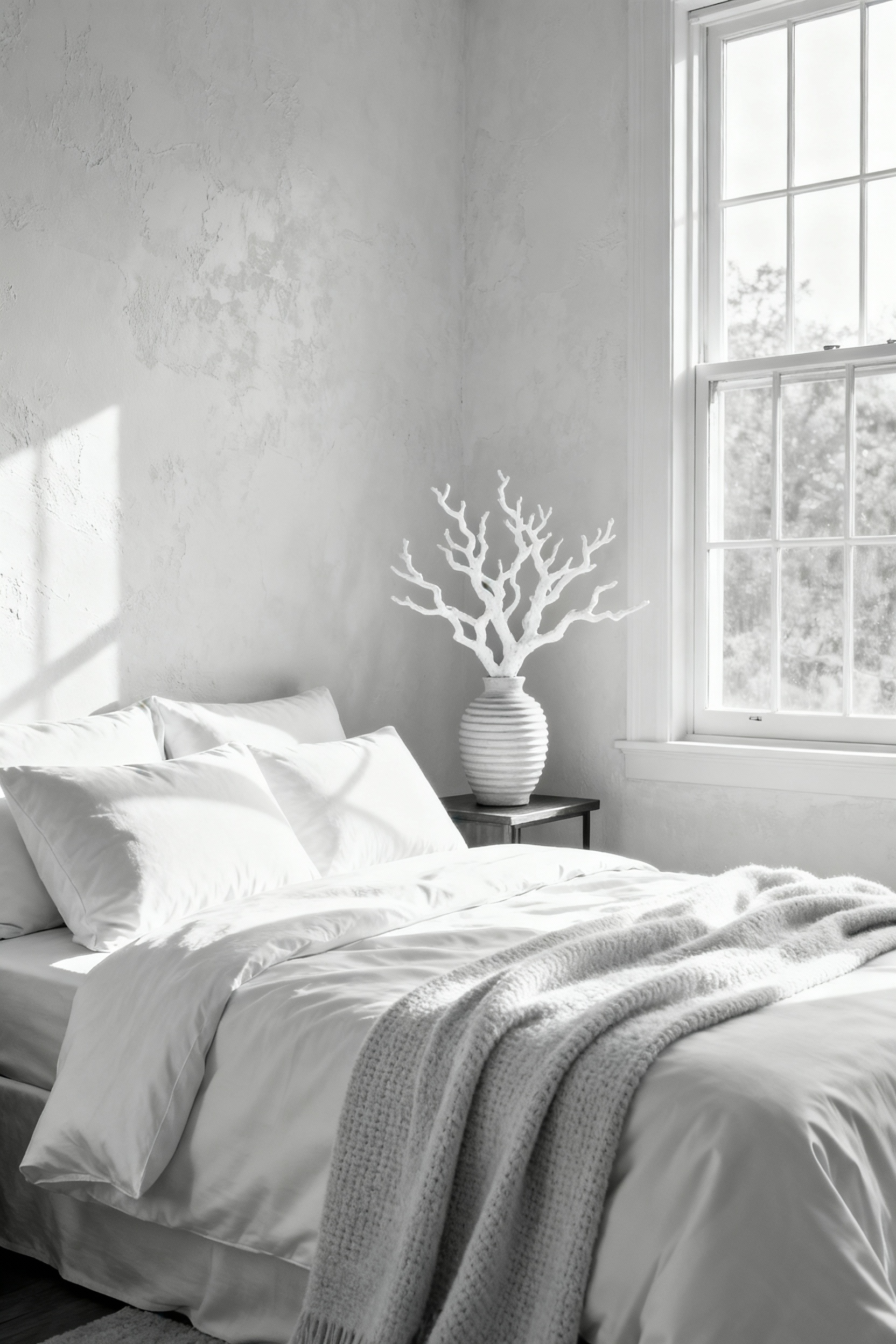
With color taking a backseat, other elements—texture, form, light—become the heroes. Suddenly, you notice the luxurious sheen of silk charmeuse, the organic integrity of Belgian linen, and the unparalleled softness of cashmere. A matte ceramic lamp, the cool touch of polished nickel, a nubby wool rug—these details provide a rich sensory feast without overstimulating the eye. The room becomes a symphony of tactile sensations, ensuring the space feels inviting and dynamic, never flat. It’s a powerful demonstration that profound richness comes not from an abundance of color, but from the artful elegance of its absence.
The true artistry of a magnificent white bedroom resides in the sophisticated use of its subtle undertones. These nearly imperceptible whispers of grey, blush, or even celadon are the quiet architects of atmosphere. It is this nuanced understanding that elevates a space from generic to bespoke, allowing white to convey an entire spectrum of moods. A white paint with a verdant-grey undertone can ground a room with an earthy tranquility, while one with a blush undercurrent radiates a soft, inviting glow.
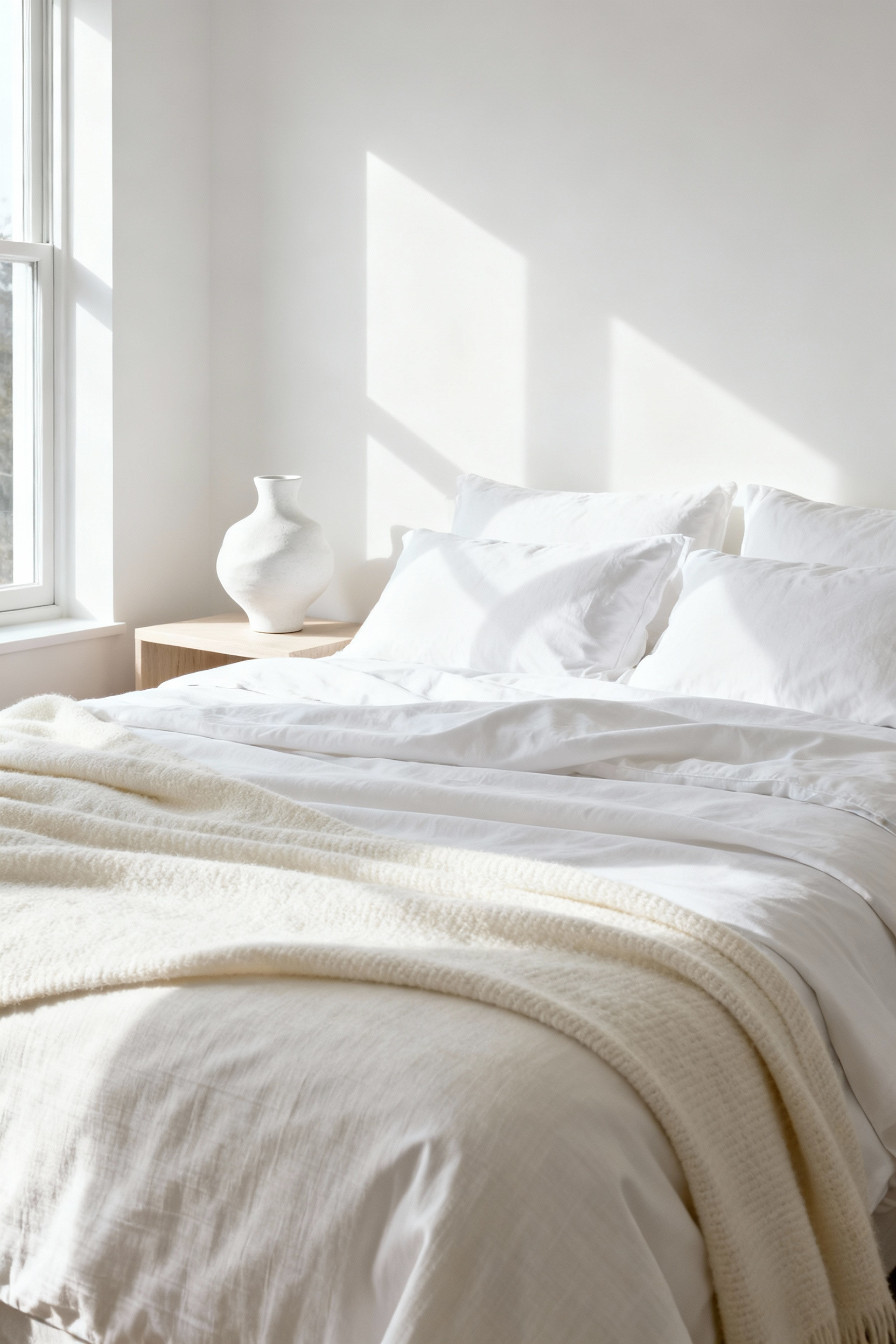
This strategy prevents sterility and fosters an incredibly rich visual landscape. Rather than relying on a stark black-and-white contrast, which can feel harsh and dated, depth is achieved by layering whites with varied undertones. Imagine pairing walls with a hint of warm greige with a bed dressed in a buttery cream linen, accented by sheer curtains that shimmer with a faint silvery blue. Each element, though nominally ‘white,’ contributes a distinct quality. What I tell my clients and readers is that the most luxurious spaces create harmony not through matching, but through a masterful blending of complementary tones. It’s a quiet, confident approach that feels both curated and effortlessly natural.
There is an undeniable link between our surroundings and our psychological state. I design hospitality spaces based on this principle: the bedroom is not just a room, but a sanctuary engineered to soothe the nervous system. The inherent associations of white—purity, order, clarity—directly translate into an environment that orchestrates a tranquil “brainscape.” A pristine white aesthetic encourages a certain discipline, a gravitation toward surfaces that are smooth, clean, and uncluttered.
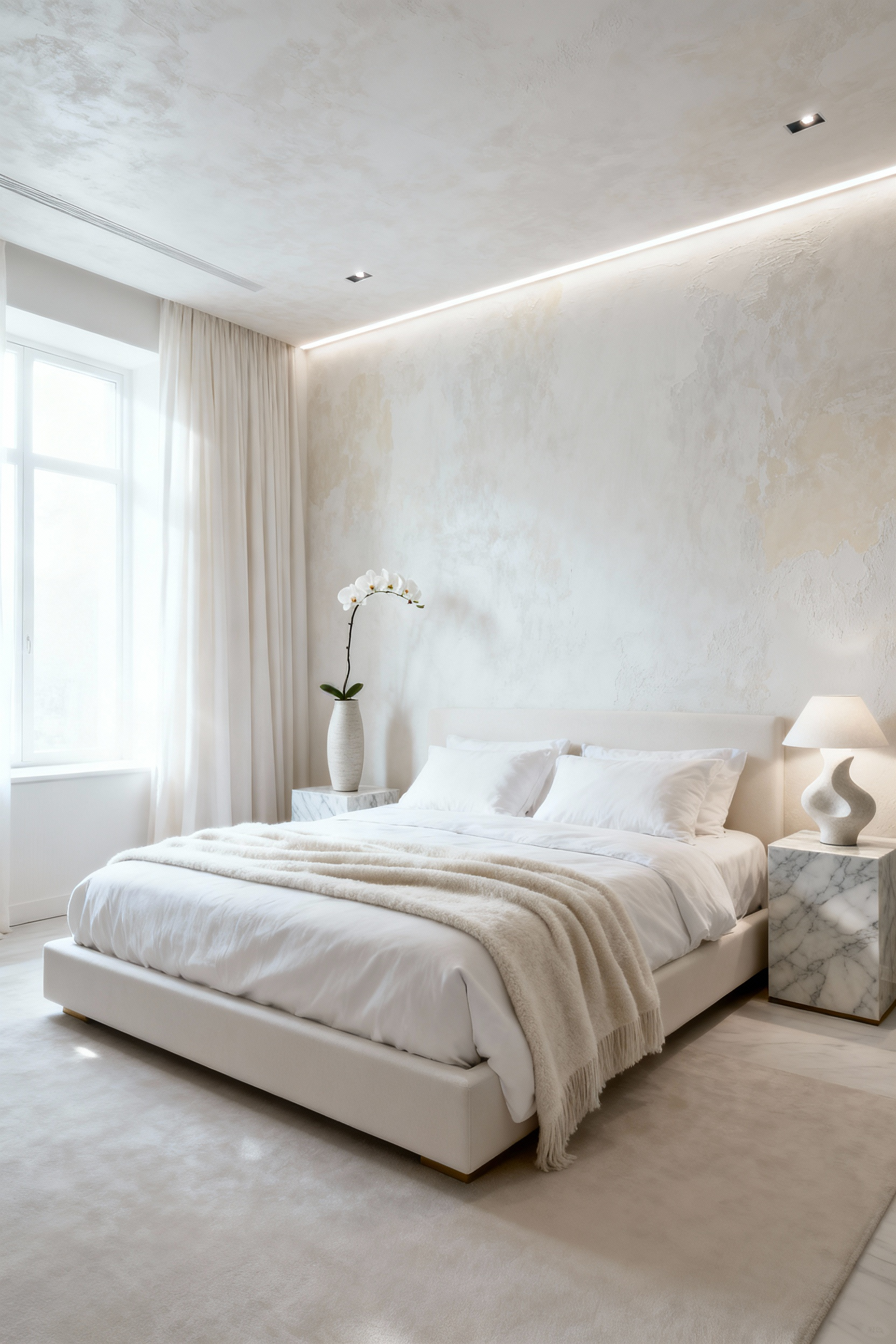
This philosophy mandates a meticulous approach to organization and flow. Concealed storage becomes paramount, because visible clutter is the enemy of calm. In the most successful white bedroom ideas, every object has earned its place. Clean lines and unburdened surfaces allow the eye to rest and the mind to wander without impediment, fostering an atmosphere conducive to introspection and deep rest. It’s more than just an aesthetic; it’s a powerful tool for well-being, actively supporting a lifestyle of intention and mental clarity.
Building upon the ‘why’, we now explore the ‘how’. White is not passive; it is an active agent in shaping a room. This section examines white’s foundational role in orchestrating light and creating the delicate balance that defines a true sanctuary.
More than a color, white is an architect of light itself. Its primary function in any space I design is to conduct and sculpt illumination. It doesn’t just brighten a room; it dynamically reshapes the perception of its volume, lending an ethereal quality that can make even a modest room feel expansive. White surfaces engage in a constant dialogue with light, amplifying, diffusing, or softening it to dictate the mood and scale.
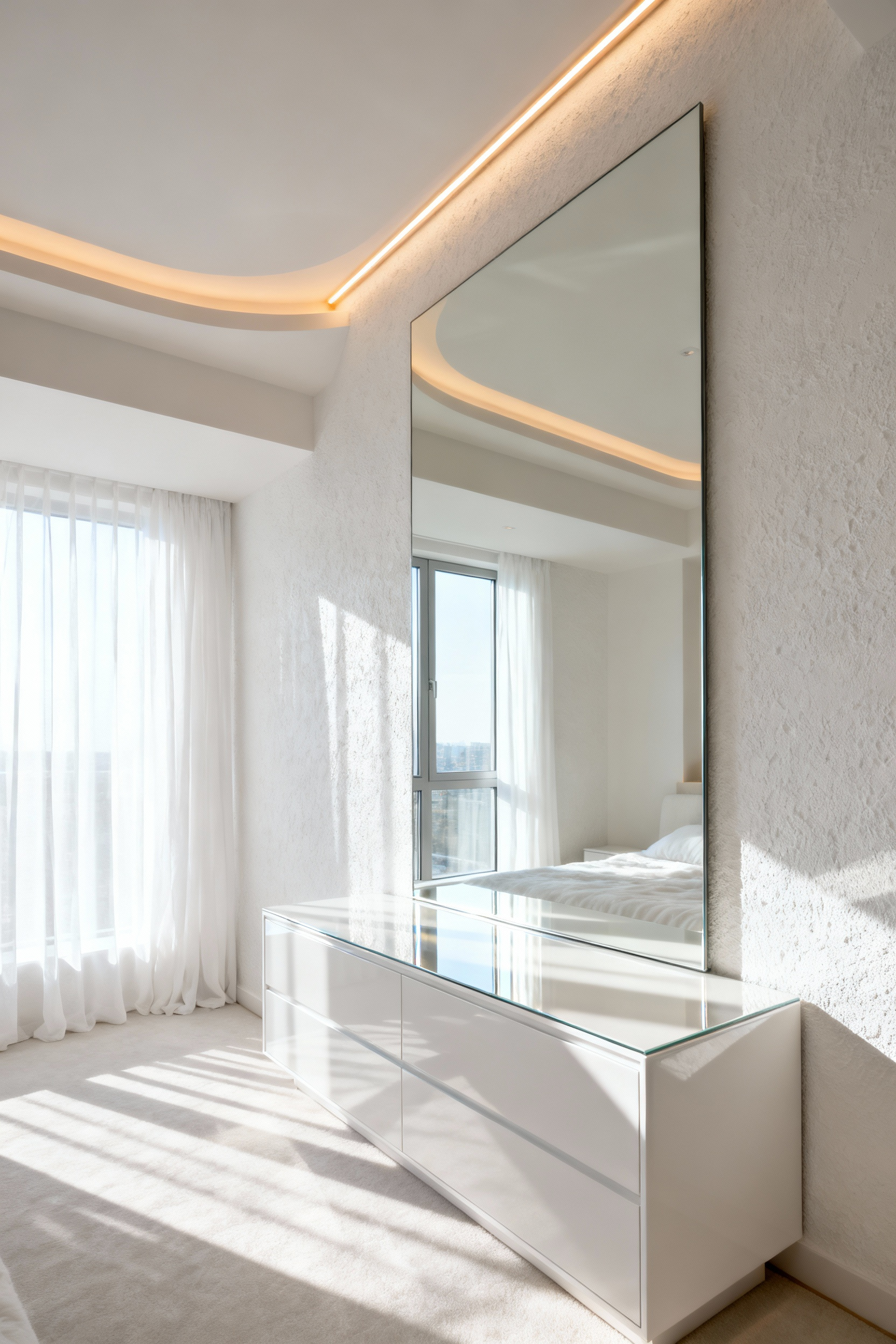
The material finish is your primary tool here. A matte or chalky white will scatter light diffusely, creating a soft, even glow that minimizes harsh shadows—the secret to that serene, velvety depth you feel in a luxury spa. In contrast, a high-gloss lacquer or a polished plaster reflects with crisp intensity, offering a modern, refined edge. I learned this when designing a hotel suite in a historic, light-challenged building: by using a slightly polished Venetian plaster, we were able to bounce what little light there was into every corner, making the room feel luminous and grand. White becomes your instrument for shaping not just the look of a room, but the feeling of its dimensions.
With white as your canvas, form and texture achieve their maximum impact. True mastery lies not in stark simplicity, but in the sophisticated understanding of visual equilibrium—how different shapes and materials can be orchestrated to create depth and interest without relying on color. The interplay of diverse textures is what saves a white bedroom from feeling sterile. It’s about creating an experience that engages more than just the eyes.
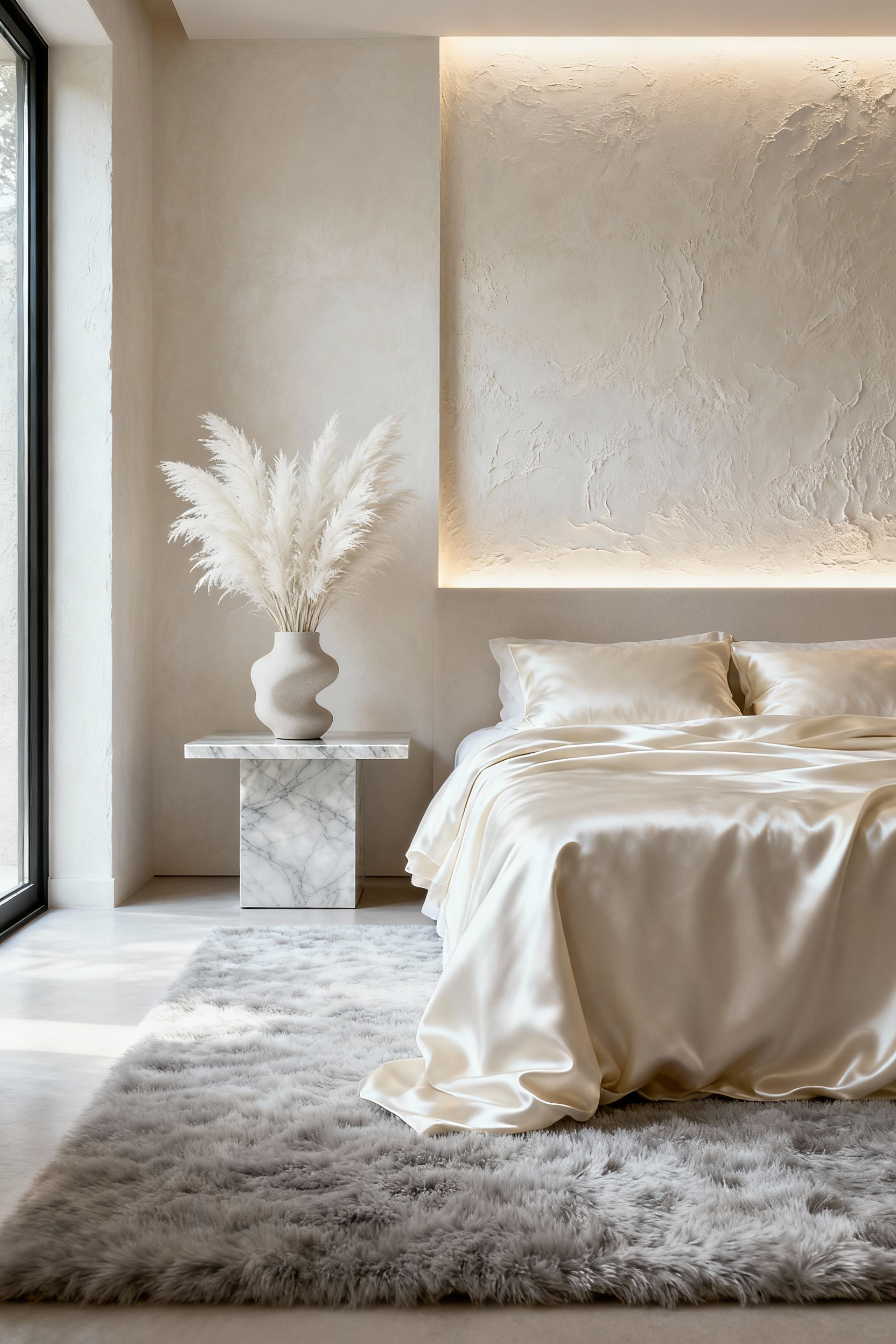
Imagine a chunky cable-knit throw casually draped over a pristine linen duvet. Picture the subtle shimmer of raw silk pillows against smooth, eggshell-finished walls. These are not random choices; they are deliberate textural conversations. Pale woods like limed oak or bleached maple introduce organic warmth, while a sparing use of brushed brass or polished chrome adds a touch of refined sparkle. Even varying the whites—a creamy ivory alongside a crisp optic white, punctuated by a cool dove grey—creates a rich tapestry of distinction. This is the essence of quiet luxury: a space that is visually calm yet sensorially rich.
A white bedroom’s soul is found in its tangible essence—how it feels to the touch, how light plays across its surfaces. This is where we move from theory to application, exploring the material choices that elevate a white space into a deeply layered, luxurious sanctuary.
A pristine white palette without textural variation is a missed opportunity. The most successful rooms are symphonies of sensory experience. This begins with the foundational layer of the bed: crisp organic cotton percale offers a cool, clean sensation, while washed linen provides a softer, more inviting drape. From there, you build. In my professional experience designing for resorts, a room isn’t finished until it has at least five different textures you can experience from the bed alone. This creates that immersive, five-star feeling.
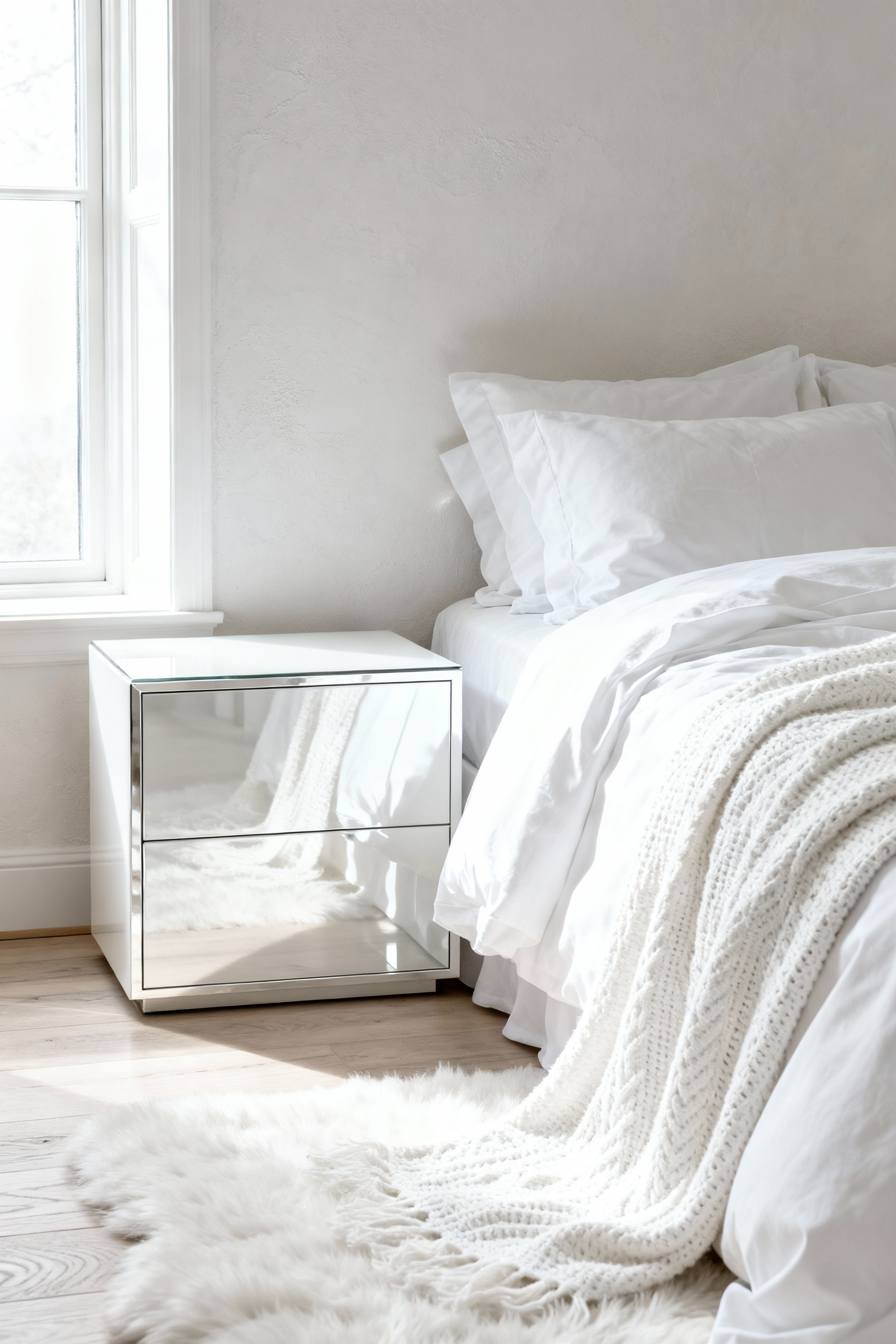
This textural conversation extends throughout the room. Consider the juxtaposition of a high-gloss lacquered nightstand, reflecting light with mirror-like precision, against a headboard upholstered in a matte bouclé. Sheer voile curtains diffuse light with a gossamer airiness, contrasting the structured weave of heavier linen panels. These are the details that generate profound depth and warmth, creating a space that is not only visually harmonious but profoundly inviting to the touch.
Reflection is a dynamic tool for expanding perceived space and amplifying light. Antique mirror, with its subtle foxing, adds character and a gentle, diffused reflection. Polished metals—from the cool gleam of chrome to the warm luster of unlacquered brass—introduce varying temperatures of light. High-sheen ceramics or impeccably lacquered furniture offer a solid, unwavering mirror to their surroundings, creating a sophisticated brilliance.
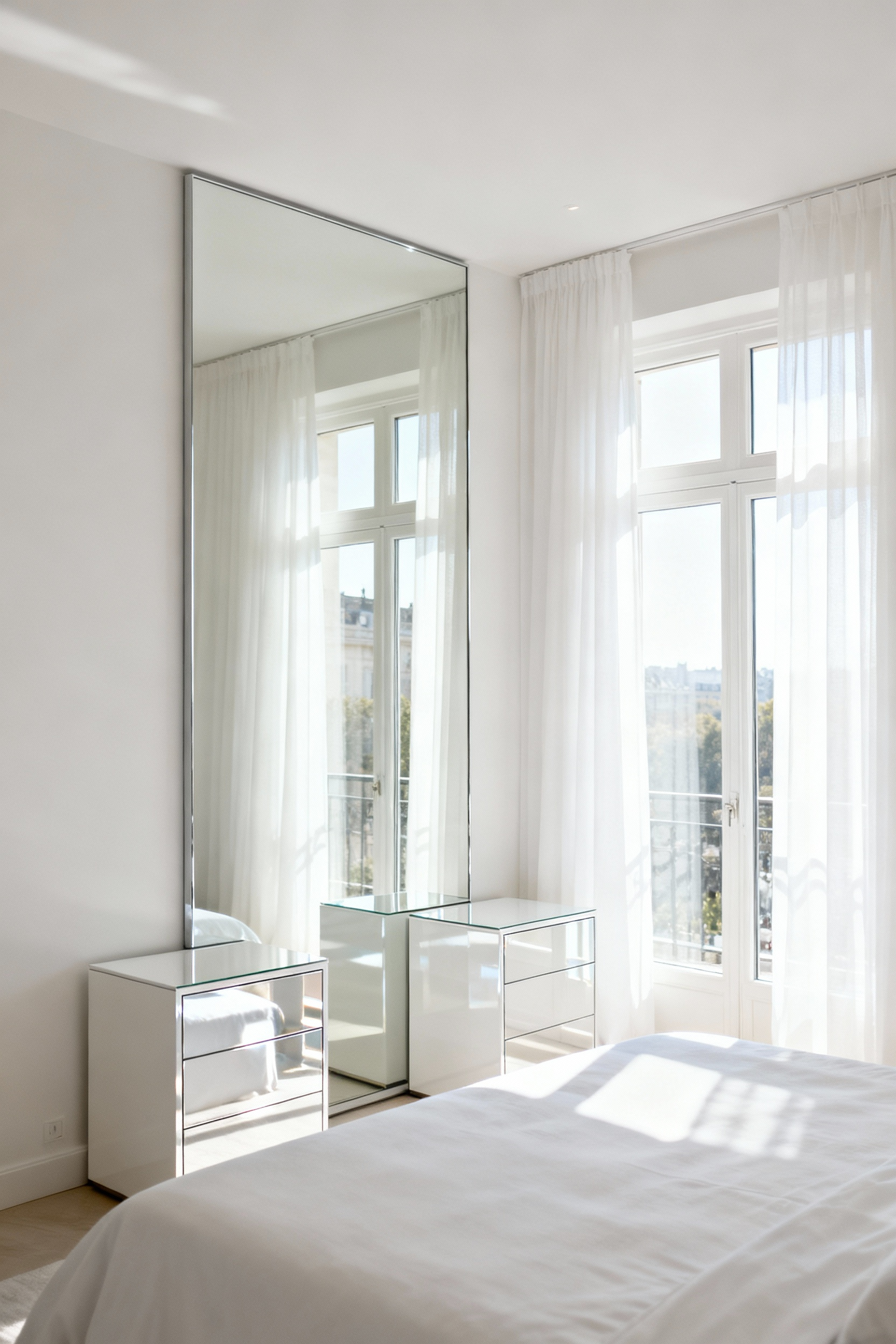
The application of these elements must be strategic. A large leaning mirror opposite a window can nearly double the room’s perceived size and maximize daylight. Mirrored wardrobe doors or a chic console table can dissolve visual bulk, making furniture feel lighter. Small metallic accents—a polished tray, a crystal box, a sleek lamp base—catch and refract light, scattering glints of brilliance. This harnessed radiance prevents a white room from ever feeling static, instead fostering an environment that feels dynamic and elegantly vibrant.
The very walls of a room can be transformed into works of art. Beyond conventional paint, handcrafted finishes like Venetian plaster or traditional limewash introduce an inimitable organic character and a lived-in luxury. These finishes interact with light in extraordinary ways, revealing subtle shifts in tone and texture throughout the day. It’s an antidote to the sterile, mass-produced aesthetic.

A feature wall in limewash can anchor a room with its quiet, mottled depth. For a truly enveloping effect, treating all four walls and the ceiling creates a seamless, cocoon-like serenity. The slight imperfections and soft, porous quality cannot be replicated by a paint roller. This artisan’s touch imbues a space with soul, offering a quiet luxury that feels uniquely tailored and serenely grounded—a daily retreat that soothes through its exquisite, subtle complexity.
To prevent a white bedroom from feeling cold, a strategic integration of natural wood is essential. It provides an organic anchor, injecting warmth without disrupting the serene palette. This isn’t about heavy, dark woods; the focus is on understated tones like blonde ash, bleached maple, or limed oak. The goal is to choose finishes that celebrate the natural grain and texture.
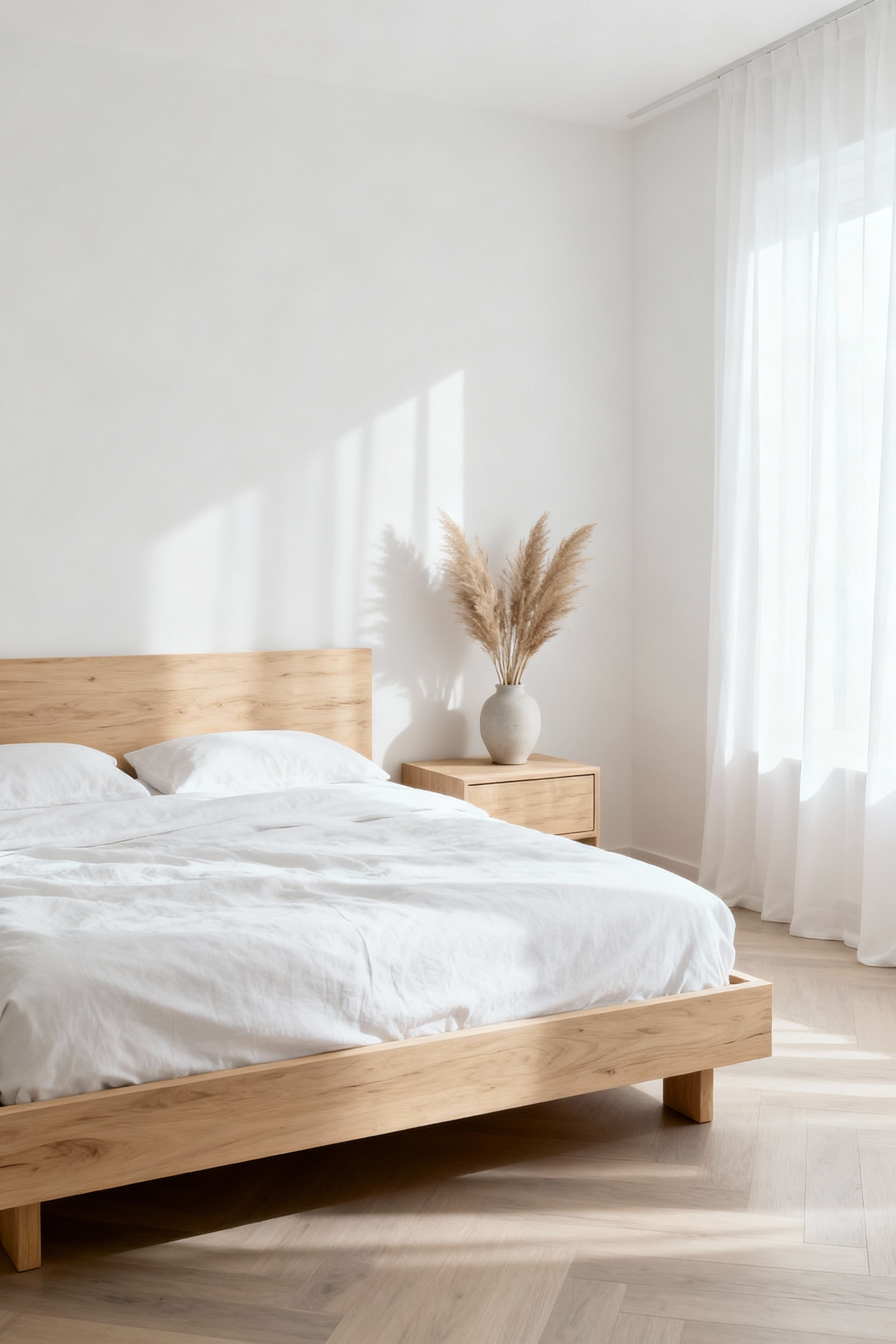
This warmth can be introduced through a minimalist bed frame in light oak or nightstands crafted from pale timber. Natural wood flooring provides a foundational layer of warmth underfoot. Even smaller touches, like a beautifully carved wooden bowl on a dresser or a chair with elegant wooden arms, can make a significant impact. This interplay between pristine white surfaces and the subtle, earthy nuance of wood creates a timeless aesthetic that feels both refined and utterly inviting.
In the quiet symphony of a white bedroom, fabrics are not mere accessories; they are primary instruments. This section explores how the careful selection and juxtaposition of different textile finishes can weave a narrative of sophisticated comfort and compelling visual depth.
In a monochromatic room, the discerning eye understands that true luxury is felt as much as it is seen. The art is in the deliberate orchestration of matte and sheen textiles. Matte fabrics—linens, wools, crisp cotton percales—absorb light, creating soft visuals that exude grounded comfort and understated elegance. They are the quiet, sophisticated foundation of the room. In contrast, fabrics with a sheen—sumptuous silks, decadent velvets, polished sateens—playfully engage with light, reflecting it to introduce movement and a distinct air of opulence.

The mastery lies in their artful juxtaposition. Imagine the tactile delight of crisp, matte percale sheets perfectly contrasted by the silken caress of lustrous decorative pillows. I’ve seen this play out when reviewing mock-up hotel rooms; a design can look beautiful in a render, but until you can touch the velvet headboard and feel the weight of the linen throw, you don’t know if it truly works. This calculated interplay between absorptive and reflective surfaces prevents a white scheme from falling flat, bestowing it with a dynamic character that reveals itself with every shift in light. This is how a bedroom becomes a multi-sensory retreat.
A sublime sanctuary is never accidental. It is the result of deliberate spatial choreography—the orchestration of light, the strategic arrangement of elements, and the nuanced introduction of art. Here, we explore how these tenets converge to create spaces of unparalleled serenity and refinement.
A masterful white palette is never truly monochrome; it is a dynamic canvas of subtle distinctions. This is achieved by layering soft neutral accents and meticulous tonal gradations. Shades like ecru, alabaster, oyster, and pearl create a rich visual texture without introducing disparate color. Natural fibers are key here—unbleached linen, cashmere, and tactile wools each possess an innate ability to interact with light uniquely, contributing to this delicate symphony.
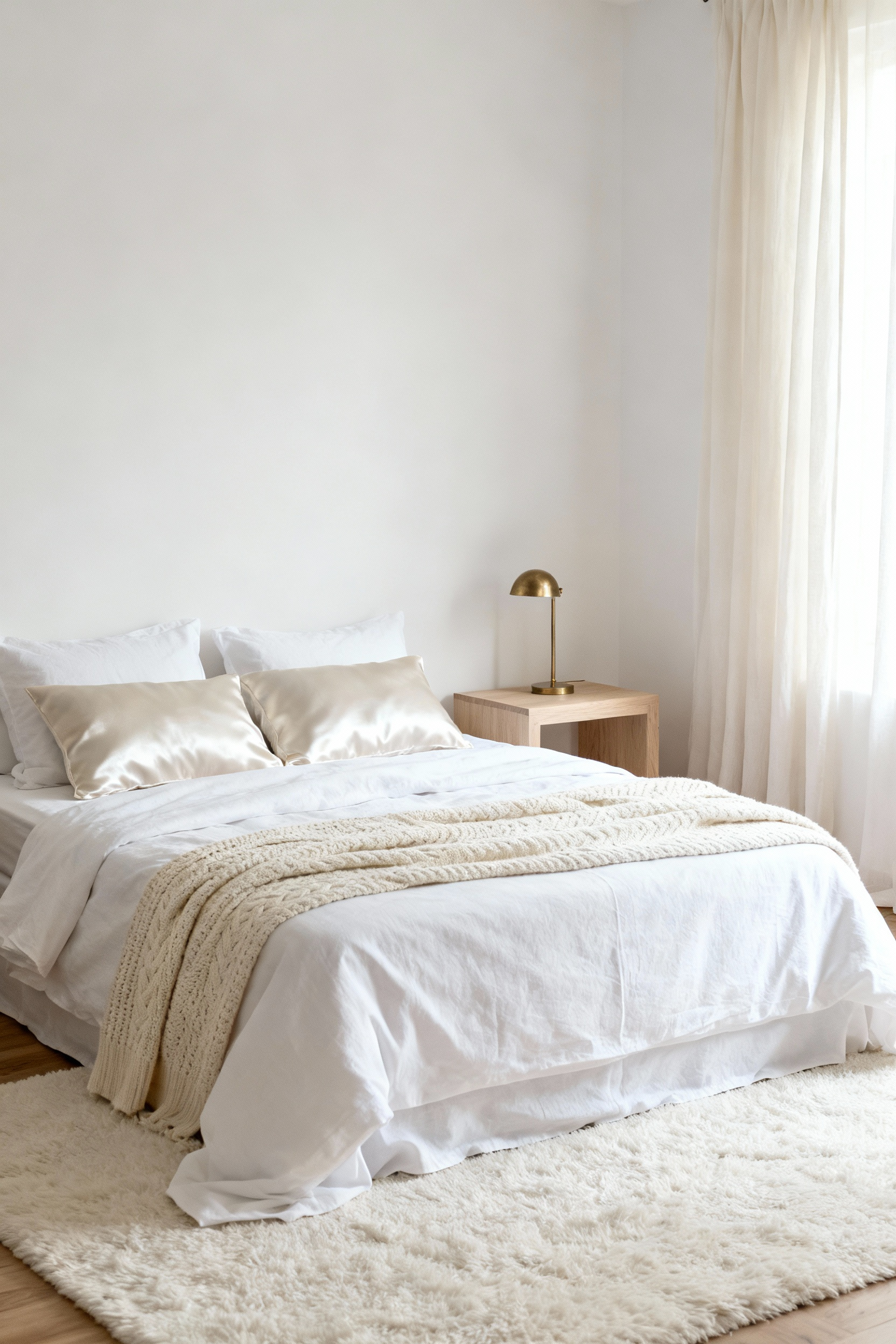
In application, the walls might be a barely-there off-white, while the bedding is a crisp, pure white. An area rug in a sophisticated pale grey or throw pillows in a rich cream then act as subtle anchors. This carefully considered blend ensures the space avoids sterility, fostering instead an enveloping sense of calm. For those seeking elevated white bedroom ideas, this intricate strategy reduces visual noise, creating a restorative environment for a life lived with quiet luxury.
Light is not a utility; it is an architectural medium. It possesses the power to sculpt mood and dimension, shaping the very essence of a white bedroom. This requires a layered approach: a foundation of soft, dimmable ambient light for an overall glow; targeted task lighting at the bedside or a reading nook; and finally, accent lighting to highlight architectural details or a treasured piece of art. The temperature of the light is also critical—a warm 2700K for intimacy, a cleaner 3000K for clarity.
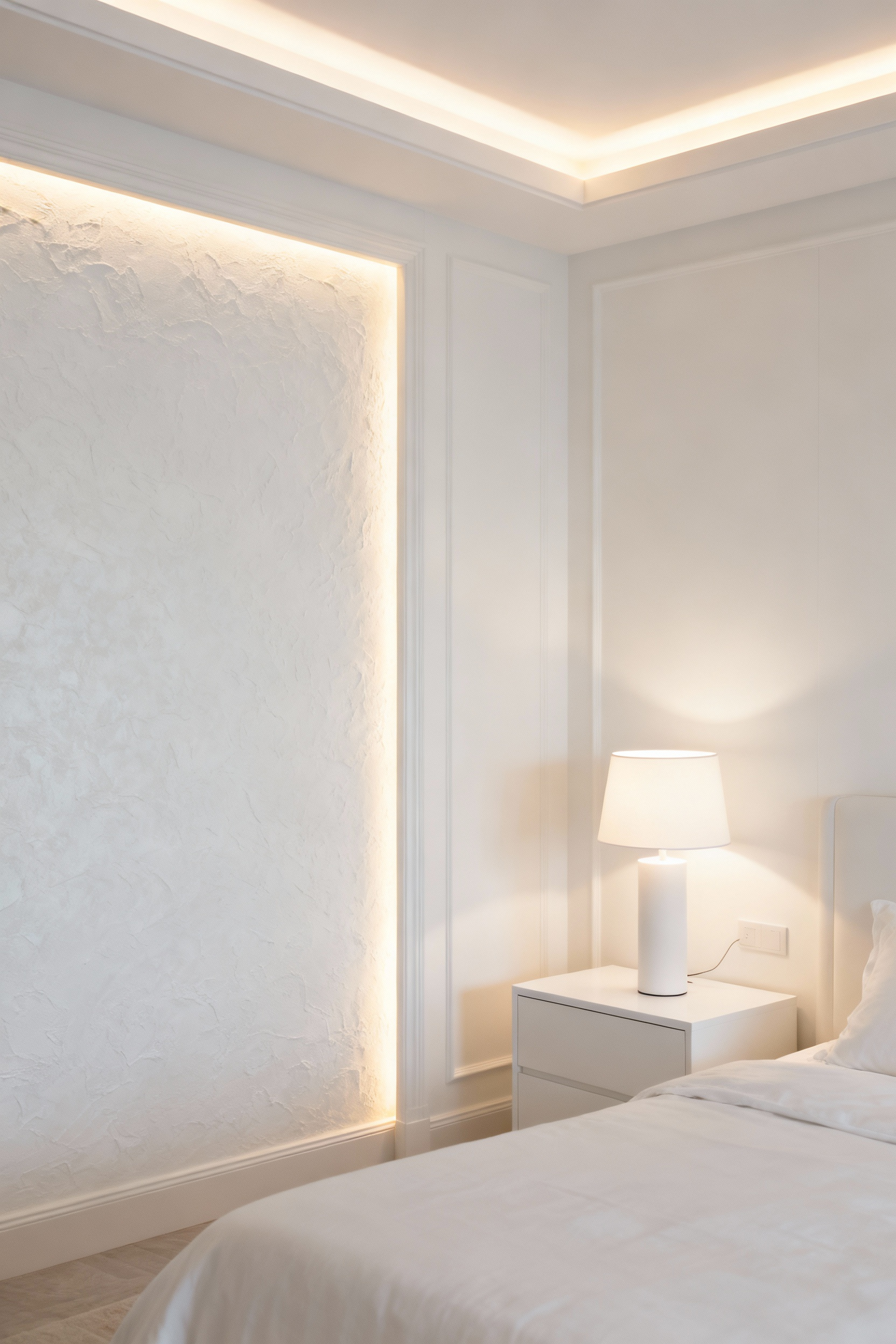
This layering allows the space to transform from day to night. Years of luxury hotel aesthetics have taught me that a guest’s perception of luxury is directly tied to the quality of the lighting. The ability to shift from bright and invigorating to soft and tranquil with the touch of a button is non-negotiable. An illuminated white bedroom becomes a dynamic sanctuary that supports rest, reflection, and rejuvenation—the pinnacle of exquisitely controlled sensory experience.
Furniture placement is the silent choreographer of a room. It delineates purpose and evokes emotion. The bed is the undeniable anchor, its position dictating the room’s energy. From there, ancillary pieces are arranged to carve out distinct vignettes: a reading nook near a window, defined by an elegant armchair and a dedicated light; a dressing area delineated by a mirror and tailored storage. This creates “rooms within a room” without physical barriers.
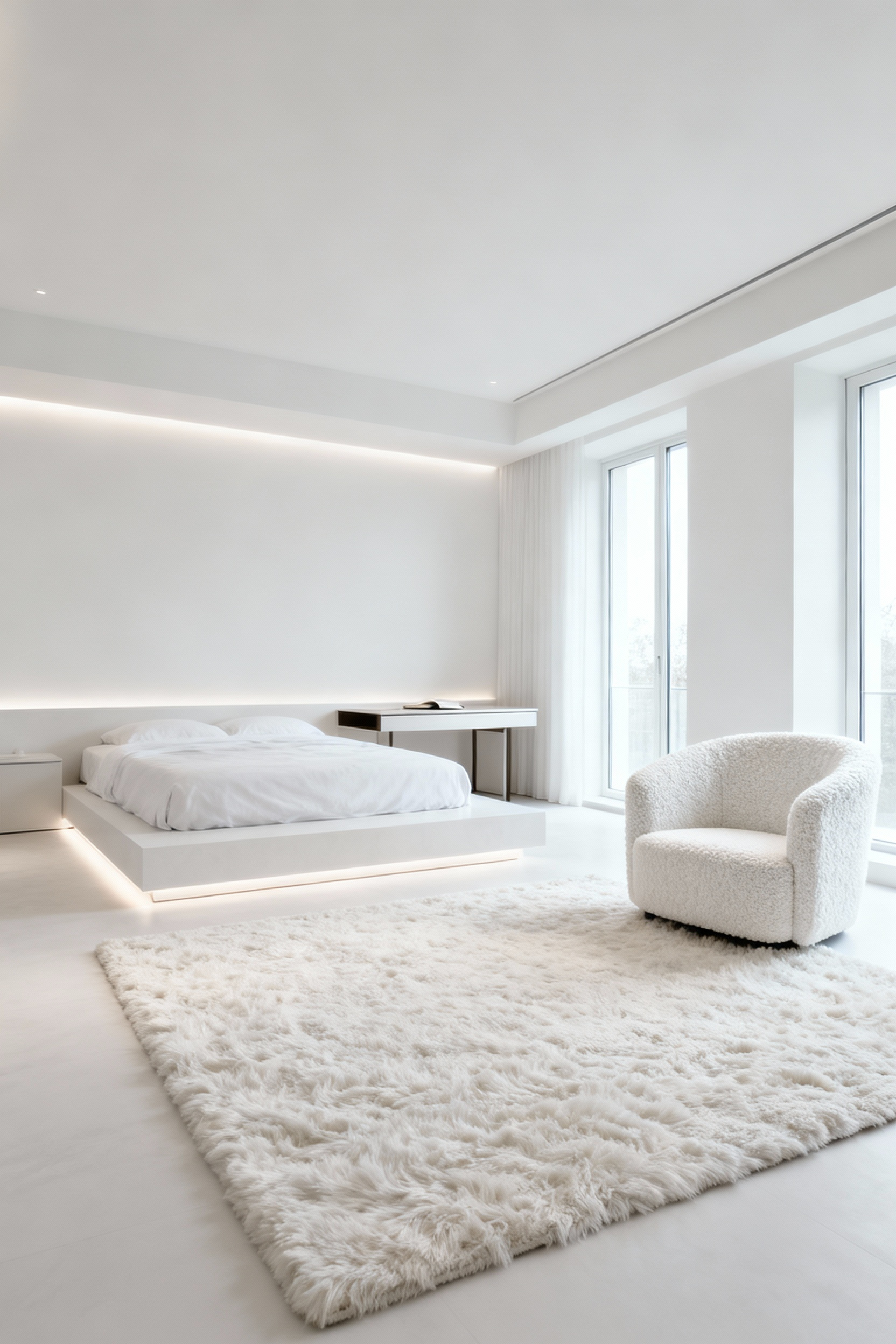
Paramount to this is the meticulous planning of pathways. Optimal flow ensures effortless navigation, which reduces cognitive friction and enhances the sense of calm. You should never have to awkwardly shuffle past a piece of furniture. This purposeful orchestration of layout elevates the living experience, transforming the bedroom into a multi-faceted retreat where movement feels intuitive and serene.
Beyond furniture, the foundational artistry of a space resides in its architectural detailing. Bespoke millwork—intricate wainscoting, elegant crown moldings, custom built-in shelving—can turn an ordinary room into an extraordinary one. When rendered in subtle tonal variations of white, these elements add texture and a quiet grandeur without introducing competing colors.
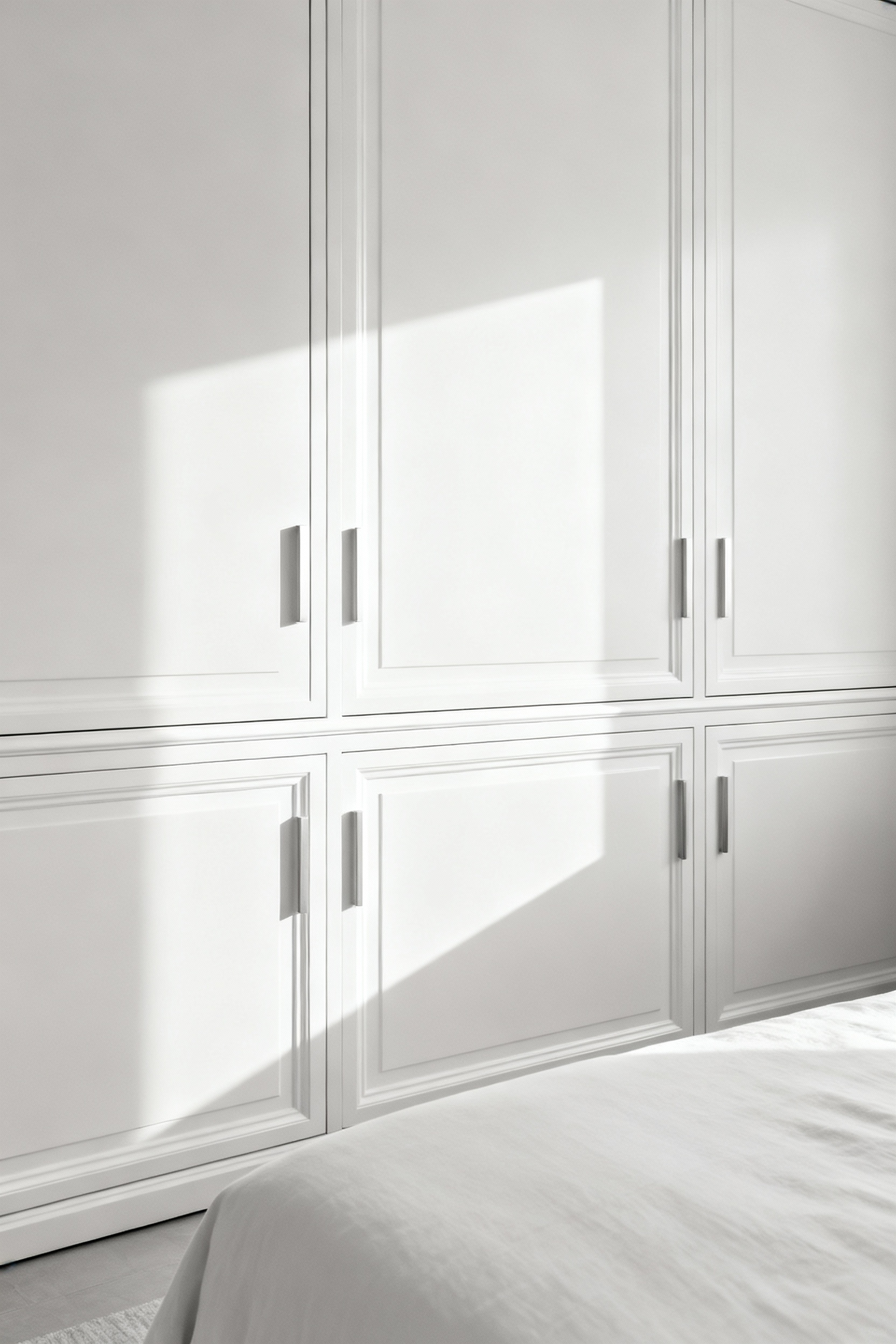
Integrated storage is the secret weapon of serene design. Masterfully disguised as architectural features—full-height wardrobes flush with the wall, or a window seat with hidden drawers—they preserve the clean, uncluttered aesthetic. They uphold the minimalist principles intrinsic to a refined white space, discreetly managing possessions so the inherent beauty of the room can take precedence. This imbues the space with a sense of sophisticated order and enduring calm.
In the serene expanse of a white bedroom, every object placed is a statement. This final piece of the choreography puzzle focuses on how the strategic inclusion of art and personal objects can infuse a monochromatic canvas with profound character and individual narrative.
In a white bedroom, less is more, but “less” must be intensely significant. Here, art and objects are not afterthoughts; they are pivotal protagonists, meticulously selected to provide narrative and personality without creating visual chaos. The pristine backdrop amplifies the presence of every form, so intentionality is key. An object isn’t just filling a space; it’s engaging in a dialogue with the enveloping whiteness.
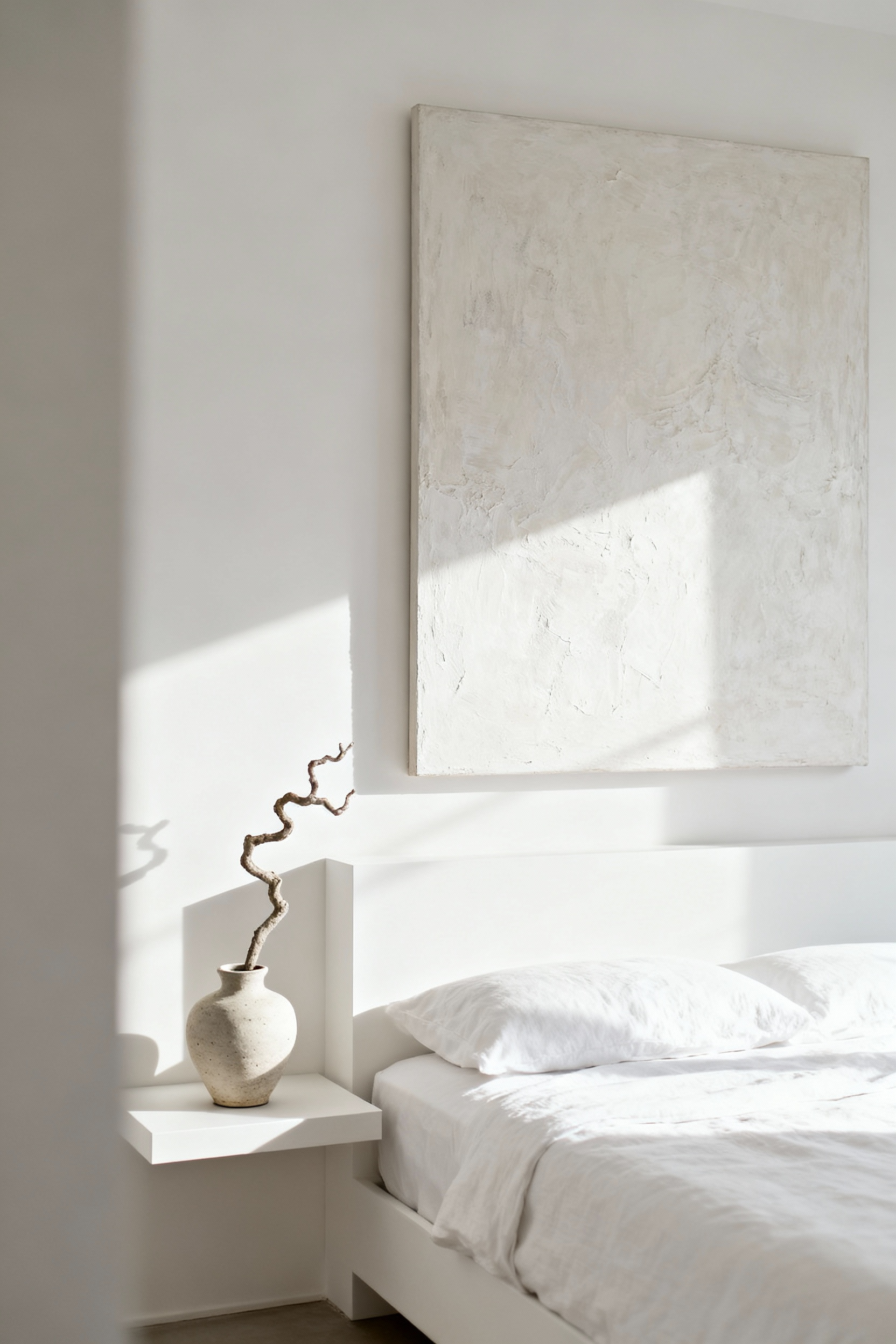
Strategic placement is paramount. A single, large-scale piece of art above the headboard can establish an immediate focal point. On a dresser or nightstand, group objects in odd numbers with varying heights and textures—a slender ceramic vessel, a stack of art books, a rough-hewn tray. Give these items breathing room. This negative space is what allows each piece to be appreciated, ensuring the additions enhance, rather than detract from, the room’s overarching tranquility.
Creating a harmonious white bedroom is only the beginning. True luxury is found in the enduring quality and deeply personal resonance of the space over time. This is about preserving beauty, making discerning investments, and weaving your own story into the fabric of your sanctuary.
An ethereal white palette demands a commitment to its sustained beauty. This requires a shift in mindset: viewing maintenance not as a chore, but as a ritual of reverence for one’s environment. For fine linens, this means laundering with specific detergents for whites and avoiding harsh bleaches. For upholstered pieces, a professionally applied fabric guard is a crucial first line of defense. High-gloss lacquer requires soft microfiber cloths; matte finishes need just a gentle wipe.
A structured protocol becomes part of your lifestyle—a quiet Saturday morning ritual of gently wiping surfaces and plumping cushions. It’s a mindful interaction with your personal haven that ensures the initial vision of a luminous space remains undiminished. What really gets me is seeing a beautifully designed space lose its magic due to neglect. Proactive care is the invisible thread that upholds enduring elegance. It’s the difference between a room that looks good on day one, and one that feels luxurious every single day.
True luxury resides not in fleeting trends, but in the discerning selection of pieces with lasting merit. In a white bedroom, investing in timeless foundational elements ensures your sanctuary will remain perennially elegant. This means choosing a bed frame crafted from solid wood, a finely upholstered headboard in a premium Belgian linen, or a well-made dresser with classic lines. These are not merely decorative items; they are cornerstones chosen for their ability to age gracefully.
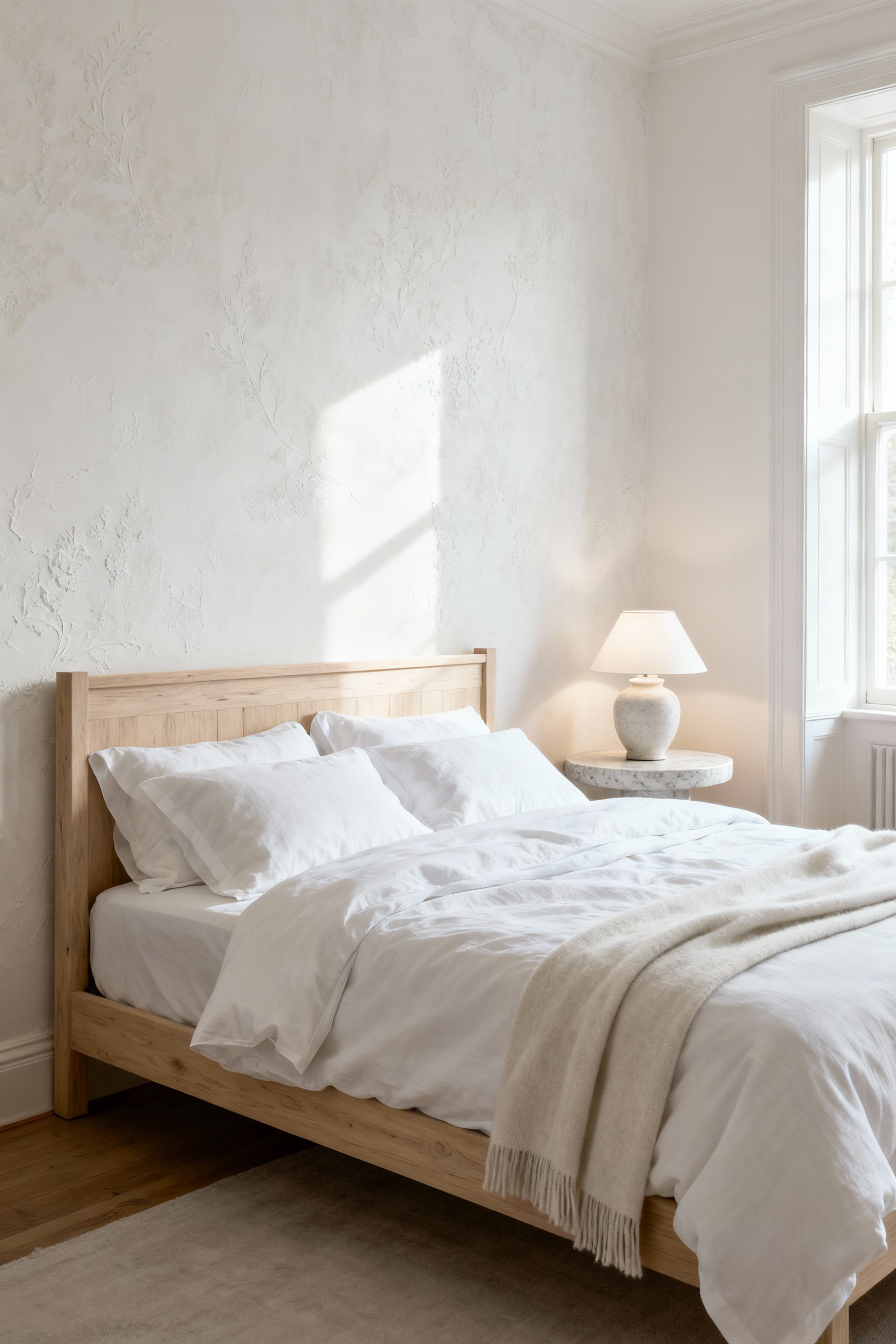
Identify the key investment pieces that will define the room’s character: the bed, a substantial storage piece, and core lighting fixtures. Smaller decorative items like throw pillows or vases can be updated with greater ease to refresh the room’s feel, while the main canvas remains a masterpiece of enduring quality. This is an embrace of considered consumption, where each piece contributes to a narrative of timeless style, free from the exhaustion of chasing trends.
While pristine, a white bedroom is profoundly enhanced by the injection of organic vibrancy—a connection to nature known as biophilia. This isn’t about creating a jungle, but about curated infusions of life that add a refreshing dynamism. Consider low-maintenance, air-purifying plants like a sculptural snake plant or a delicate peace lily. The varied greens and leaf structures offer an organic texture that contrasts beautifully with crisp white surfaces.
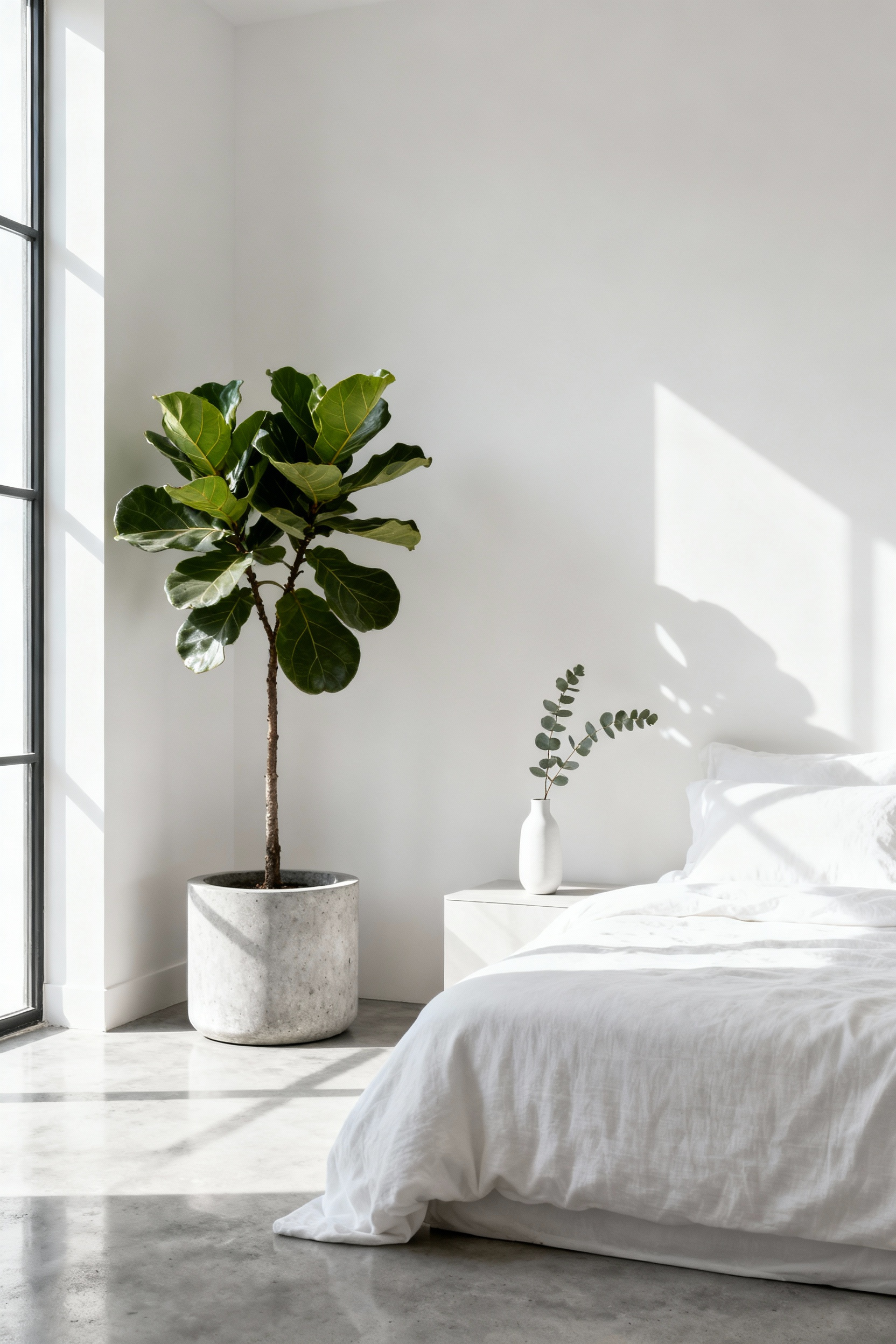
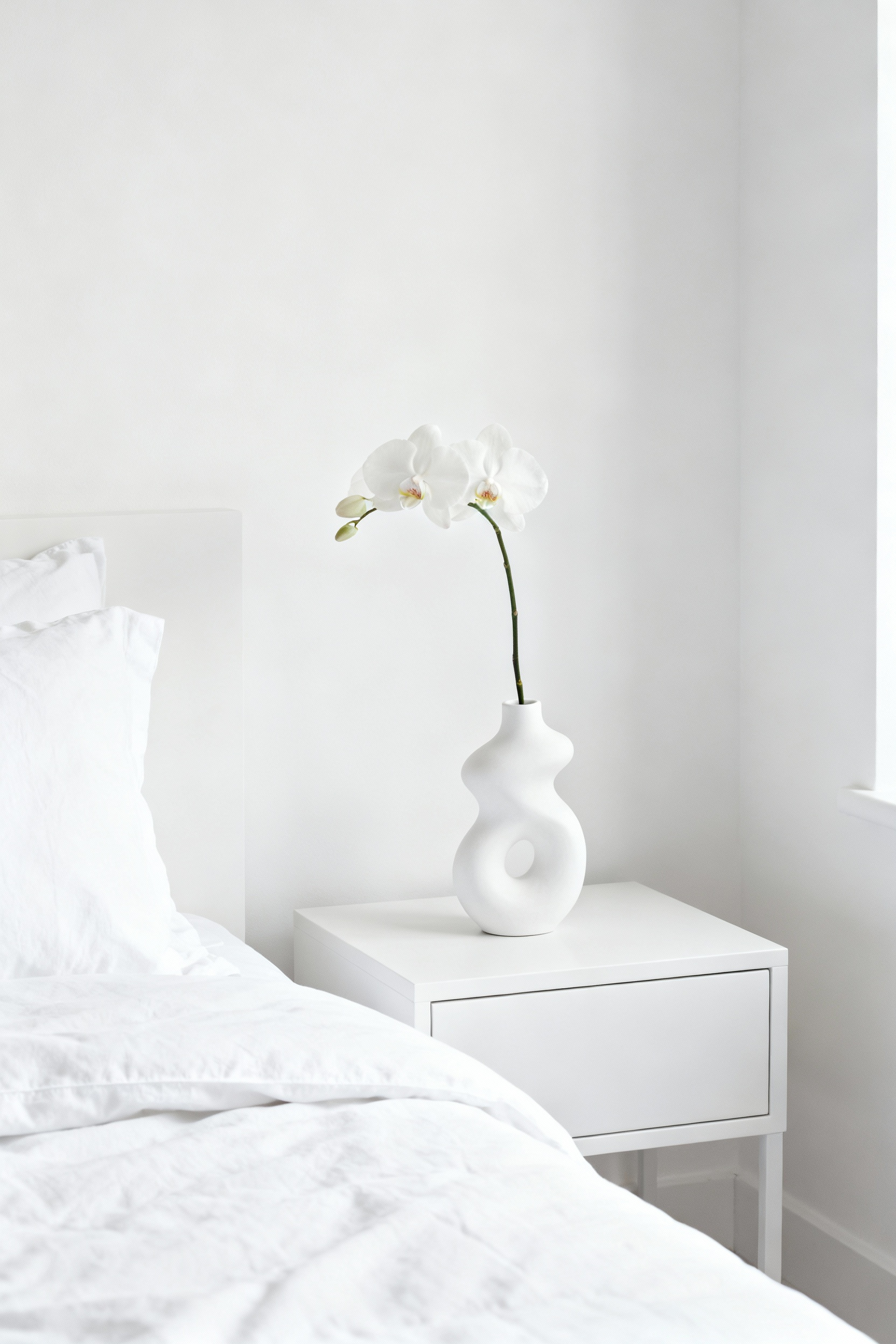
The vessels are just as important as the plants—a minimalist glazed ceramic pot or an unglazed terracotta planter become design elements in their own right. A majestic fiddle-leaf fig can command a corner, drawing the eye upward. A petite orchid on a nightstand can offer a touch of living sculpture. The goal is to create vignettes that breathe life into the room, ensuring it remains vibrant and connected to the natural world’s exquisite balance.
The ultimate expression of luxury is personalization. It is the art of transforming a beautiful room into a meaningful one, allowing your unique journey to quietly unfold. A pristine white canvas is the ideal backdrop against which treasured objects—a framed photograph, a collection of books, an inherited piece of art—can truly resonate. These items, imbued with sentiment and history, add profound depth.
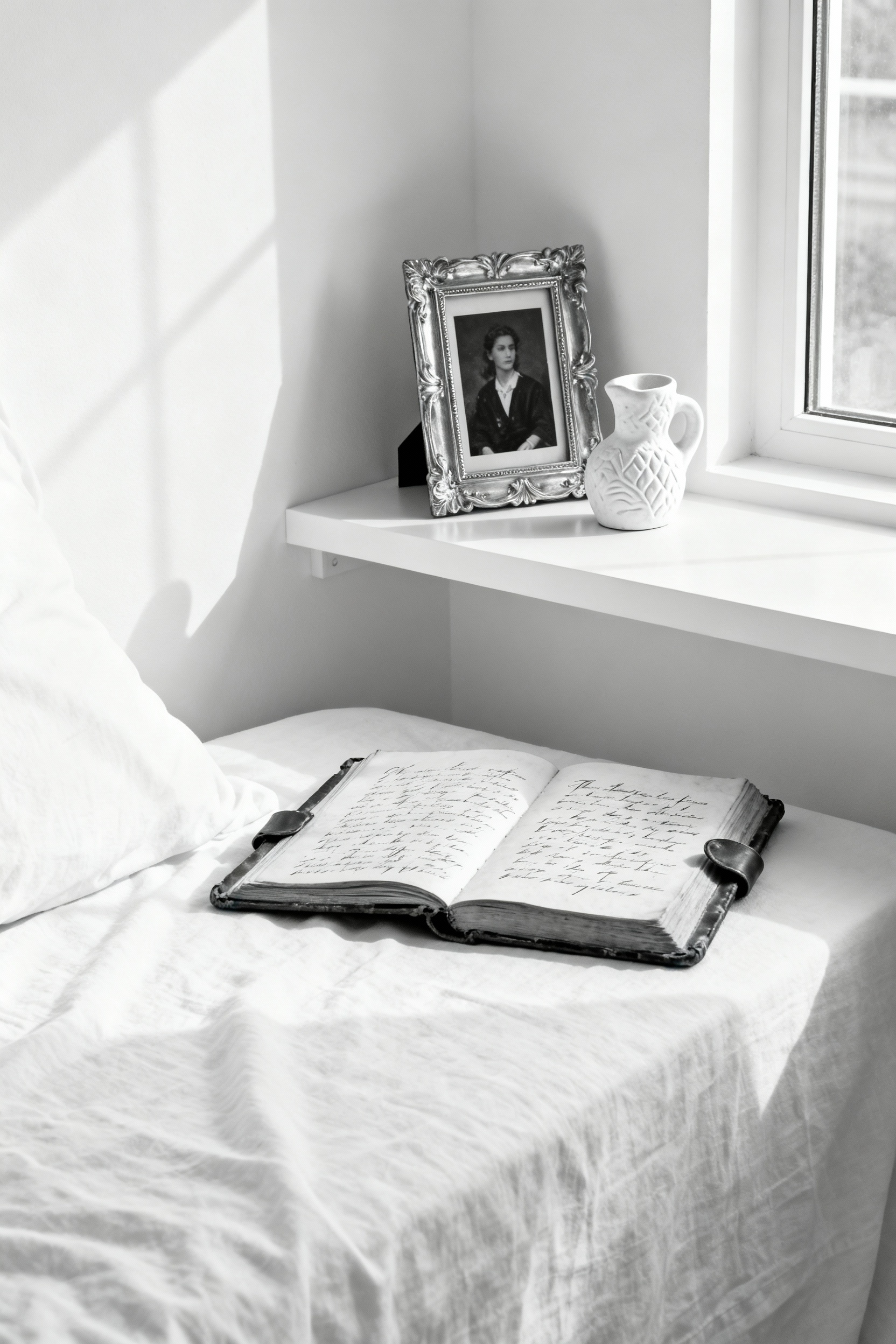
Display these memoirs with sophisticated discernment. Create intimate vignettes on a nightstand or dresser. A carefully selected stack of books alongside a small sculpture can speak volumes. The key is to highlight a few key pieces, not to fill every surface. This ensures your bedroom remains a sanctuary, not a museum. It fosters a connection to your past, present, and future, transforming mere elegance into an intimately lived experience.
Our exploration of these twenty distinct white bedroom ideas has dismantled the myth of white as a monotonous, unimaginative choice. It is, in fact, the definitive foundation for profound sophistication and bespoke serenity. We have seen how a strategic, hospitality-level approach to layering texture, materiality, and light unlocks an unparalleled depth, transforming a simple palette into a space of complex tranquility.
The true revelation is that white is not a single shade, but an entire spectrum of possibilities. The intelligent interplay of elements—the raw elegance of linen against polished metal, the sculptural impact of millwork, the transformative power of layered light—is where the magic resides. A white bedroom is not merely decorated; it is composed. Now, armed with these insights, it is your invitation to translate these elevated principles into your own personal haven. Reject the commonplace and embrace the truth: white is not an absence of color, but an abundance of sophisticated potential.