Physical Address
304 North Cardinal St.
Dorchester Center, MA 02124
Physical Address
304 North Cardinal St.
Dorchester Center, MA 02124
Explore 20 concepts for modern kitchen cabinets, from foundational aesthetics to advanced smart home integration. Design an intelligent, future-ready kitchen.
The most forward-thinking designers and architects spend maybe 15% of their time picking finishes for modern kitchen cabinets. After digging into hundreds of smart home blueprints and successful projects, I found the hidden framework they all use. It’s not about just getting a sleek look or more storage—it’s about building a fused system of form, intelligent tech, and future-readiness from the very start.
Most people see cabinets as static boxes you pick out late in the game. That’s a mistake. In a truly modern home, your cabinets are the central infrastructure. They are the silent partners that manage convenience, efficiency, and even wellness. To really get it right, you have to stop thinking of them as furniture and start seeing them as the foundational platform for your smart home.
Here are 20 concepts that will teach you to think like an architect designing for tomorrow. We’ll start with the Essential Fundamentals, move to Elevating Your Approach with smarter techniques, then hit the Advanced Strategies where tech integration gets serious, and finally land on Mastering the full system. Prepare to have your definition of modern kitchen cabinets completely rewired.
Before we get into the high-tech wizardry, we need a solid foundation. These are the non-negotiable principles that set the stage for everything else. Think of this as the chassis of the car—get it right, and the performance upgrades will actually mean something.
The absolute baseline for modern kitchen cabinets is the flat-panel, or slab, door. This isn’t just a trend; it’s a strategic move away from the visual noise of traditional framed doors. By choosing a completely unadorned surface, you create an uninterrupted visual plane that makes your kitchen feel calmer, larger, and more architectural. Doors with panels create shadows and lines that chop up the space. Flat panels do the opposite—they unify it.
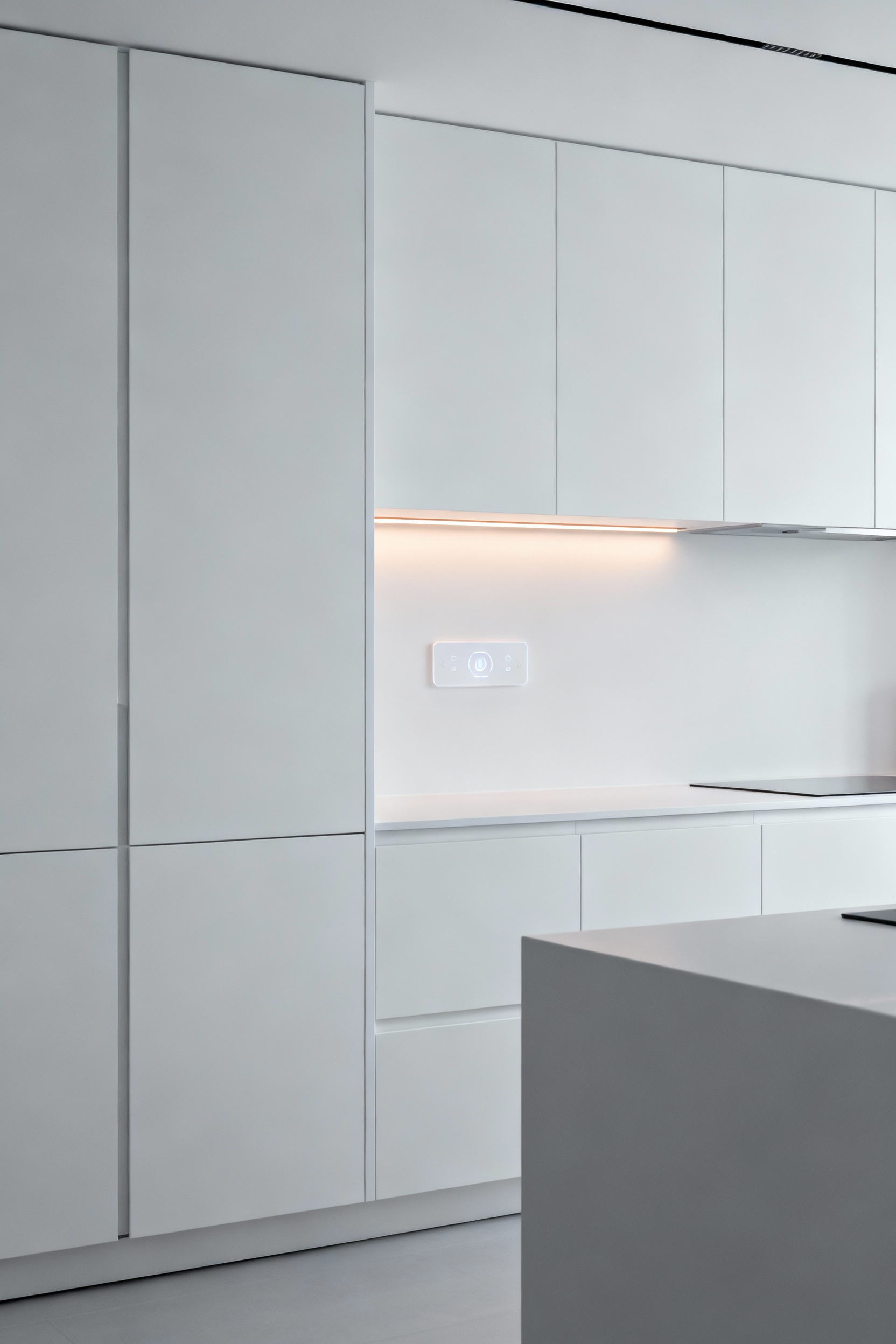
This visual simplicity is more than just aesthetics; it’s the perfect canvas for everything else. What I tell my clients is that a flat-panel design is future-proof because it doesn’t compete for attention. It allows the technology we integrate later—like a hidden screen or a flush-mounted charging pad—to feel like it belongs, rather than looking like an add-on. It turns a wall of cabinets into a single, cohesive statement, letting you choose other focal points, like a killer countertop or smart appliances.
Let’s be honest: laminate used to have a bad rap. Not anymore. Today’s high-pressure laminates are a world away from the stuff you remember. For high-traffic areas—think lower cabinets, the front of the island—they are incredibly smart. They’re built to resist scratches, moisture, and fading, which is exactly what you need in a busy home. They deliver that flawless modern look without the constant worry.
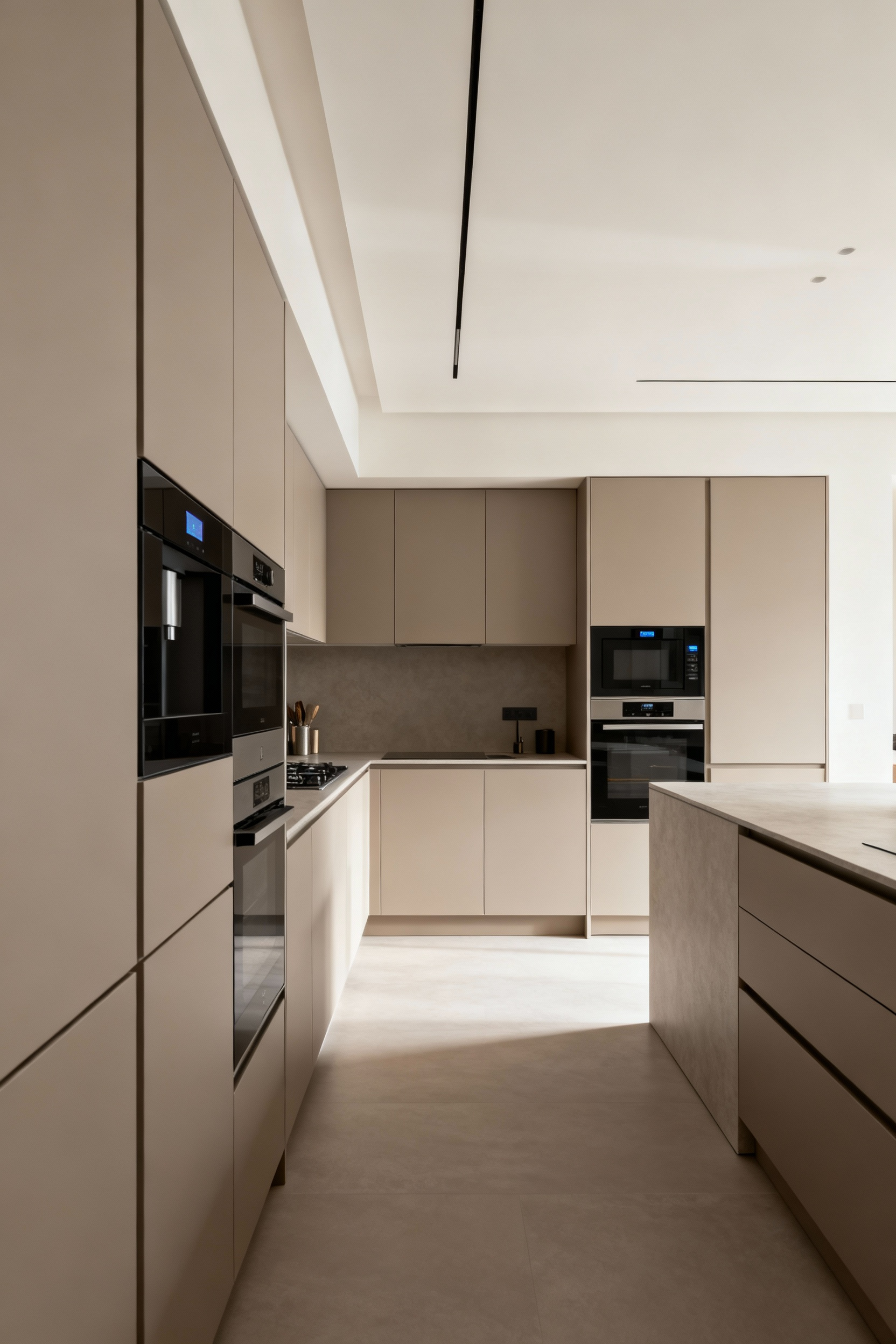
What’s really interesting is how far the aesthetics have come. Modern laminates can mimic rich wood grains or stone so well that you’d be hard-pressed to tell the difference, and they often outperform the real thing in durability. From my work in tech-friendly design, I’ve seen a huge shift toward super-matte finishes with anti-fingerprint technology. This is a game-changer. It gives you that deep, sophisticated look without the constant smudges, keeping the clean lines of your kitchen actually clean.
Once you’ve committed to the clean look of flat-panel doors, the next logical question is: where do the handles go? The answer is they don’t. Push-open mechanisms are the key to achieving that seamless, monolithic facade. With a gentle press, a spring-loaded or magnetic latch opens the door for you. It’s an intuitive and clean interaction that makes hardware feel completely obsolete.
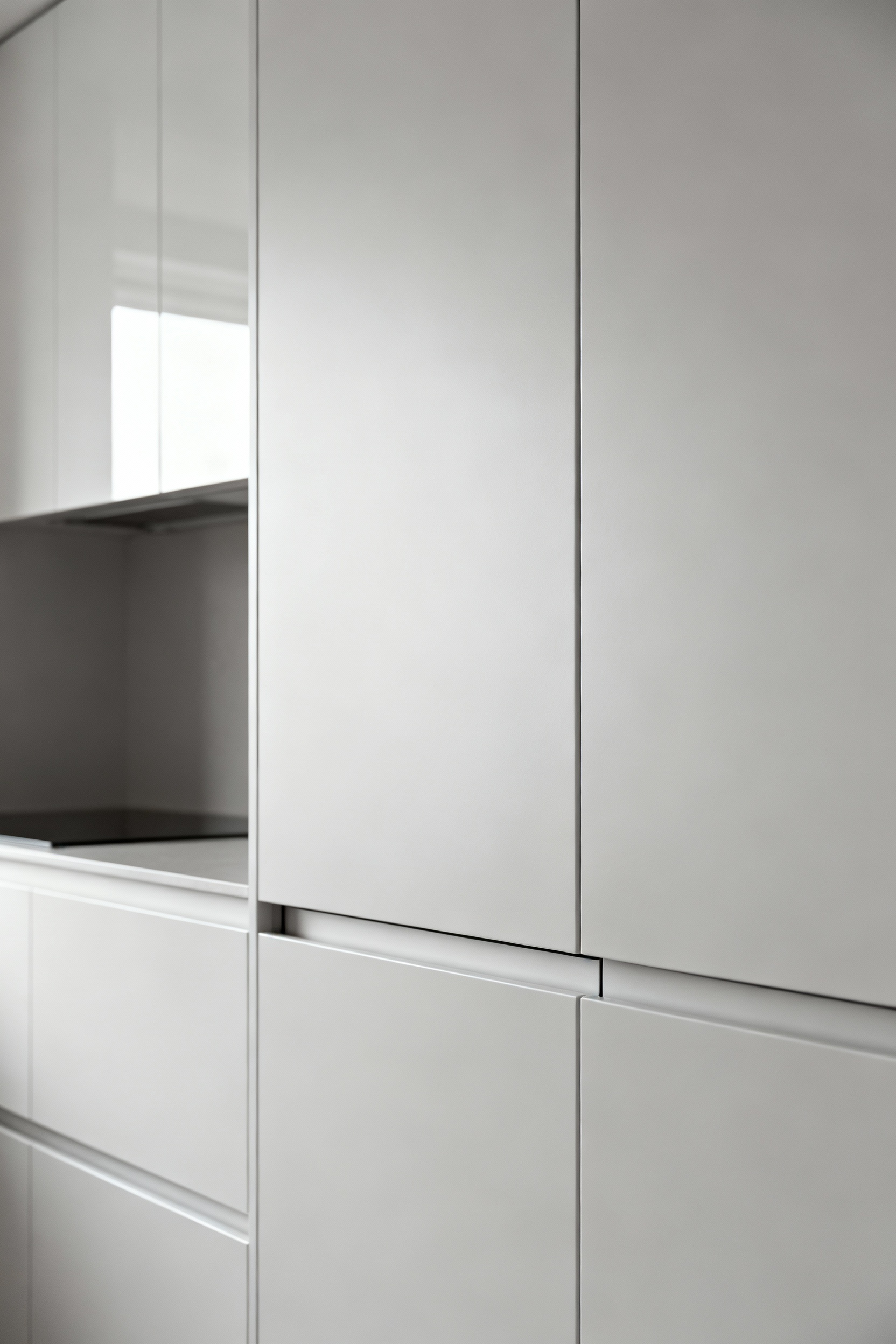
This isn’t just about looking good. It contributes directly to a better user experience. There are no handles to bump into, which is great in smaller kitchens or for families with kids. And frankly, there’s less to clean. For heavier doors or integrated appliances, you can even step up to electromechanical systems that offer a smoother, more powered feel. In my smart home integration practice, handleless design is a core principle because it signals a move toward a more responsive, less cluttered environment.
A beautiful kitchen with chaotic drawers is a design failure. True modern design thinks about the experience from the inside out. Optimized drawer inserts are not an afterthought; they’re essential. This goes way beyond a simple plastic cutlery tray. We’re talking about custom-fit, modular systems made from quality materials like bamboo or solid wood that are configured for your specific tools.
I learned this when I realized a client’s perpetually messy “junk drawer” was actually their primary utensil drawer—it wasn’t their fault; the space was poorly designed. Good design creates a designated home for everything, from the chef’s knives in a dedicated block to spices laid out so you can read every label. It’s about workflow. When you can grab what you need without thinking, you’ve reduced friction in your daily life. That’s what smart design is really about.
Okay, let’s cover a structural point. Some might call this step zero, because it’s the DNA of almost every truly contemporary European-inspired kitchen. Understanding this construction method is key to unlocking that minimalist look and next-level utility.
At the heart of most modern kitchen cabinets is European frameless construction. Unlike traditional American cabinets that have a thick wood frame on the front of the box, frameless cabinets are simpler. The doors attach directly to the cabinet box itself. This might sound like a small detail, but it has massive implications. First, you get more storage space because there’s no frame getting in the way. It offers full, unobstructed access to the interior.
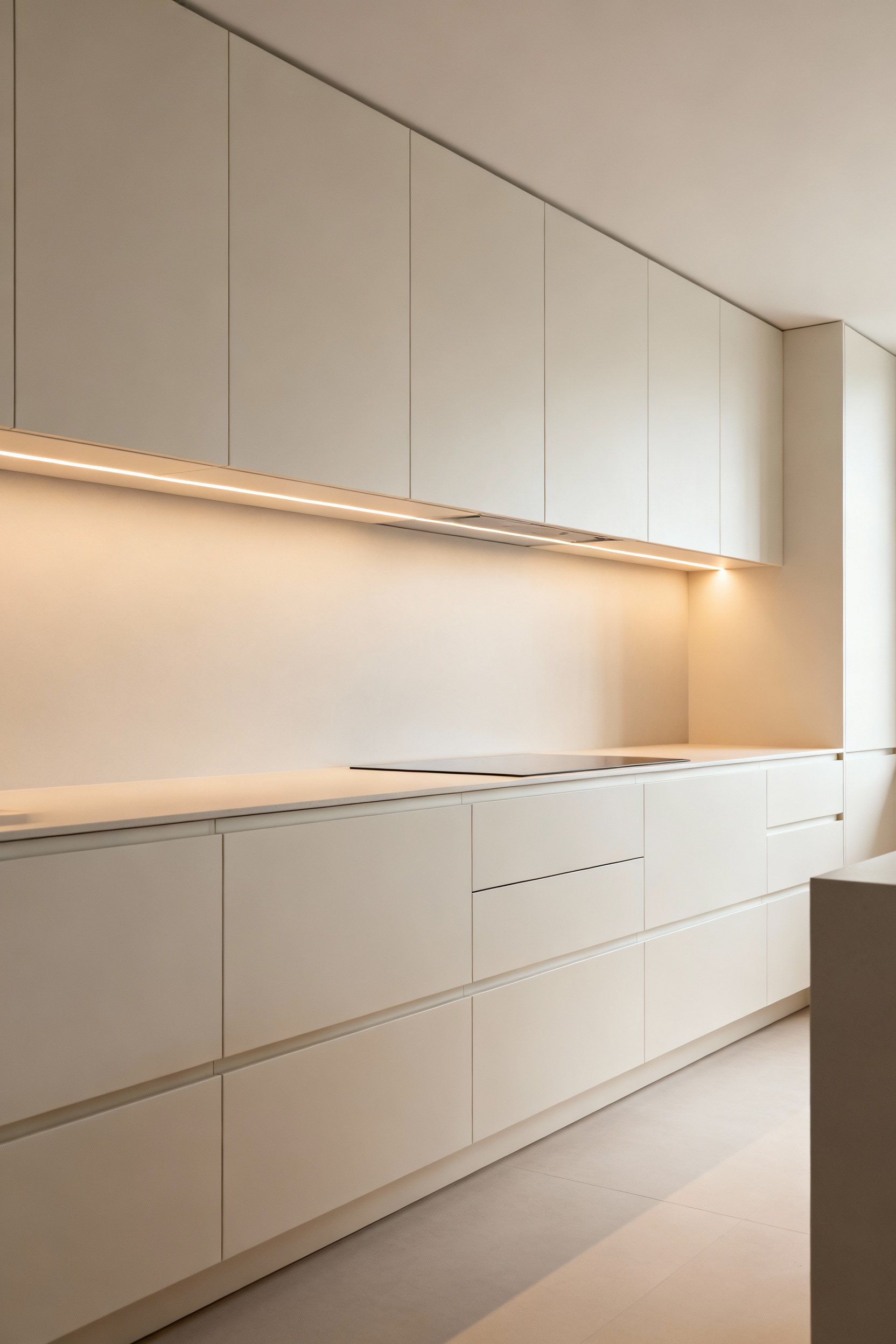
Aesthetically, this is what enables that ultra-clean, seamless look. The doors and drawers cover the entire cabinet front, leaving only a tiny, precise gap between them. This creates those crisp, unbroken lines that define modern design. In my professional experience, this construction method is the only way to properly integrate panel-ready appliances and handleless mechanisms. It creates a solid, architectural presence that makes the kitchen feel less like a collection of boxes and more like a single, thoughtfully designed installation.
Now that we have the foundations, let’s start layering in the strategies that take a kitchen from simply ‘new’ to truly sophisticated. This is where we play with integration, materials, and smart organizational systems to build something with personality and depth.
If you want that high-end, architectural look, you have to make your appliances disappear. This is done with panel-ready units—refrigerators, dishwashers, you name it—that are designed to accept a custom front that matches your modern kitchen cabinets perfectly. The goal is to create an uninterrupted wall of cabinetry, a quiet and calm surface where the function is hidden until you need it. It turns the kitchen into a beautifully curated space.
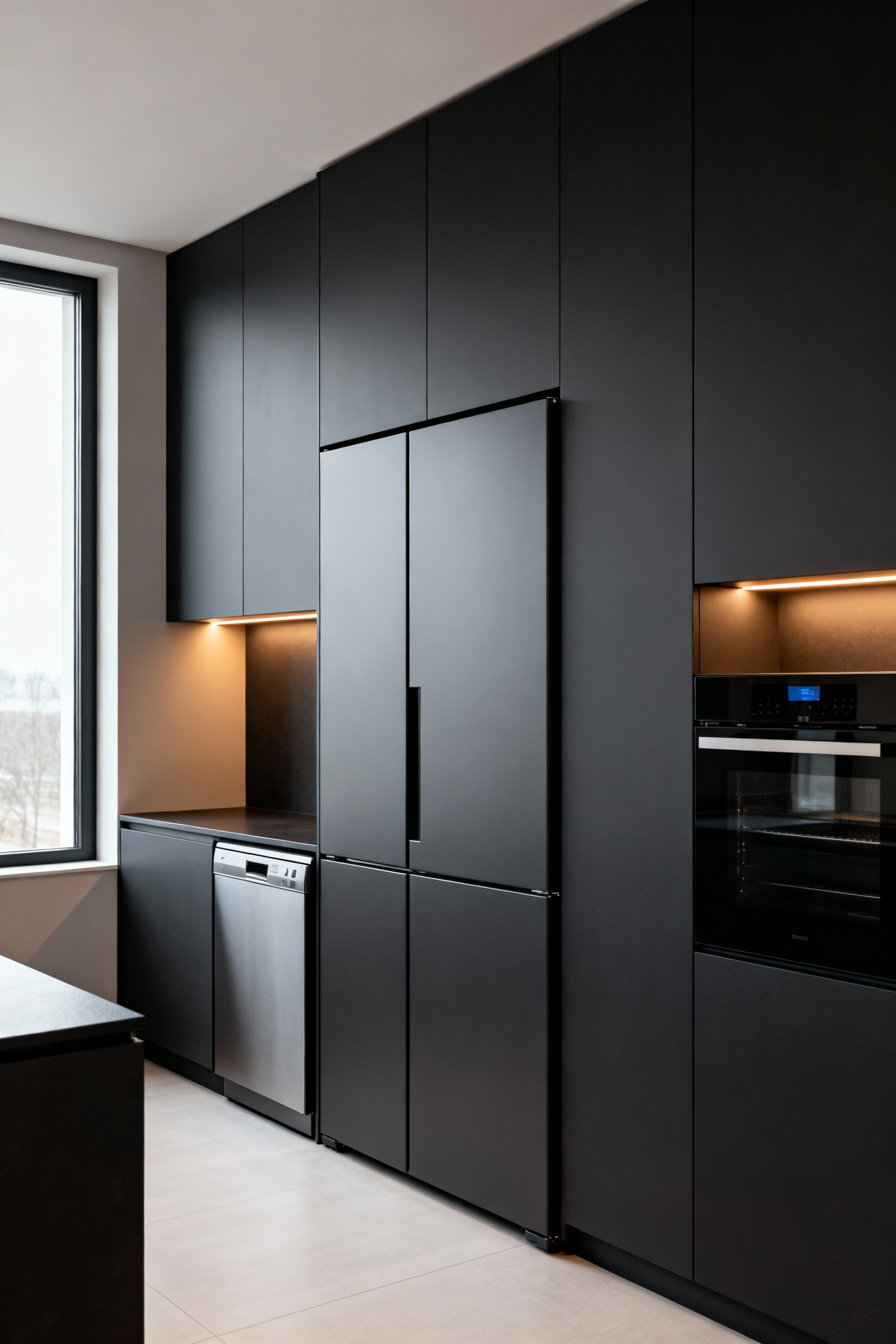
The key to getting this right is planning from day one. You can’t just decide to panel an appliance later. It requires specifying the right units, ensuring the millwork is precise, and using hinges that can support the weight of the panels. This extends to things like downdraft vents that rise from the countertop instead of a bulky hood, or an induction cooktop that sits perfectly flush. When done correctly, your kitchen’s utility becomes elegantly understated, putting the focus on the design itself.
A single-color kitchen can be beautiful, but a well-executed two-tone scheme adds a layer of depth that feels custom and intentional. It’s a fantastic way to introduce contrast and visual interest without making the space feel busy. A classic approach is to use a darker, grounding color for the base cabinets or the island, and a lighter, airier tone for the uppers. This simple trick can make the ceiling feel higher and the room feel bigger.
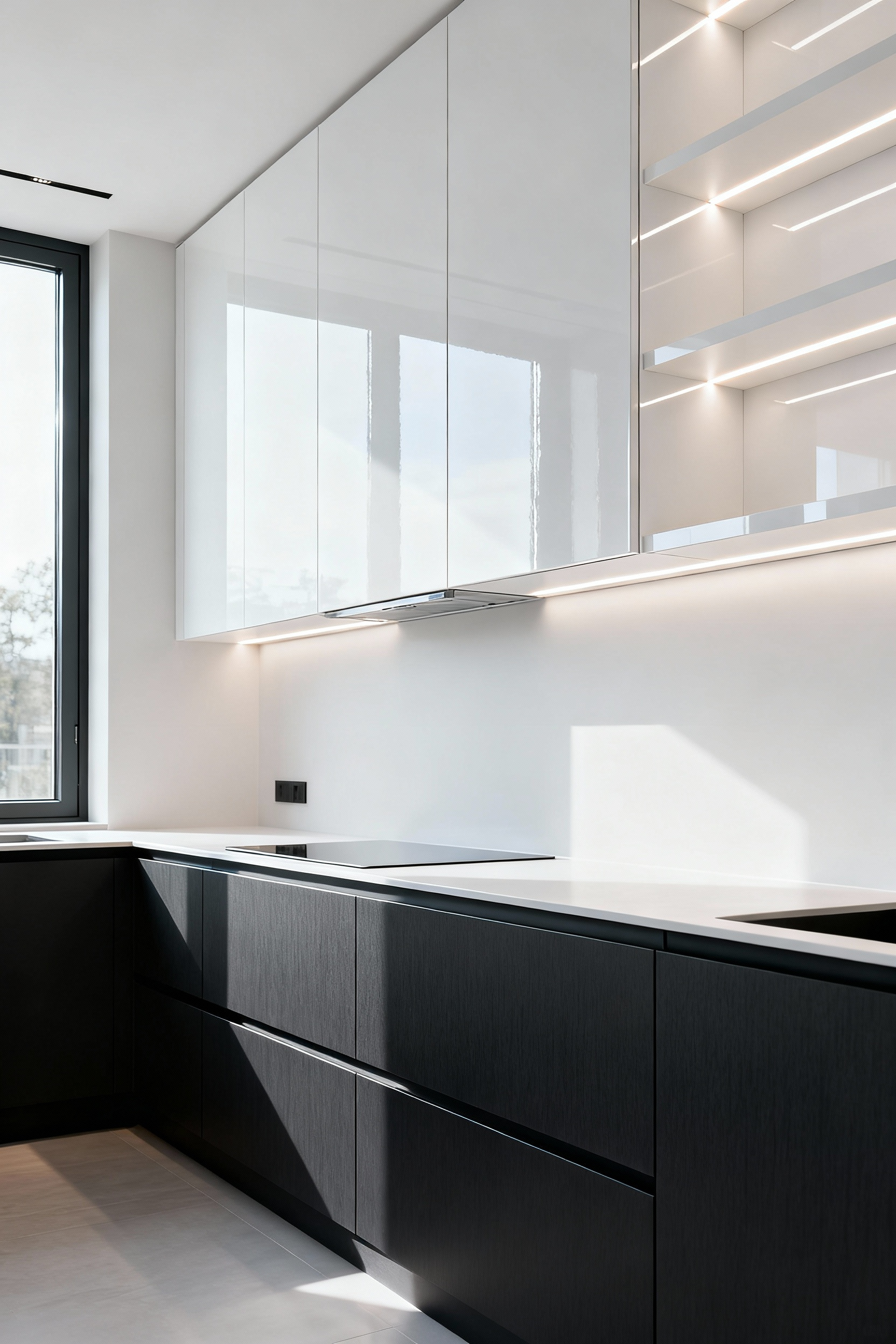
But you can get more creative. In my projects, I love mixing textures, not just colors. Imagine a rich, dark wood grain on the lower cabinets paired with a soft, super-matte gray for the uppers. This engages more than just the eye; it adds a tactile dimension. The success of a two-tone kitchen is all about balance. The two finishes need to complement each other and be deployed thoughtfully to create distinct zones or anchor the space, resulting in a design that feels layered and sophisticated.
This builds on the two-tone idea but focuses specifically on texture. This is where a kitchen stops just being seen and starts being felt. Pairing the organic warmth of a beautiful wood grain with the sleek, almost soft-touch finish of a modern matte lacquer is a powerful combination. It prevents a minimalist space from feeling sterile by injecting natural character and a welcoming feel.
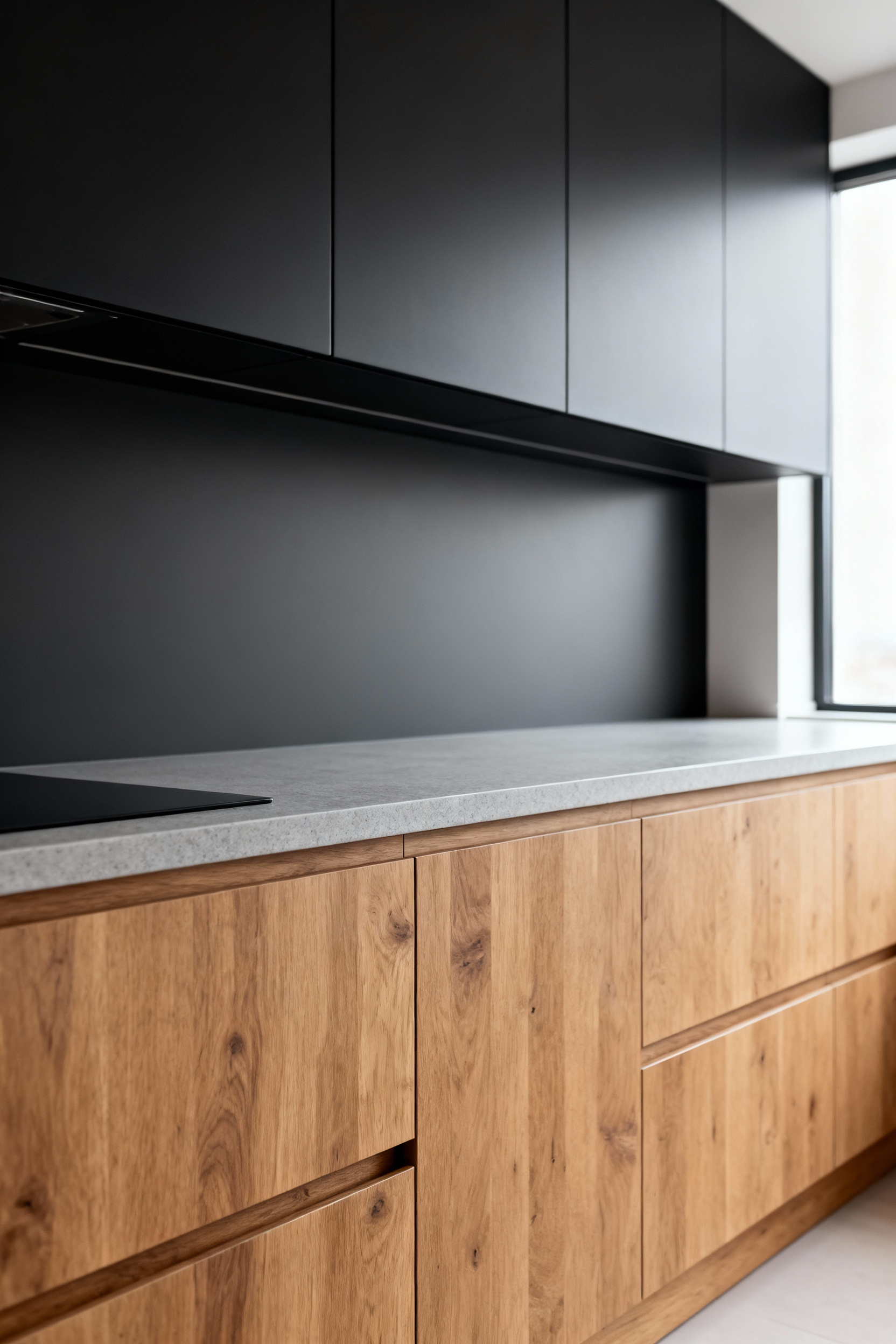
I’ve seen this work best when one material takes the lead. For example, a full wall of tall cabinets in a deep matte charcoal provides a stunning, monolithic backdrop for a central island clad in a warm, horizontal-grain walnut. The matte finish absorbs light, creating a calm, muted effect, while the wood subtly reflects it, drawing you in. It’s a sophisticated play of opposites that feels both cutting-edge and timeless. It makes your modern kitchen cabinets part of the sensory experience of the home.
A tall pantry cabinet is the unsung hero of a clutter-free kitchen. It uses vertical space—which is often wasted—to create an incredible amount of storage. But its true power isn’t just in its size; it’s in what’s inside. Modern pantries are marvels of engineering, designed to bring everything to you, so you never have to go digging into a dark corner again.
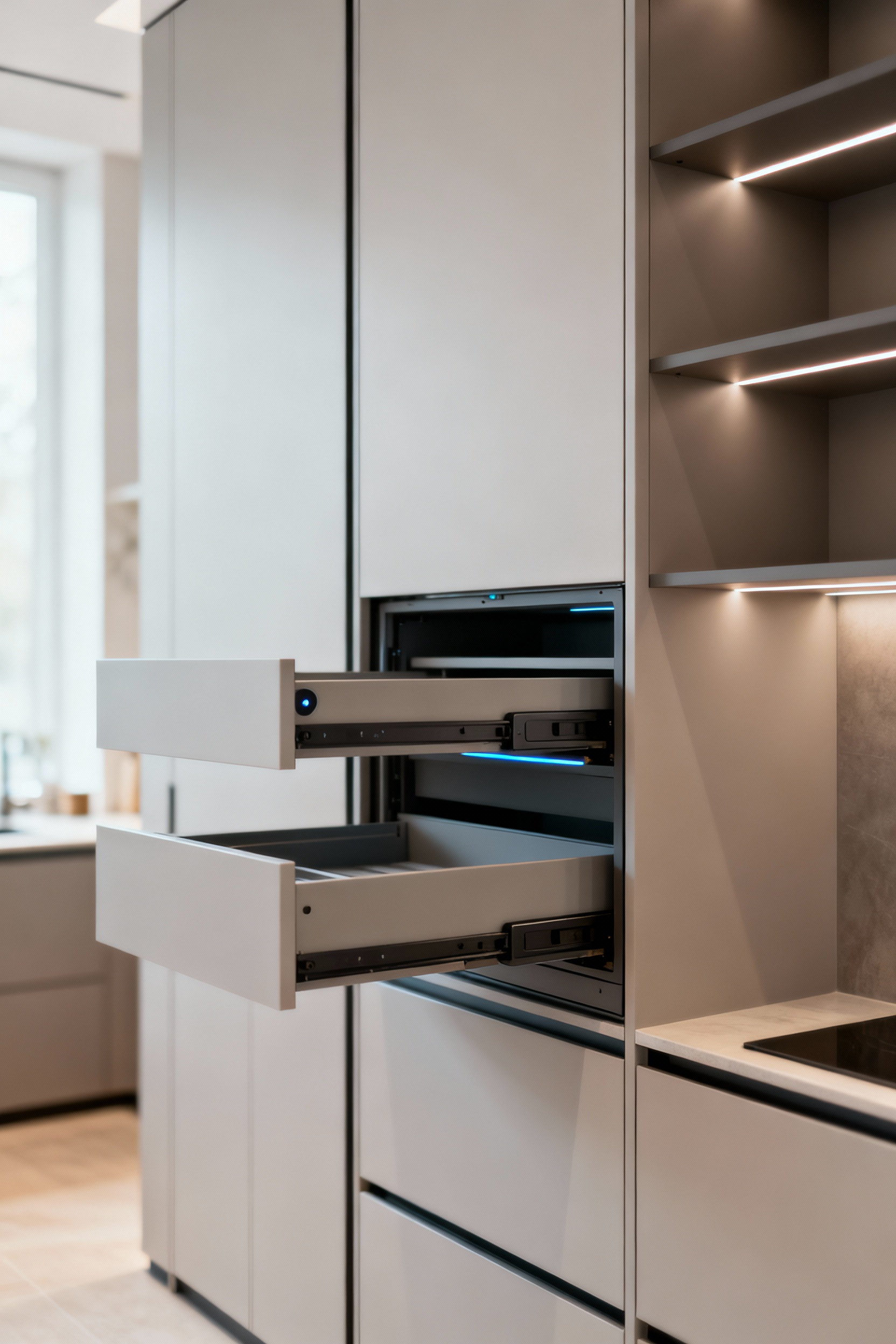
Think of systems like a tandem pantry, where opening the door pulls the front shelves out while simultaneously sliding a second bank of shelves into view from the back. Or consider full-extension drawers and rotating shelves that make every last item completely accessible. What I tell my clients is that a well-designed pantry is like a magic trick; a huge amount of stuff disappears behind a single, sleek door, but it’s all perfectly organized and ready the moment you need it. This preserves the minimalist exterior by ensuring the interior is hyper-functional.
Here’s where we get into the active elements—the things that make your kitchen work for you. We’re moving from static design choices to dynamic integrations that enhance the mood, feel, and function of the space in real-time.
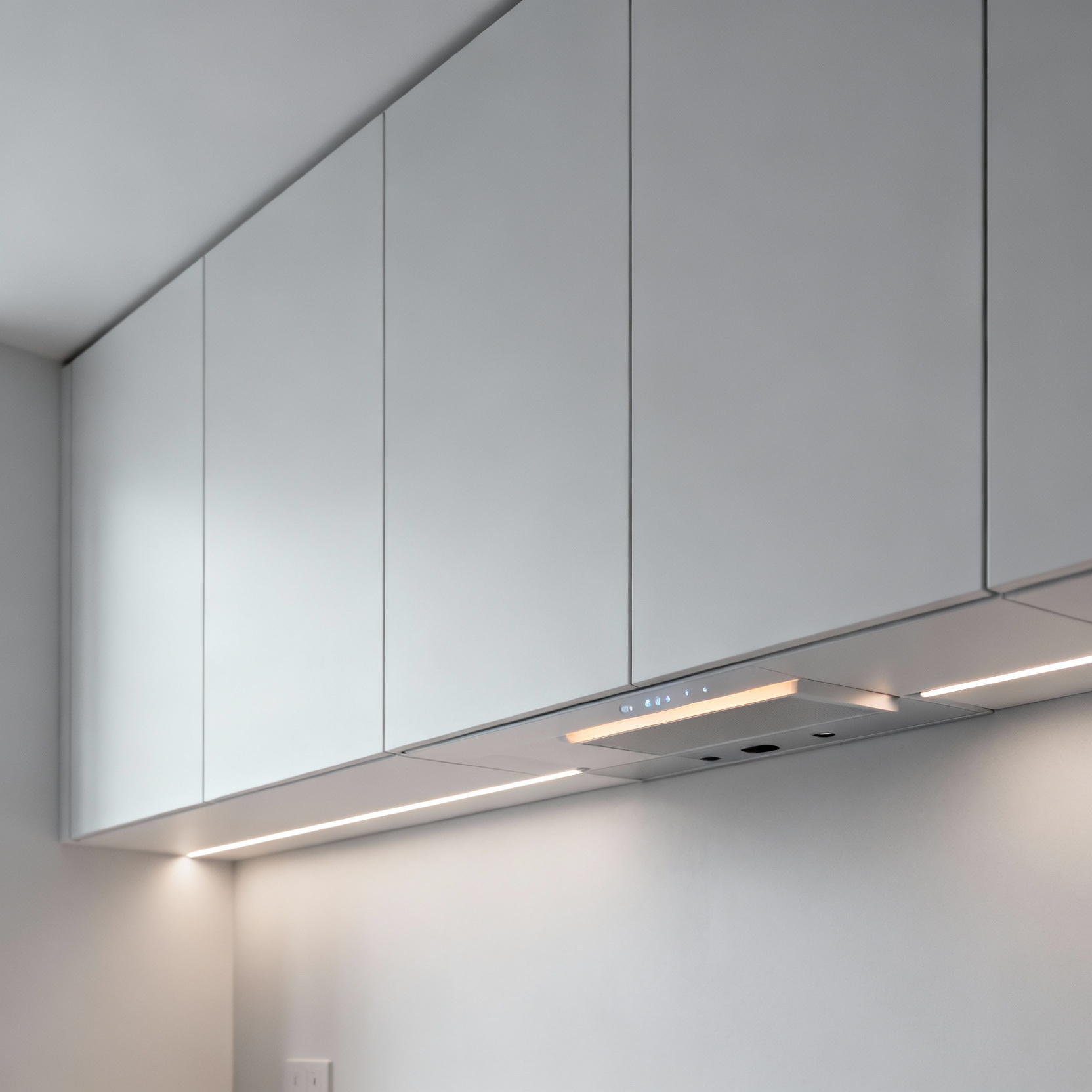
Lighting can make or break a kitchen design. Under-cabinet lighting started as a simple solution for illuminating your countertops, and that’s still important. But today, the technology allows for so much more. The baseline for any modern kitchen should be dimmable, tunable white LED strips. This lets you shift from a bright, cool white for focused prep work to a warm, inviting glow for dinner or a late-night snack. You’re not just lighting the space; you’re setting the mood.
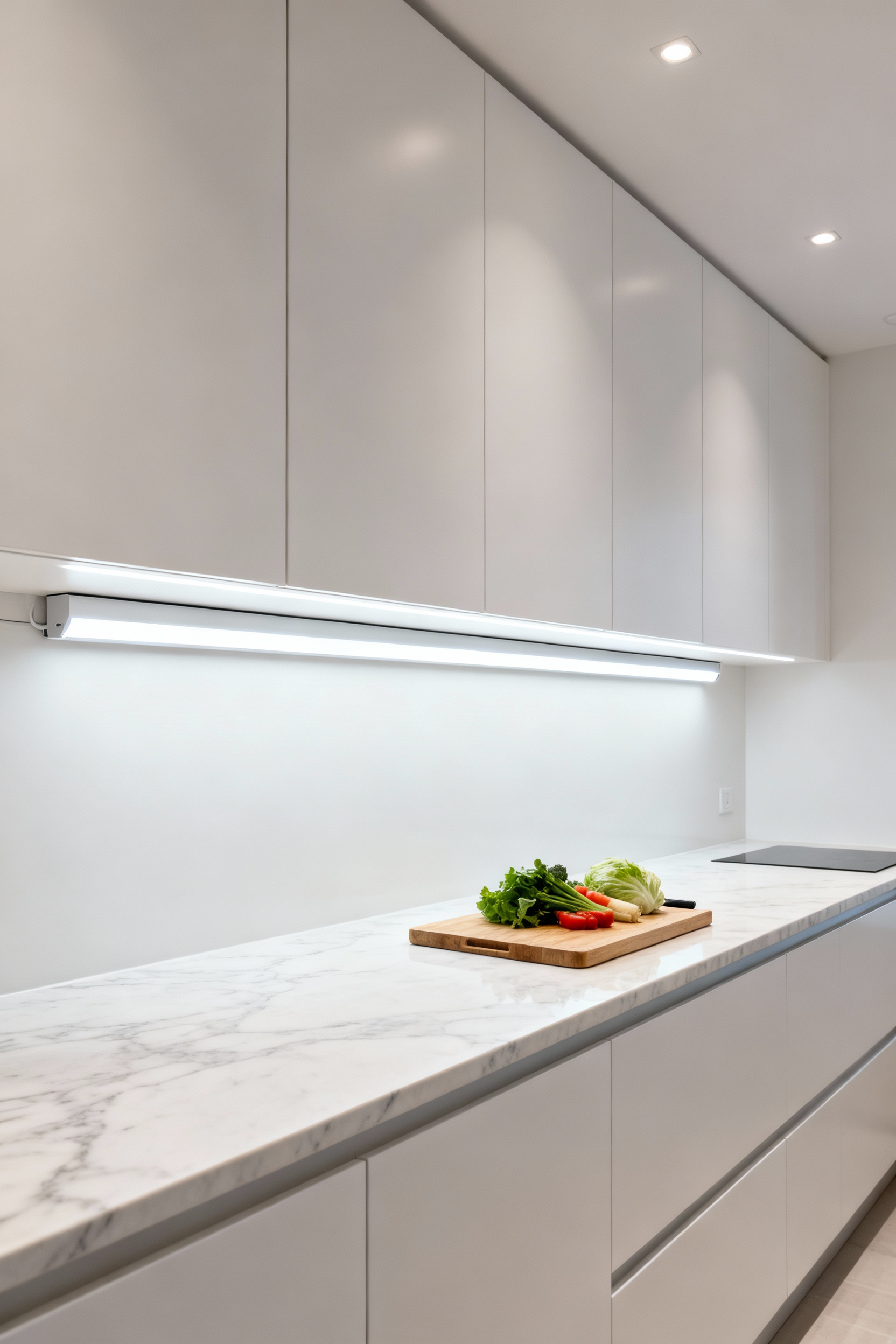
Now, here’s the thing—in a truly smart home, this lighting becomes part of the home’s nervous system. By integrating it with your smart home platform, you can control it with your voice, have it activate with motion sensors, or create custom scenes. A “Cooking” scene might bring task lights to full bright, while a “Relax” scene dims everything to a warm 2700K. In my work with future-ready spaces, I often design lighting that supports circadian rhythms—mimicking natural daylight patterns to improve well-being. That’s when your cabinets start actively contributing to a healthier environment.
Want to make your kitchen feel lighter and more spacious? Make the cabinets float. This is an architectural sleight of hand that has a huge psychological impact. Mounting wall cabinets without any visible supports, or designing base cabinets without a traditional toe-kick (plinthless design), creates the illusion that they’re hovering off the floor. This negative space underneath draws the eye back, making the room feel larger.
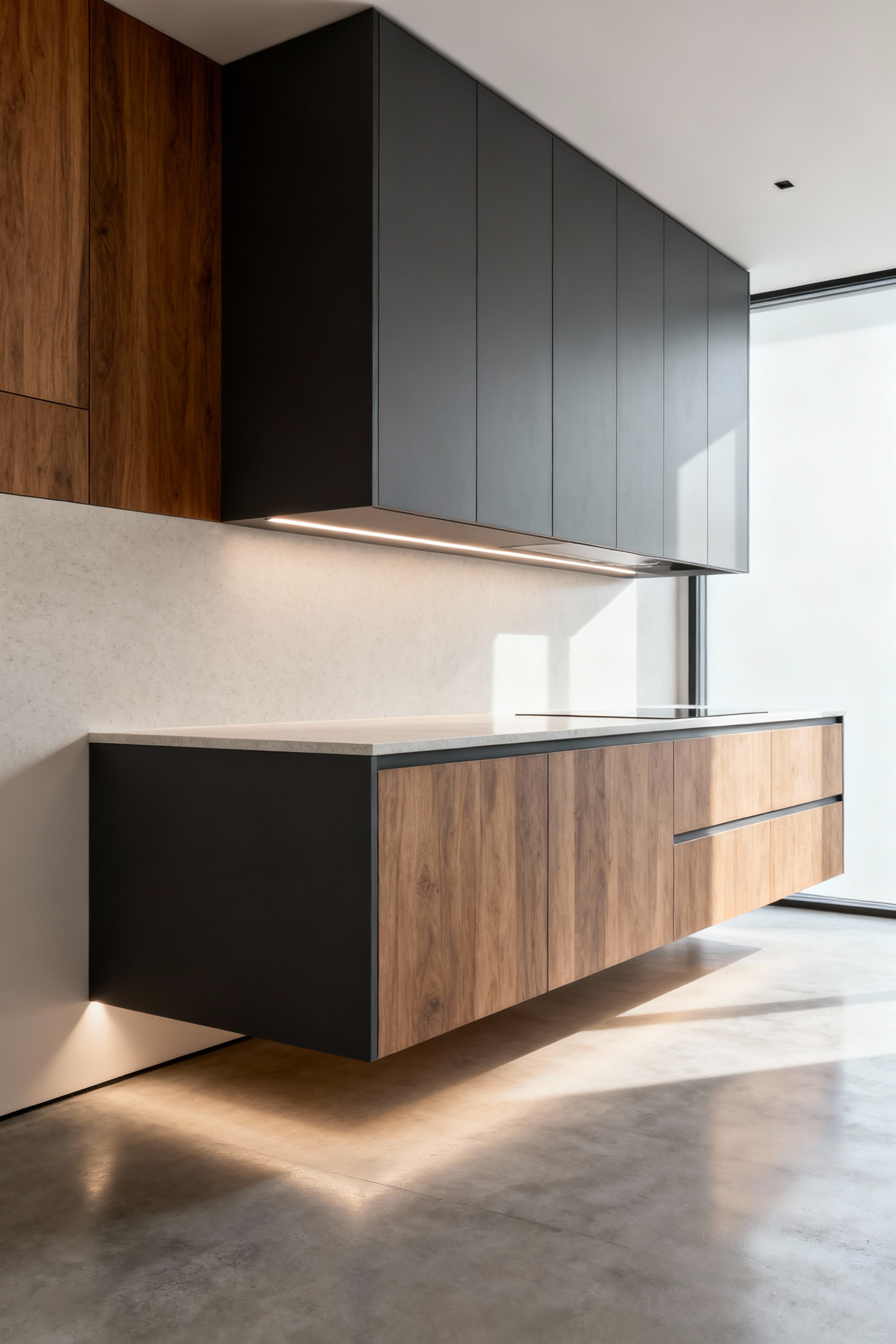
This isn’t just about looks; it makes cleaning underneath a breeze. The effect is especially dramatic when you combine it with the under-cabinet lighting we just discussed. A soft wash of light emanating from underneath a floating island or vanity is a high-end touch that feels both futuristic and serene. It takes serious planning and structural support to pull off, but the result is a kitchen that feels less like a collection of furniture and more like a piece of sculpture.
We talked about mechanical push-to-open systems. The next level is electronic touch-to-open. This is where your kitchen really starts responding to you. Systems like Blum’s SERVO-DRIVE use a small motor to open drawers and doors with just a light touch—or even a bump of the hip if your hands are full. The motion is smooth, silent, and frankly, feels a little bit magical.
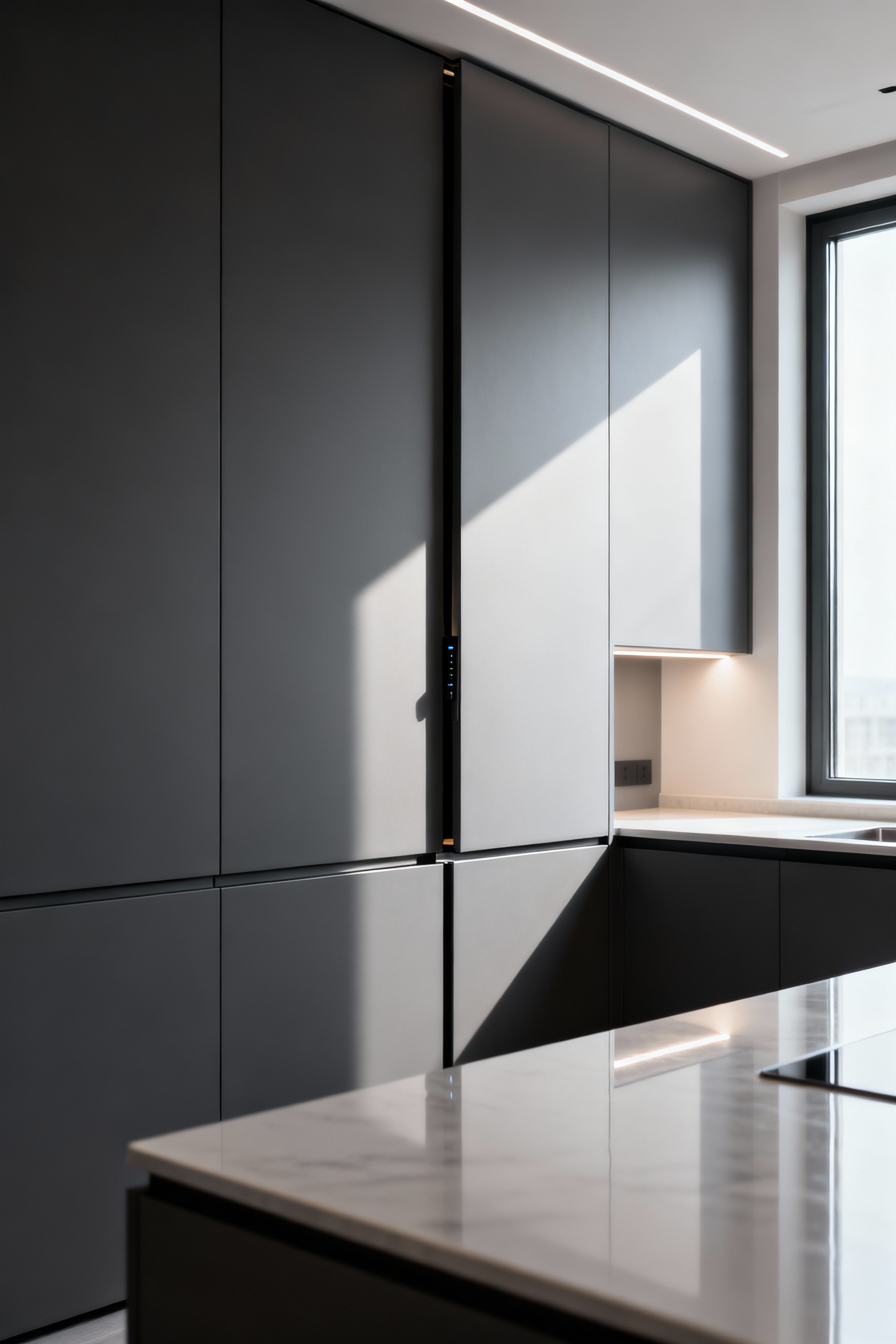
This technology is a perfect marriage of minimalist design and maximum convenience. It allows you to maintain that perfectly clean, handleless facade without any usability compromises. For sophisticated home automation, these systems can even be integrated with voice or gesture controls. Imagine your waste and recycling drawer gliding open automatically as you approach with scraps. It’s one of those features that, once you have it, you can’t imagine living without. It removes another tiny point of friction from your day.
Now we’re getting into the deep cuts. These are the strategies that separate a nice modern kitchen from a truly intelligent, high-performance one. It’s about data-driven ergonomics, personalized security, and seamless robotics that make life easier.
The old “kitchen triangle” (sink, stove, fridge) is a good starting point, but it’s dated. A truly modern kitchen is designed around zones: a prep zone, a cooking zone, a cleaning zone, and a storage zone. The goal is to place everything you need for a specific task right where you perform that task. Your knives, cutting boards, and mixing bowls belong near your main prep counter. Spices and oils should be right next to the cooktop.
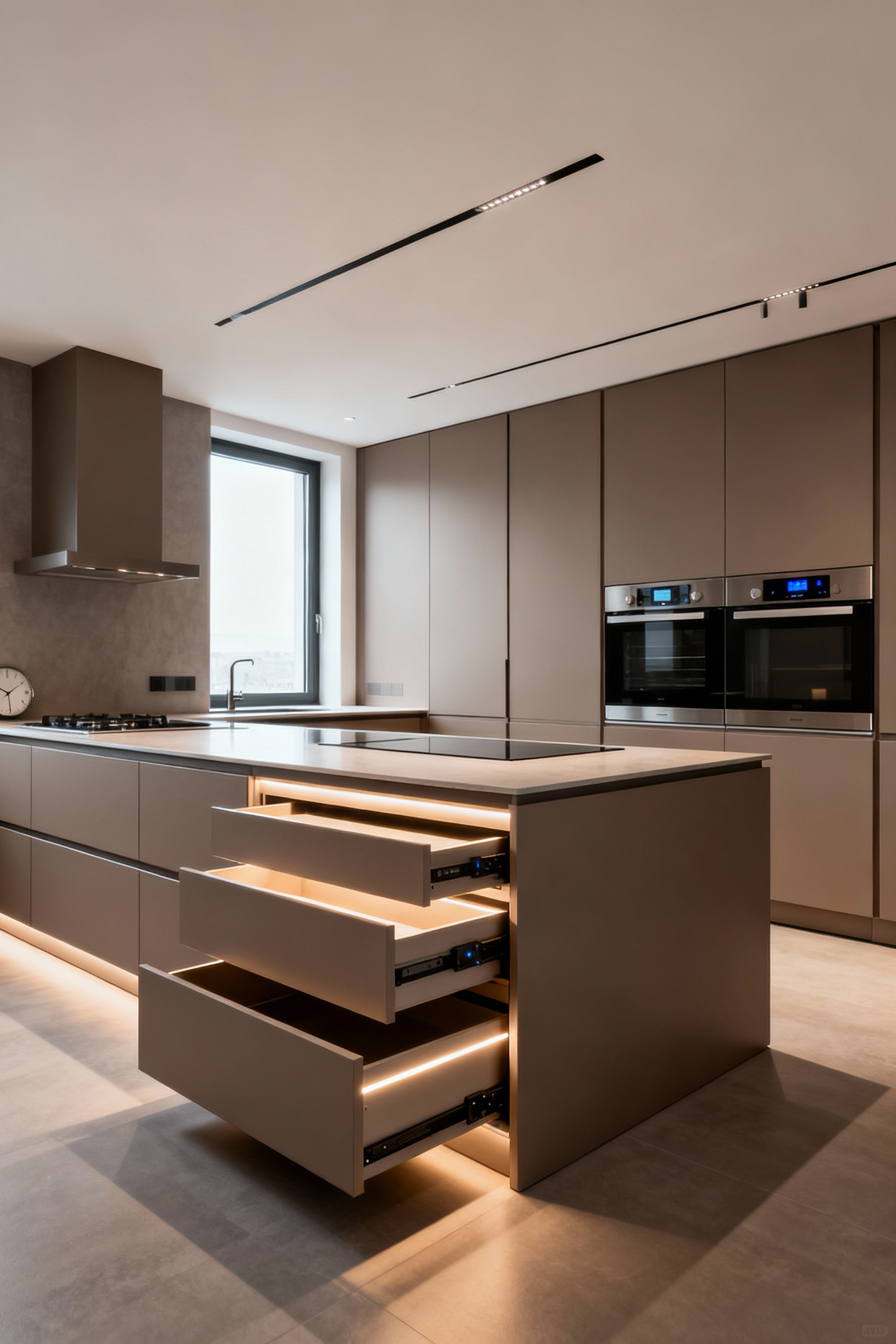
My professional experience has taught me this is where efficiency is truly won or lost. It’s about minimizing wasted steps and unnecessary bending or reaching. We can take this even further by calibrating these zones to the user. Are you left-handed? Tall? We can adjust counter heights and place frequently used items within your personal “reach envelope.” Motorized lifts that bring a heavy stand mixer up to counter height are a perfect example of design that adapts to the user, not the other way around.
This might sound like something out of a spy movie, but it has incredibly practical applications. Integrating a small, discreet fingerprint scanner into a cabinet allows for secure, keyless access. Why? To keep cleaning chemicals, sharp knives, or that expensive bottle of whiskey away from curious kids. Or maybe to secure medications in a multi-generational household.
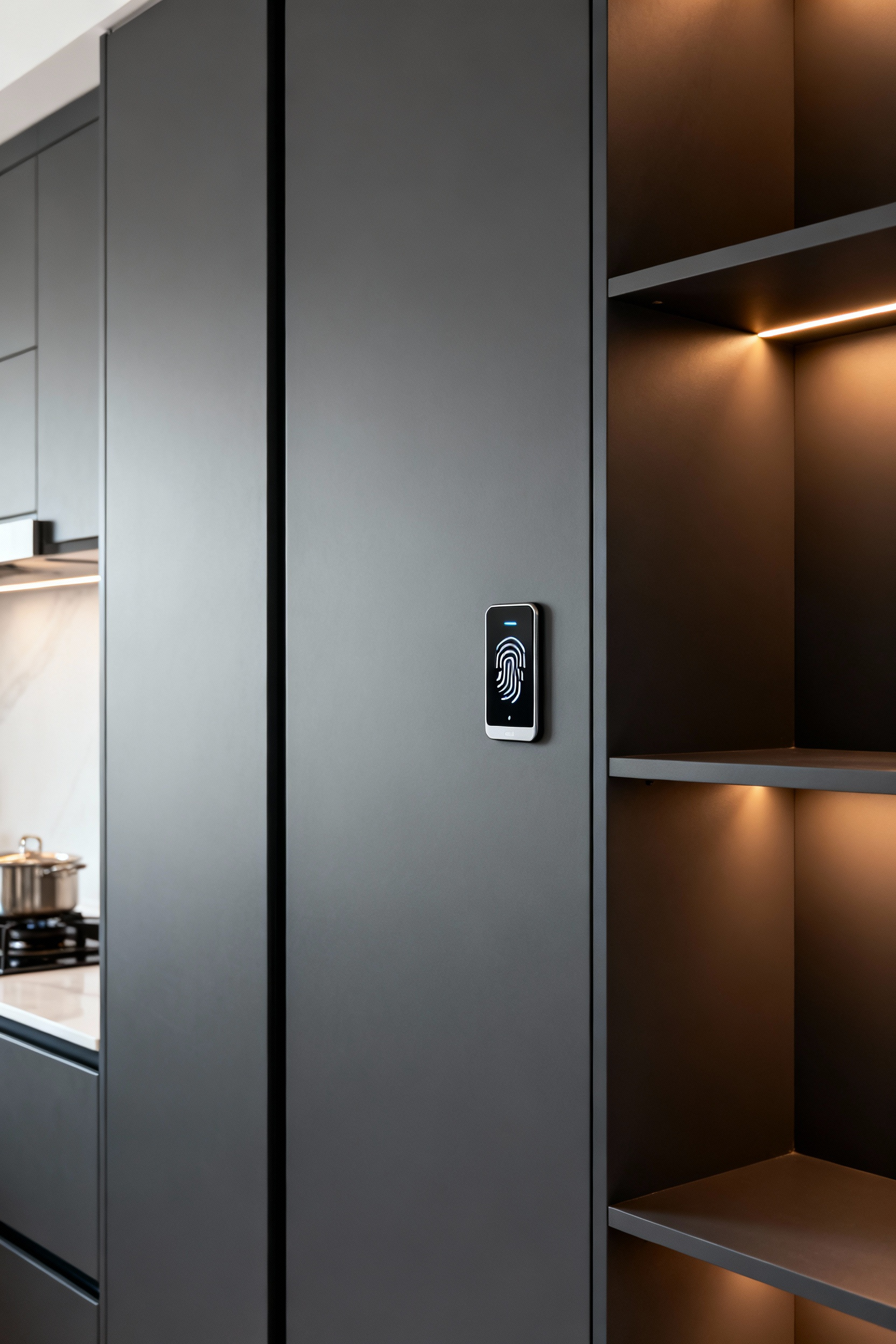
What really gets me excited is the personalization aspect. A biometric system can do more than just unlock; it can trigger user-specific settings. Imagine a cabinet that recognizes your fingerprint and adjusts the internal lighting to your preference. Or a “kid-friendly” mode where certain drawers remain locked. It’s a seamless way to add a serious layer of safety and customization without cluttering up the design with ugly locks and keys. It’s security that’s invisible until it’s needed.
This is where the hands-free kitchen becomes a reality. By integrating motors and smart controls into your modern kitchen cabinets, you can operate them with simple voice commands. With your hands covered in dough, you can just say, “Hey Google, open the pantry,” and the doors will glide open. You can ask for specific lighting—”Set counter lights to 70% warm white”—and get an instant response.
I learned the true power of this when designing a kitchen for a client with mobility challenges. A voice-activated system that could lower upper cabinet shelves to counter height was life-changing. But this technology is a universal benefit. It’s about creating a responsive environment that assists you. It’s the ultimate in convenience and a powerful tool for accessibility, making the kitchen a more welcoming and functional space for everyone.
Let’s face it: most range hoods are big, loud, and get in the way of a clean design. Downdraft systems are better, but the future is ventilation that’s completely invisible. I’m talking about high-powered ventilation units that are built directly into the modern kitchen cabinets above the cooktop. When not in use, they are completely hidden behind a matching cabinet front.
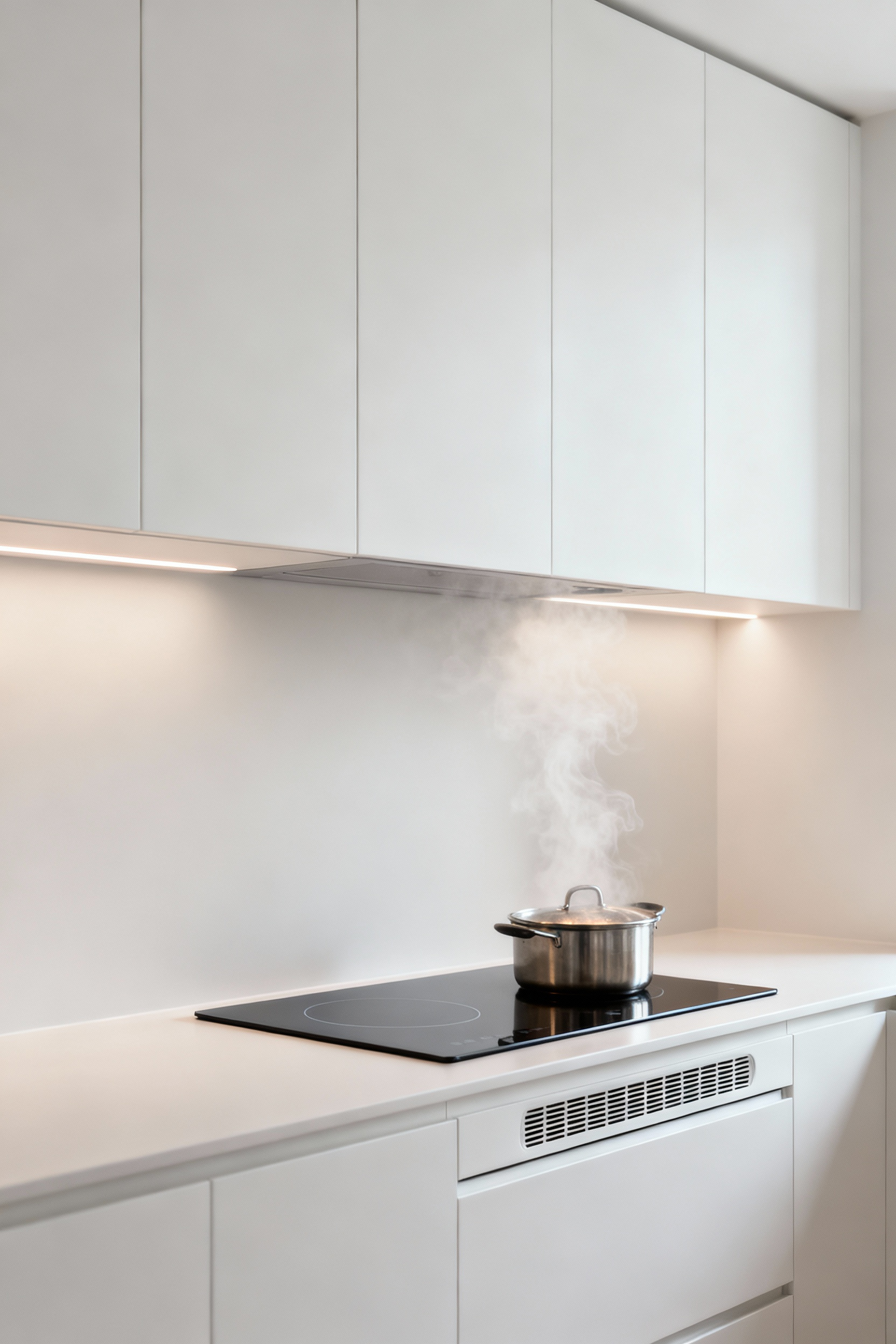
The really advanced part is the automation. These systems use sensors to detect heat, steam, and airborne particles from your cooking, automatically turning on, adjusting their power, and turning off when the air is clear. They are powerful, quiet, and architecturally invisible. This solves a major design challenge, allowing you to have a continuous, uninterrupted line of upper cabinets even over the cooktop, without compromising on powerful and effective air purification.
We’re pushing further into the science of materials and systems thinking. These concepts focus on making your kitchen not only smarter, but healthier and more efficient on a deeper level.
A forward-thinking kitchen has to be a responsible one. And I’m not just talking about recycling. The materials you choose for your modern kitchen cabinets have a huge impact, starting with indoor air quality. I always push my clients to specify materials that are certified low-VOC or formaldehyde-free, like those with a GREENGUARD Gold rating. This is about creating a healthier environment for your family.
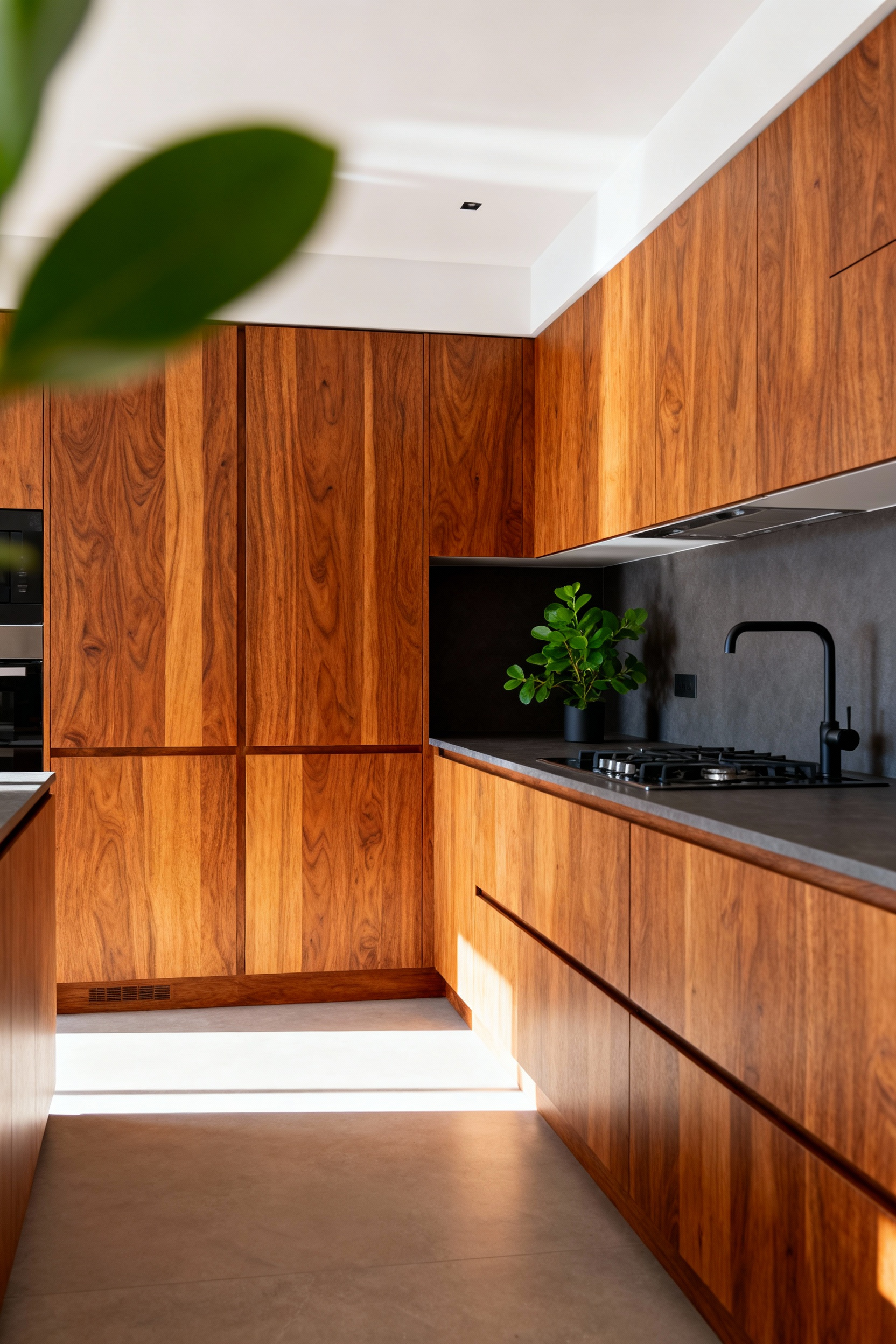
Beyond that, we can look at materials from responsibly managed sources (like FSC-certified wood), rapidly renewable resources like bamboo, or even panels made from recycled content. What’s exciting from a design perspective is that these sustainable options are often at the forefront of innovation, offering incredible durability and beautiful aesthetics. Being environmentally responsible isn’t a compromise anymore; it’s a feature of high-quality, modern design.
We’re moving past just buying dividers and into designing the cabinet around your workflow. Hyper-efficient storage is about bespoke solutions. Think about a custom pull-out designed specifically for your collection of oils and vinegars, with tiered shelves so you can see every label. Or a dedicated coffee station inside a cabinet, complete with a built-in drawer for pods and a clever knock-box for espresso grounds.
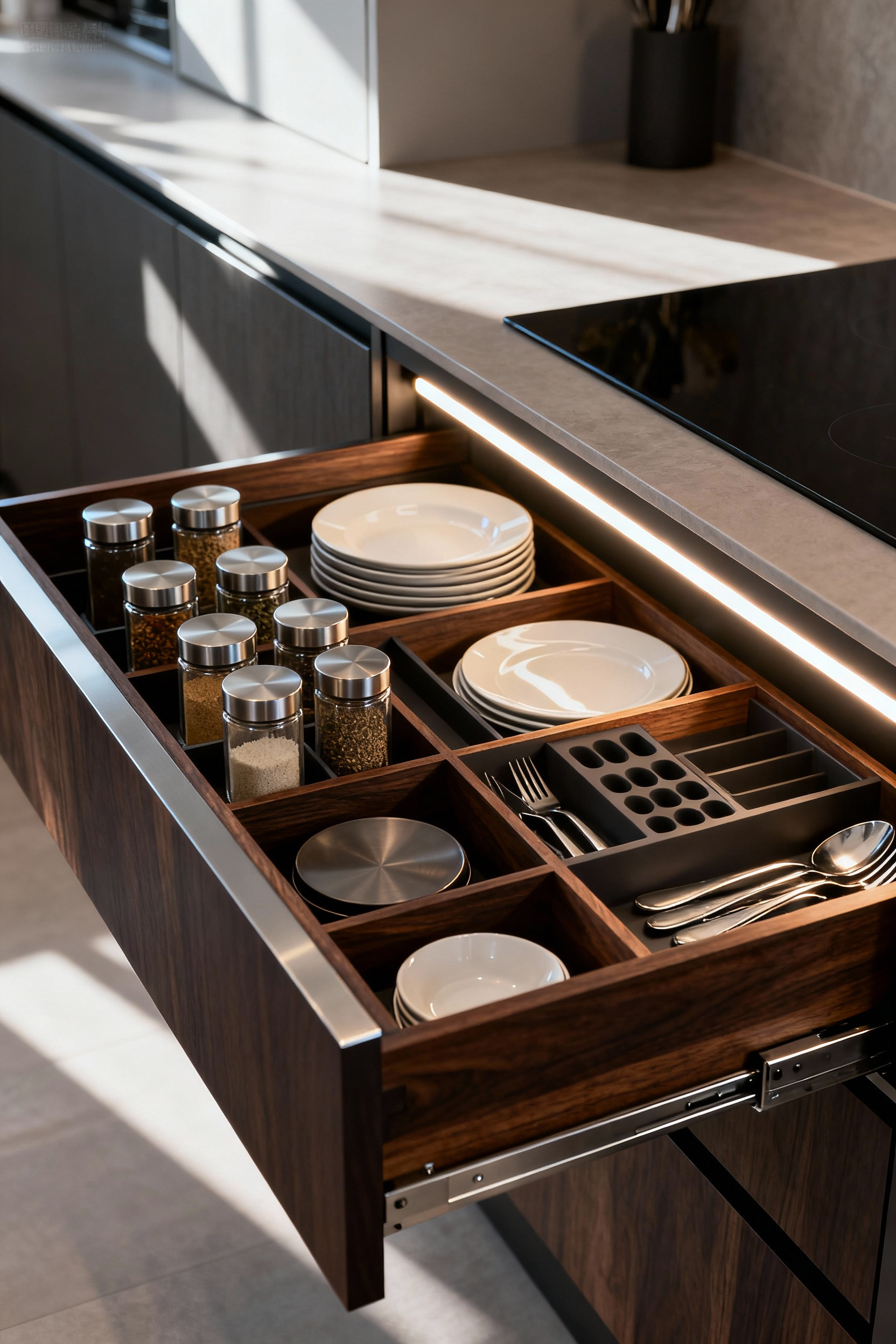
Years of designing smart kitchens have taught me that true luxury is frictionless living. These custom solutions remove the tiny frustrations of daily life. For tech enthusiasts, this can even mean smart drawers that monitor inventory. Imagine a cabinet that knows when you’re low on coffee beans and adds them to your shopping list automatically. This is when the cabinet stops being a dumb box and starts being a true partner in managing your home.
We’ve arrived at the pinnacle. This is where modern kitchen cabinets stop being furniture and become the central nervous system of your home—a fully integrated platform for control, health, and wellness.
A smart home with twenty different apps isn’t very smart. The goal is centralized control, but you don’t need another screen cluttering up your countertop. Mastery is about embedding the “brain” of your home—the central hub—invisibly within your cabinetry. We’re talking about a dedicated space for a powerful mini-PC or a smart home controller, hard-wired for reliability and connected to everything.
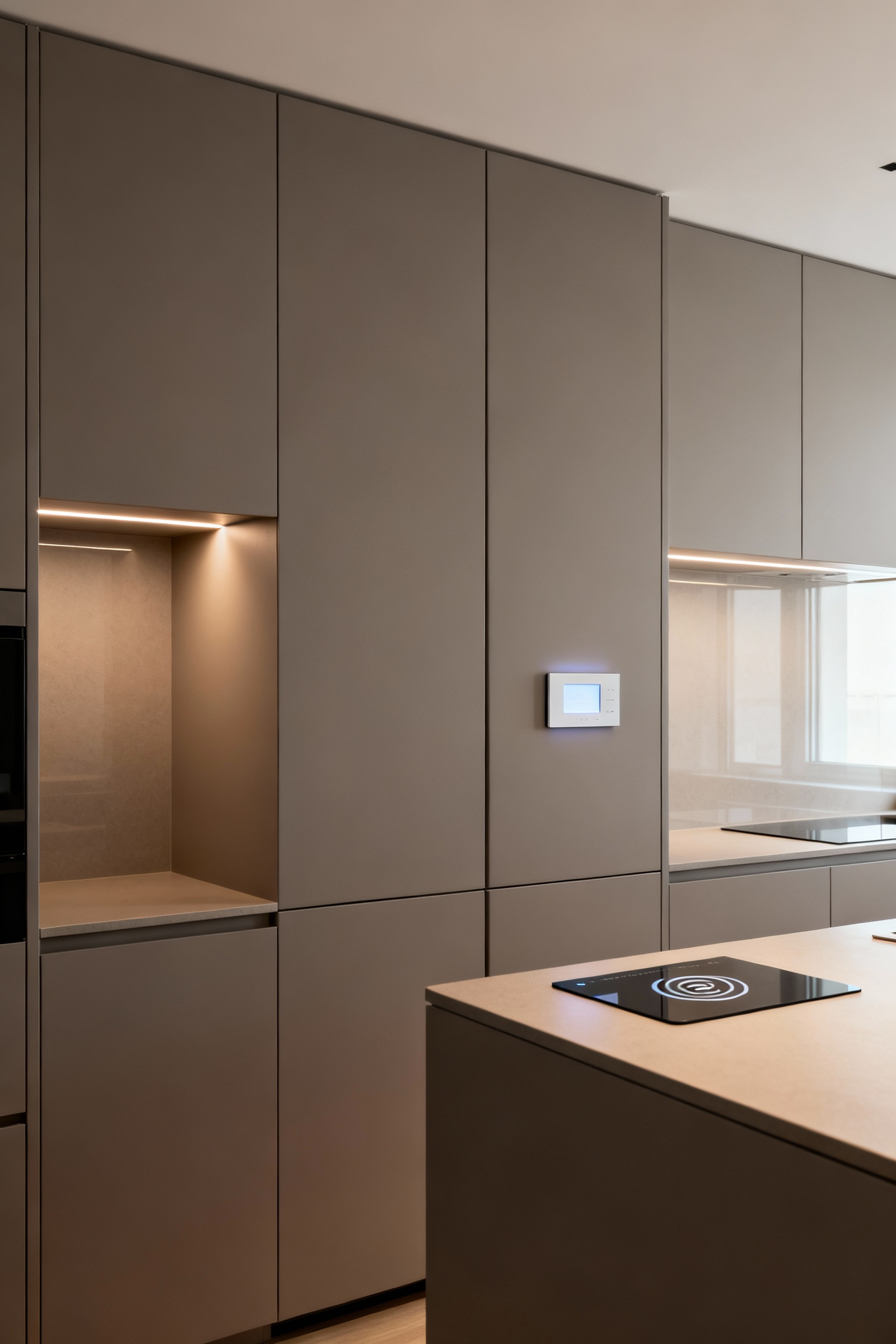
What I tell my clients is that true smart home integration should feel invisible and intuitive. The control interface could be a screen that appears on a cabinet door only when you approach it, or it could be entirely voice-driven. From this central point, you can manage lighting, climate, security, and entertainment throughout the entire house. The modern kitchen cabinet, a quiet and central fixture, becomes the perfect command center for a seamlessly automated life.
This might sound like science fiction, but the technology is here. For ultimate hygiene, we can now design with surfaces that actively help keep themselves clean. It starts with antimicrobial materials, like laminates infused with silver ions, that inhibit the growth of bacteria on contact. This provides a constant, passive layer of protection that goes far beyond what manual cleaning can do.
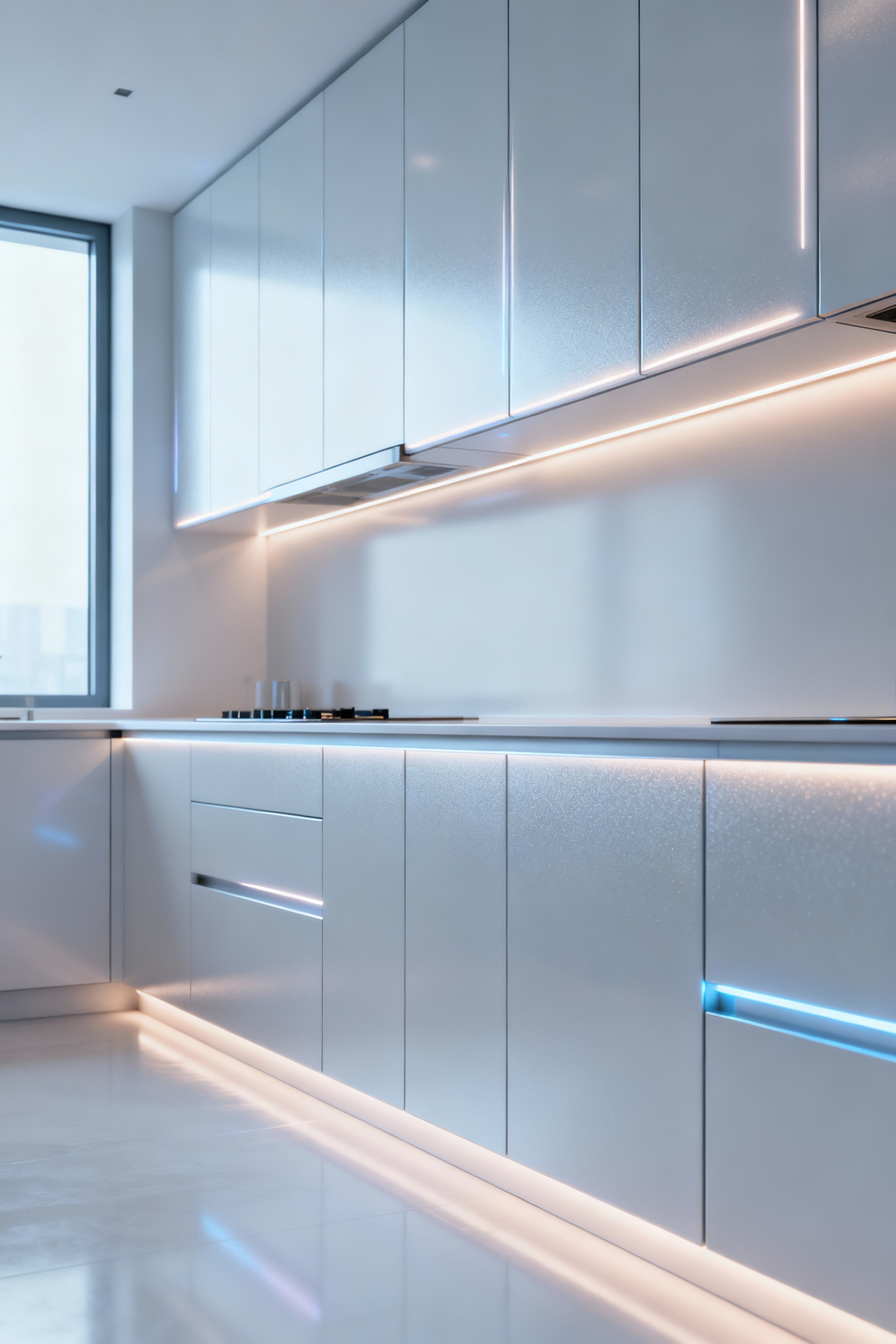
But the next level is active self-cleaning. Certain advanced surfaces use photocatalytic nano-coatings that react with light (even ambient indoor light) to break down organic matter—like fingerprints, grease, and germs—into harmless vapor. It’s an incredible innovation for maintaining a pristine and hygienic kitchen with far less effort. By integrating these materials, your modern kitchen cabinets become an active part of your home’s wellness system, creating a safer, healthier environment by design.
We’ve moved through 20 concepts, starting from simple aesthetics and building to a vision of the kitchen as a responsive, intelligent ecosystem. It should be clear by now that modern kitchen cabinets are not just about the doors you choose. They are the architecture that underpins a smarter, more efficient, and healthier way of life. They are the platform for the technology that simplifies your routine and the wellness features that protect your family.
The real takeaway is this: great design is holistic. It’s about the seamless integration of form, function, and forward-thinking technology. Your kitchen shouldn’t just look modern; it should live modern. It should anticipate your needs and remove friction from your day. As you plan your next project, I encourage you to use these ideas not as a checklist, but as a new way of thinking. Architect a kitchen that isn’t just built for today, but is ready for tomorrow.